

Group Therapy… Why I think it may be right for you
As we recover from the COVID 19 pandemic, many families are struggling. Children are facing challenges at school and at …
Read more
Therapeutic Approaches
When parents first hear that cognitive behavioral therapy might help their child, a flood of questions typically follows. Will my six-year-old really be able to engage in therapy? How is this different from what an adult would experience? What actually happens in those sessions? These questions reflect something important: parents want to understand not just whether CBT works, but how it works—especially when their child is still learning to tie their shoes, navigate friendships, and make sense of big emotions. At our practice, we see this curiosity as a strength. Parents who understand the therapeutic process become powerful partners in their child’s growth. In this article, we walk through how CBT is adapted for children ages 5 to 10, what sessions actually look like, and how parents can support their child’s progress at home.
Cognitive Behavioral Therapy operates on a straightforward principle: our thoughts, feelings, and behaviors are all connected. When we change one part of this cycle, we create ripple effects throughout the whole system. For children, this means that learning to notice and shift unhelpful thinking patterns can reduce distressing emotions, and practicing new behaviors can build confidence and competence.

The reason CBT is so frequently recommended by organizations like the American Academy of Child and Adolescent Psychiatry comes down to evidence. Decades of research across multiple countries have consistently shown that children who complete CBT often experience meaningful reductions in anxiety, improvements in emotional regulation, and better daily functioning. When we say an approach is “evidence-based,” we mean it has been tested in controlled studies and shown to help a significant proportion of children who receive it.
However, calling something evidence-based doesn’t mean it works identically for everyone. What the research tells us is that when CBT is delivered well—with appropriate developmental adaptations and consistent family involvement—many children show noticeable improvement. Some improve quickly, others more gradually, and some may need additional or different supports. This realistic framing helps parents approach therapy with appropriate hope rather than pressure.
The CBT your child receives looks nothing like what an adult would experience in therapy. This isn’t just a matter of using simpler words—it reflects a fundamental rethinking of how to teach these skills to developing minds.
Young children think in concrete, immediate terms. While an adult can discuss hypothetical scenarios and abstract patterns, a seven-year-old needs to see, touch, and experience concepts to understand them. Therapists use:
A forty-five minute session for a six-year-old might include four or five different activities rather than one extended conversation. Children might move between a check-in game, a skill-teaching activity, a physical relaxation practice, and a planning conversation—all connected by the same therapeutic goals but varied enough to maintain engagement.
For children at the younger end of this age range (5-7), therapy leans heavily on play and behavioral components. This isn’t because cognitive work doesn’t matter—it’s because play is how young children naturally process experiences and learn new skills. A therapist might use puppets to role-play handling a worry, or create a board game that practices identifying “helpful” versus “tricky” thoughts.
Children ages 8-10 can typically engage more directly with the cognitive aspects of CBT. They can begin to identify thinking patterns, understand that their interpretation of events affects how they feel, and practice generating alternative thoughts. Even so, therapists continue using visual supports, metaphors, and hands-on activities rather than purely verbal discussion.
Understanding these developmental layers helps parents appreciate why individual therapy for children requires specialized training. A therapist skilled with adults won’t automatically know how to engage a first-grader who would rather talk about Pokemon than feelings.
One of the most common questions parents ask is: “But what will my child actually do in there?” Visualizing the process helps parents feel more comfortable and better equipped to support their child’s work.
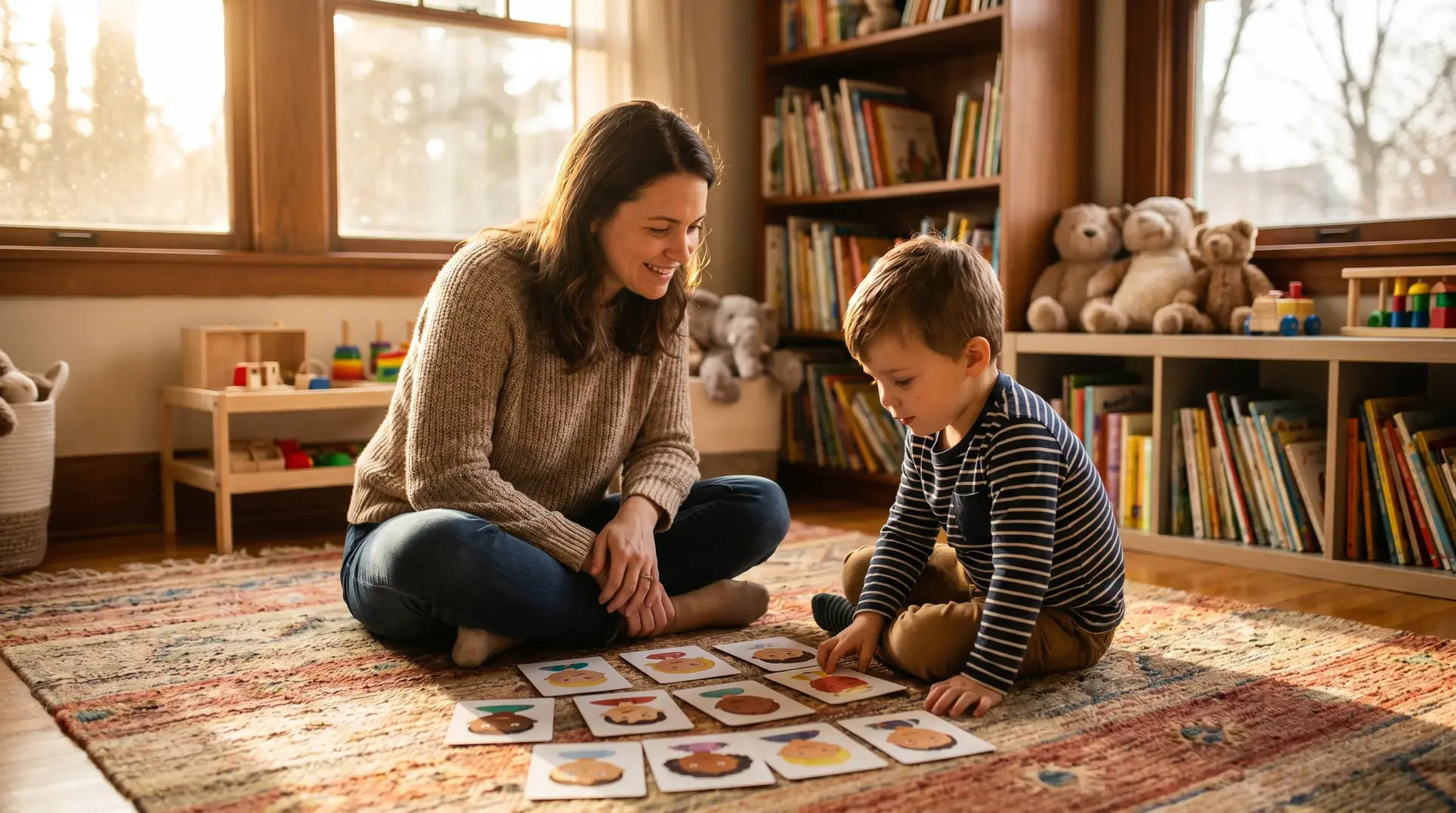
Early sessions often focus on building emotional vocabulary. A therapist might spread emotion cards across the floor and ask a child to find the feeling that matches different scenarios. Or they might use a “feelings thermometer” to help children recognize that emotions come in different intensities—a little worried versus very worried, slightly annoyed versus really angry.
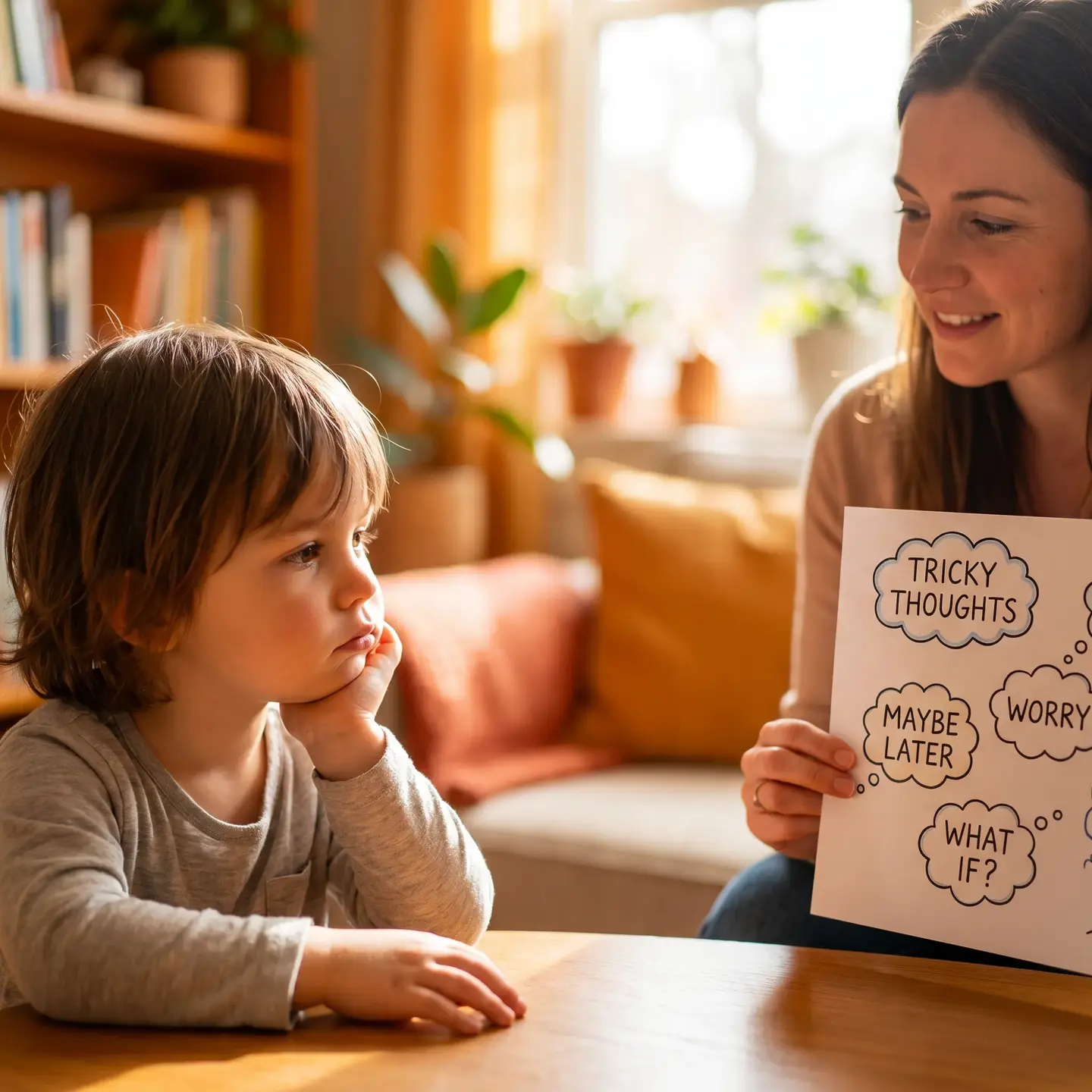
Children learn to notice their thoughts through playful activities. A therapist might introduce “thought bubbles” like in comic books, helping children understand that thoughts are separate from facts. They might play “detective” games where the child investigates whether a worry thought has evidence to support it or whether it might be a “tricky thought” that isn’t quite true.
Rather than simply telling children that their fears won’t come true, CBT helps them test their predictions. A child who believes they can’t handle any uncomfortable feelings might practice sitting with mild discomfort for increasing periods and discover they’re more capable than they thought. A child who fears making mistakes might intentionally make a small, low-stakes error and observe what actually happens.
Social scenarios, assertiveness skills, and problem-solving steps are all practiced through role-play. The therapist might pretend to be a classmate who won’t share, giving the child repeated opportunities to practice responding. This rehearsal builds confidence before facing real situations.
Children learn calming strategies presented as games or adventures:
Between-session practice is essential in CBT, but for children, this rarely looks like adult worksheets. A child might:
Parents play a crucial role in supporting this practice, which leads to our next important topic.
CBT helps children develop skills that apply across many different challenges. Parents don’t need to have a specific diagnosis in mind—and in fact, many children benefit from CBT skills without meeting criteria for any clinical disorder.
Children who experience intense emotional reactions—whether frequent meltdowns, explosive anger, or overwhelming worry—learn to recognize early warning signs in their bodies and minds. They practice calming strategies before emotions escalate and develop new ways of responding to triggers.
CBT is particularly well-suited for children who struggle with anxious thoughts, avoidance behaviors, or specific fears. Through gradual exposure and cognitive skills, children learn that they can handle uncomfortable situations and that their worried predictions often don’t come true.
For children showing defiance, impulsivity, or difficulty following rules, CBT helps them slow down, consider consequences, and develop problem-solving skills. Combined with parent training, this approach addresses both the child’s skills and the environmental patterns that maintain difficult behaviors.
Children who struggle with friendships, feel rejected, or have trouble reading social cues benefit from role-playing, perspective-taking exercises, and building a toolkit of social strategies.
Some children become quickly overwhelmed when things don’t go as expected or when tasks feel hard. CBT helps them develop flexibility in thinking and build capacity to tolerate discomfort.
For parents who want to understand more about what drives their child’s challenging moments, understanding your child’s behavior provides additional context on the “why” behind these patterns.
Here’s something that surprises many parents: when working with children ages 5-10, parent involvement isn’t optional—it’s essential. Children at this age are deeply embedded in family systems, and sustainable change requires shifts in the home environment alongside the child’s skill development.
Parent participation in child CBT typically includes:
When a child learns to use “balloon breathing” in therapy, that skill becomes powerful when parents also know it and can gently prompt its use during real moments of distress. When the therapist introduces the concept of “helpful versus tricky thoughts,” parents who understand this framework can help their child apply it at bedtime, before school, or during sibling conflicts.
This doesn’t mean parents need to become therapists. Rather, it means creating an environment where the skills practiced in sessions can generalize to everyday life. Small moments of reinforcement—noticing when your child uses a coping strategy, asking about their “brave challenges,” using the same language the therapist uses—compound over time.
A common concern parents express: “I don’t want to ask too many questions or make my child feel like therapy is another thing to perform at.” This sensitivity matters. The goal is supportive curiosity rather than interrogation. You might say, “I noticed you took some deep breaths when you got frustrated today—that was great!” rather than “Did you remember to use your breathing like the therapist said?”
For parents who want additional support in navigating these dynamics, parent coaching services can provide personalized guidance alongside your child’s therapy.
CBT is designed to be goal-oriented and time-limited, which means you should have a sense of what you’re working toward and roughly how long it might take.
For many children, a course of CBT involves somewhere between 8 and 20 sessions, depending on the complexity of challenges and the goals established. Some children with more focused concerns (a specific fear, for example) may need fewer sessions. Those with multiple challenges, family stress, or slower initial progress may benefit from longer treatment or periodic booster sessions.
Most children attend weekly sessions, especially at the start of treatment when skill-building is most intensive. As progress solidifies, some families transition to biweekly sessions before ending treatment.
Your child’s therapist will track progress in several ways:
Progress isn’t always linear. Children often show improvement, then hit a setback when stressors increase, then continue forward. This is normal and expected.
It helps to frame CBT as building skills that become part of your child’s toolkit for life, rather than a cure that eliminates all challenges. Children who complete CBT often experience:
What CBT typically doesn’t do is eliminate all anxiety, prevent all tantrums, or transform a child’s temperament. A naturally cautious child may become more flexible and brave while still being more cautious than peers. An emotionally intense child may learn regulation skills while still having bigger feelings than average. The goal is healthy functioning and resilience, not personality change.
This approach tends to work well for children who:
CBT may need to be modified or supplemented for children with significant developmental delays, severe family instability, or challenges that require other specialized approaches first. A thorough assessment helps determine whether CBT is the right fit or whether another approach might serve your child better.
This article may be most useful for parents who suspect their child could benefit from skill-building around emotions and behavior. If you’re unsure whether your child’s struggles warrant professional support or you’re exploring different therapy approaches for children, a consultation can help clarify next steps.

Seeking therapy for your child can feel like a significant step, and we believe that our therapeutic approach should feel like a partnership rather than a mystery. When parents understand how CBT works, they become active contributors to their child’s progress rather than passive observers wondering what happens behind the closed door.
CBT offers children something valuable: a set of skills they can use not just to address current challenges, but to navigate whatever comes next in their development. The anxious first-grader who learns to face fears becomes a third-grader who can handle new situations. The child who learns to catch “tricky thoughts” at age eight has a tool for the more complex social dynamics of middle school.
If you’re considering whether Individual Therapy — Children (9-10) or support for a younger child might help your family, we encourage you to reach out for a consultation. Understanding the “why” behind your child’s struggles and having concrete strategies to support their growth can transform not just their wellbeing, but the whole family’s daily experience.
CBT is a structured therapy that helps children understand how their thoughts, feelings, and behaviors connect. For younger kids, therapists make it fun and hands-on through play, movement, and concrete activities they can easily grasp and practice in everyday life.
Child CBT uses simple words, pictures, games, and role-play because young children learn best through fun, hands-on activities. Sessions are shorter, and parents get much more involved to help children practice new skills at home every day.
Sessions include games that help children name their feelings, catch worried thoughts, practice calming techniques, and try small brave challenges. Kids get fun practice activities between sessions that feel more like exciting missions than homework assignments.
CBT helps children with anxiety, big emotions, behavior challenges, friendship troubles, avoiding difficult situations, and getting easily frustrated. It works especially well when kids need practical, everyday coping tools they can use right away in real-life situations.
Parents play a vital role in child CBT. They share important background details, meet regularly with the therapist, learn the same coping tools as their child, and help practice these skills at home between therapy sessions.

You don’t have to keep guessing. With the right tools and support, parenting can feel easier—and your child can thrive.
Book a Free Consultation
