Serving all Ontario residents | In-person and virtual appointments available

Call us today

(647) 360-3294

Skip to content
Back to Blog

Therapeutic Approaches

Play Therapy for Children: How Therapists Help Kids Heal Through Play

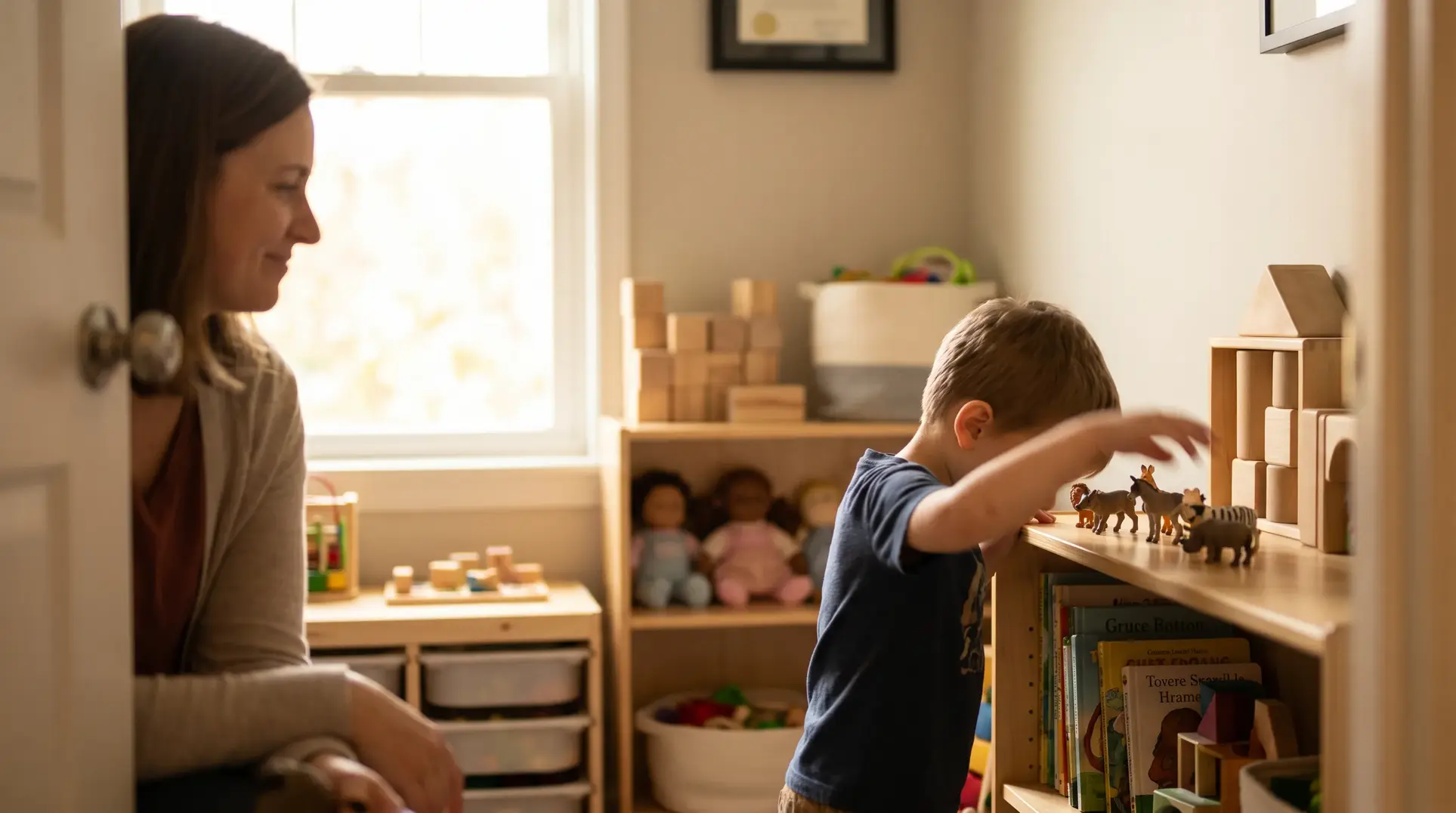
A child is playing with wooden toy animals and blocks on a shelf while books are also displayed on the shelf. In the background, a woman is smiling and watching the child. The setting appears to be a playroom or child's bedroom with other toys and storage visible.

When parents first observe their child in a therapy session, they often expect to see something resembling a conversation—perhaps their child sitting on a couch, talking through their worries or frustrations with a caring adult. Instead, they watch their child arrange figurines on a shelf, build a tower only to knock it down, or engage in what appears to be an elaborate game with dolls and toy animals. A natural question arises: “Is this really therapy, or is my child just playing?”

We understand this concern deeply. At our practice, we hear it regularly from parents who genuinely want the best for their children but feel uncertain about whether sessions spent with toys and art supplies constitute legitimate treatment. The truth is that play therapy represents one of the most sophisticated and developmentally appropriate interventions available for young children. Far from being a distraction from therapy, play is the therapy—a carefully structured, evidence-based approach that allows children to process emotions, work through difficult experiences, and develop healthier ways of relating to themselves and others.
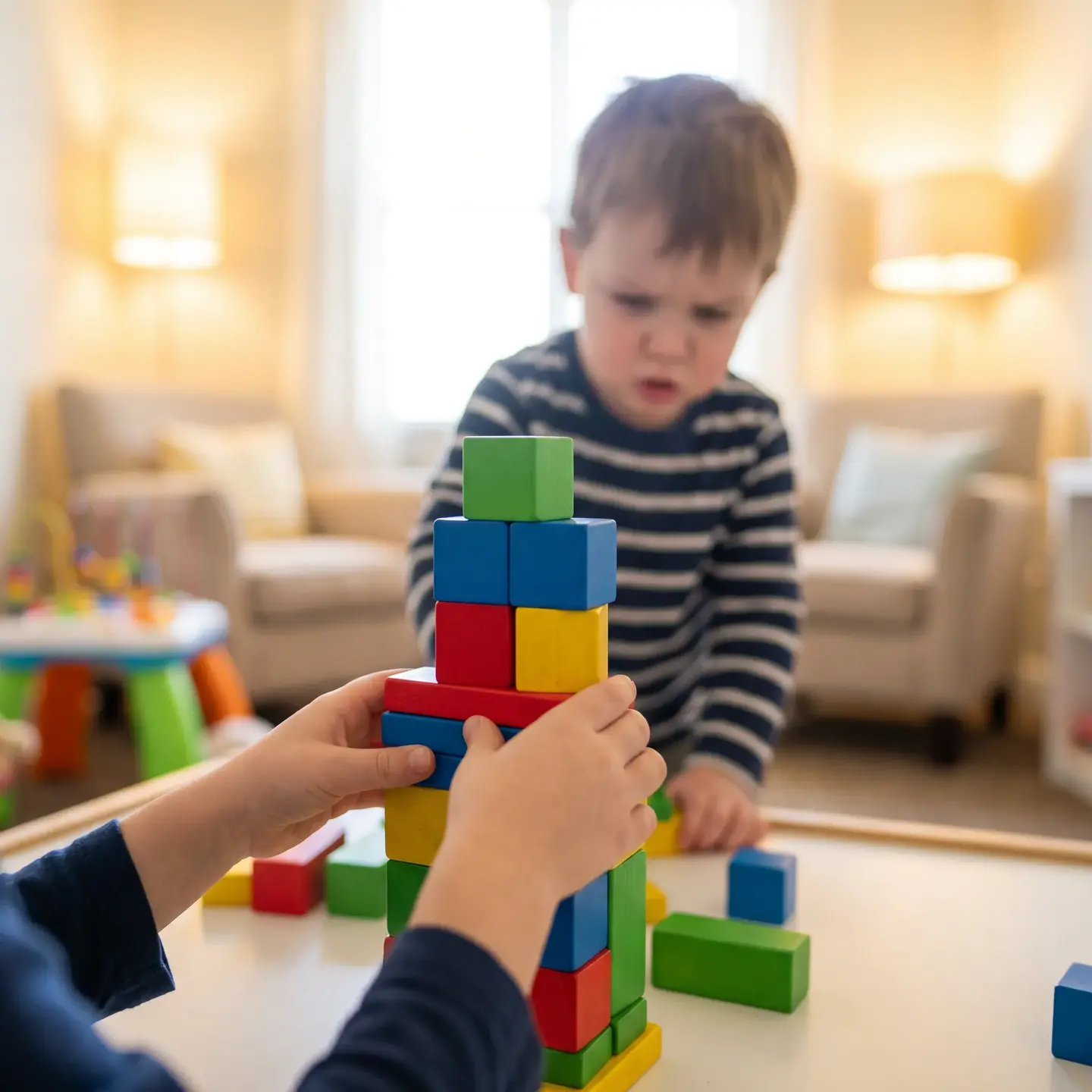
Child building tower blocks

Who This Article Is For—And Who It’s Not For

This article is written specifically for parents and caregivers of children roughly ages five through ten who are considering therapy or whose children are already engaged in play-based treatment. It’s for families who want to understand what’s actually happening during their child’s sessions and why this approach is effective.

This article is not intended for:

  • Parents of adolescents, who typically benefit from different therapeutic modalities
  • Those seeking information about group therapy programs
  • Readers looking for condition-specific treatment information (such as OCD or trauma protocols)
  • Mental health professionals seeking clinical training resources

If you’re a parent wondering whether your child’s play therapy sessions are “working” or seeking to understand the method behind what might look like mere play, you’re in the right place.

Why Children Can’t “Just Talk” About Their Problems

Adults naturally process experiences through language. When something difficult happens, we talk it through with friends, journal about it, or discuss it with a therapist. We assume children can do the same—that if we simply ask the right questions, they’ll tell us what’s bothering them.

However, children’s brains work differently, and understanding your child’s emotional development helps explain why talk-based approaches often fall short.

Developmental Limitations in Verbal Processing

Children under age ten or eleven are still developing their capacity for abstract thinking. The parts of the brain responsible for putting complex emotions into words, reflecting on internal states, and understanding cause-and-effect relationships across time are not yet fully developed. When we ask a seven-year-old, “Why do you feel anxious?” we’re asking them to perform a cognitive task they may not yet be capable of completing.

Consider these developmental realities:

  • Limited emotional vocabulary: Children may feel a hundred different shades of distress but only have words for “mad,” “sad,” or “scared”
  • Concrete thinking: Abstract concepts like “anxiety” or “self-esteem” don’t translate easily into a child’s concrete understanding of the world
  • Action-oriented processing: Children naturally learn and process through doing, moving, and manipulating their environment
  • Memory encoding: Young children often store experiences as sensory and emotional impressions rather than verbal narratives

Play as the Child’s Natural Language

Just as adults process experiences by talking them through with friends, children process experiences by playing them through. Play is not a lesser form of communication—it’s the developmentally appropriate form of communication for children. When a child creates a story with figurines, builds and destroys structures, or draws pictures of their inner world, they’re engaging in the same kind of meaningful processing that adults do through conversation.

This is why our individual therapy for children ages 9-10 relies heavily on play-based approaches. We’re meeting children where they are developmentally, using the communication medium that makes sense to them.

The Science Behind Play Therapy: How Play Processes Emotion

Play therapy isn’t effective simply because children enjoy it. The therapeutic power of play rests on well-established psychological mechanisms that facilitate genuine emotional healing and growth.

Externalization of Internal Experience

When a child is overwhelmed by big feelings, those feelings can seem all-consuming and impossible to manage. Play allows children to externalize internal experiences—to take what’s happening inside and represent it outside, where it can be examined, manipulated, and ultimately mastered.

A child who feels powerless might create play scenarios where a small figure defeats a much larger one. A child processing a frightening medical experience might repeatedly “treat” stuffed animals with toy medical equipment. Through these play narratives, children gain distance from overwhelming emotions while still engaging with them meaningfully.

Creating Psychological Distance

Talking directly about painful experiences can feel threatening and overwhelming. Play provides a protective layer—a child can explore themes of abandonment through a story about a lost puppy rather than directly discussing their parents’ divorce. This symbolic distance doesn’t diminish the therapeutic work; it enables it by keeping the child within their window of tolerance.

Mastery and Control

Many childhood difficulties stem from experiences of helplessness—traumatic events, overwhelming emotions, or situations where the child had no control. In play, children become the directors of their own narratives. They decide what happens, who wins, and how conflicts resolve. This experience of agency and mastery can be profoundly healing.

Repetitive Processing

Parents sometimes notice their child returning to the same play themes again and again. This repetition serves an important function. Just as adults might need to tell the story of a difficult experience multiple times before feeling resolution, children need to play through challenging material repeatedly. Each repetition allows for slightly different outcomes, gradually integrating the experience and reducing its emotional charge.

According to peer-reviewed research on play therapy efficacy, these mechanisms contribute to measurable improvements in children’s emotional and behavioral functioning.

Types of Play Therapy: Directive vs. Non-Directive Approaches

Not all play therapy looks the same. Understanding the two primary approaches helps parents know what to expect and why their child’s sessions might unfold in particular ways.

Non-Directive (Child-Centered) Play Therapy

In child-centered play therapy, the child leads the session entirely. The therapist creates a safe, accepting environment stocked with carefully selected toys and materials, then follows the child’s lead. The therapist:

  • Tracks the child’s behavior verbally (“You’re putting the family together in the house”)
  • Reflects feelings (“That lion seems really angry”)
  • Sets only necessary limits for safety
  • Avoids directing, questioning, or interpreting the play

This approach trusts the child’s innate capacity for growth and self-direction. By providing unconditional acceptance and empathic presence, the therapist creates conditions where the child can naturally work through their challenges.

Sandbox play therapy scene

Directive Play Therapy

In directive approaches, the therapist takes a more active role, introducing specific activities or themes designed to address the child’s treatment goals. A therapist might:

  • Introduce a specific game to teach emotion identification
  • Use puppets to help a child practice social skills
  • Guide a sand tray activity focused on a particular theme
  • Incorporate cognitive-behavioral techniques within playful activities

Which Approach Is Right for Your Child?

Many therapists, including those at our practice, use an integrative approach—drawing on both directive and non-directive methods based on what each child needs. A child might benefit from the freedom of child-centered sessions while also engaging in more structured activities to build specific skills.

Our our evidence-based therapeutic approach emphasizes tailoring treatment to each child’s unique needs, developmental stage, and presenting concerns rather than applying a one-size-fits-all method.

What Therapists Observe and Interpret During Play

Perhaps nothing transforms parents’ understanding of play therapy more than learning what trained therapists actually see during sessions. What appears to be aimless play to an untrained observer reveals rich clinical information to a skilled play therapist.

Themes and Patterns

Therapists track recurring themes across sessions:

  • Power and control: Who wins in the child’s play narratives? Who has power, and who doesn’t?
  • Nurturance and care: Does the child engage in caregiving play? How do they treat vulnerable figures?
  • Danger and safety: Are play scenarios chaotic or organized? Do characters find safety or remain threatened?
  • Connection and isolation: How do figures relate to each other? Are characters lonely or connected?

Choice of Toys and Materials

The toys a child gravitates toward provide meaningful information. A child consistently drawn to aggressive toys (dinosaurs, soldiers, weapons) may be working through themes of anger or vulnerability. A child who primarily uses nurturing toys (baby dolls, medical kits) might be processing caregiving relationships or their own need for care.

Role Assignment

When children assign roles in play—to the therapist, to themselves, or to toy figures—they reveal aspects of their internal world. A child who always assigns themselves the role of the baby while the therapist becomes the parent may be expressing unmet dependency needs. A child who consistently becomes the powerful protector might be managing feelings of vulnerability by taking on a strong role in fantasy.

How Conflicts Resolve

Therapists pay close attention to how problems get solved in children’s play:

  • Does the child find satisfying resolutions, or do conflicts remain unresolved?
  • Are solutions realistic and adaptive, or do they rely on magic or avoidance?
  • Can the child tolerate ambiguity, or must every scenario have a clear winner?

Emotional Expression

The affect accompanying play tells its own story. A child might narrate happy scenarios with flat or sad expression, or become intensely engaged during aggressive play. These emotional signals help therapists understand what the play means to the child.

The Association for Play Therapy’s research on therapeutic outcomes demonstrates that this kind of sophisticated clinical observation, combined with skilled therapeutic response, leads to meaningful improvements in children’s functioning.

How Parents Can Support Play Therapy at Home

Parents often ask us how they can help their child’s therapy progress. While the therapeutic work happens primarily in session, parents play a crucial supportive role.

What to Do

  1. Create space for unstructured play at home. In our activity-packed world, children often lack time for the kind of self-directed play that supports emotional processing. Building regular unstructured play time into your family’s routine complements therapeutic work.
  2. Notice without interrogating. If your child spontaneously shares something about their session or enacts therapy-related themes at home, listen with curiosity rather than probing for details.
  3. Communicate with the therapist. Share observations about changes you’re noticing at home, new stressors, or concerns. This information helps therapists adjust their approach.
  4. Maintain consistent attendance. Regular, predictable sessions are essential for building the therapeutic relationship and maintaining momentum.
  5. Be patient with the process. Meaningful change often takes time, and progress isn’t always linear.

What to Avoid

  • Don’t ask your child to report on sessions. The therapy space needs to remain private and separate from the rest of the child’s life.
  • Avoid interpreting your child’s play at home. While it’s natural to wonder what things “mean,” leave interpretation to the trained therapist.
  • Don’t expect immediate behavioral changes. Internal shifts often precede external changes, and healing doesn’t follow a predictable timeline.
  • Resist the urge to direct your child’s play. When playing at home, let your child lead rather than steering toward “therapeutic” themes.

Our parent coaching services can provide more personalized guidance on supporting your child’s therapy while building your own confidence and skills as a parent.

What to Expect: The Play Therapy Process

Understanding the typical arc of play therapy helps parents calibrate expectations and recognize progress.

Session Structure

Play therapy sessions typically last 45 to 50 minutes and occur weekly. The playroom is equipped with carefully selected toys and materials—not just any toys, but those that allow for expression across a range of themes (family, aggression, nurturance, construction and destruction, fantasy, and real-life scenarios).

Most children do not have parents in the room during sessions, though parents typically meet regularly with the therapist to discuss progress and receive guidance. This separation helps children experience the therapy space as truly their own.

How Long Does Play Therapy Take?

Research suggests that many children show meaningful improvements within 8 to 16 sessions, though this varies considerably based on the complexity of the child’s difficulties, family circumstances, and individual factors. Children with more chronic or complex issues may benefit from longer-term treatment.

It’s helpful to think of play therapy as a process rather than a quick fix. Early sessions focus on building trust and establishing the therapeutic relationship. Middle sessions involve deeper exploration and processing. Later sessions consolidate gains and prepare for ending.

Signs of Progress Parents Can Watch For

Because the work happens through play rather than direct conversation, progress can be subtle. Parents might notice:

  • Slightly fewer or less intense emotional outbursts
  • Increased ability to name or express feelings
  • Improved flexibility or problem-solving
  • Better sleep or appetite
  • More positive peer interactions
  • Increased willingness to try new things
  • Greater emotional vocabulary

Sometimes children actually show increased emotional expression initially as they begin to feel safe enough to bring feelings to the surface. This can feel like a step backward but often represents important therapeutic movement.

How Therapists Communicate Progress

Play therapists maintain the child’s confidentiality—they won’t share the specific content of sessions. However, they do communicate with parents about general themes, progress toward treatment goals, and recommendations for supporting the child at home. This balance protects the therapeutic relationship while keeping parents appropriately informed and involved.
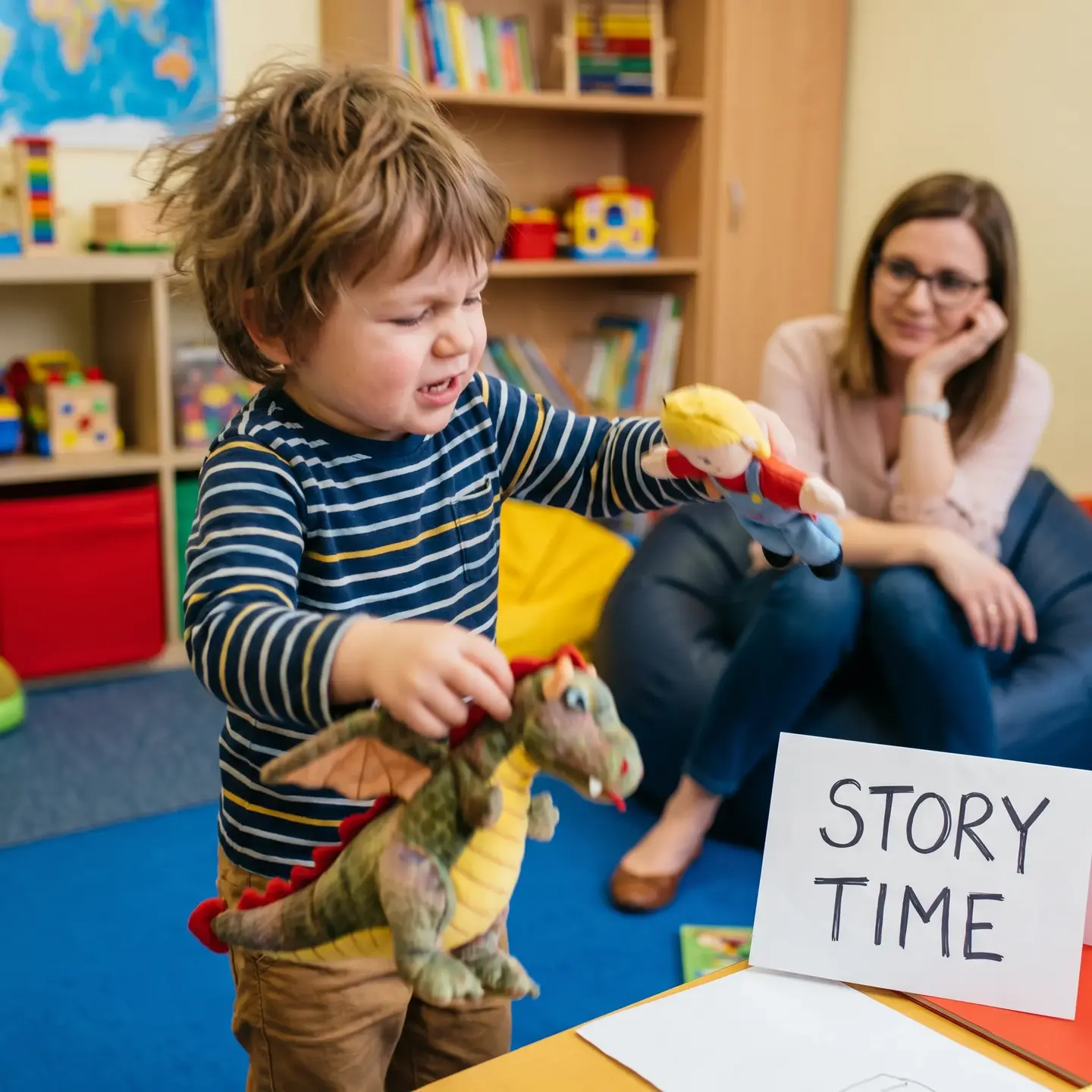
Child playing with puppets

Play Therapy Is Real Therapy

We want to be clear: play therapy is not a lesser form of treatment or a placeholder until children are “old enough” for real therapy. It is a sophisticated, evidence-based intervention specifically designed to meet children where they are developmentally. The American Psychological Association’s overview of play therapy recognizes play therapy as a legitimate therapeutic approach with demonstrated effectiveness.

When your child engages in what looks like play during therapy, they are doing the hard work of healing—processing difficult emotions, working through challenging experiences, and building the internal resources they need to thrive. The therapist observing and responding to that play is applying years of specialized training to facilitate genuine psychological change.

If you’re considering play therapy for your child or wondering whether your child’s current treatment is working, we encourage you to explore our Individual Therapy — Children (9-10) services. Our team specializes in working with children and families through evidence-based, developmentally appropriate approaches that honor how children naturally communicate and heal.

The question is not whether play therapy is “real” therapy. The question is whether your child has access to a trained professional who understands how to harness the therapeutic power of play in service of their growth and healing. When that alignment happens, what looks like play becomes the pathway to genuine, lasting change.

Frequently Asked Questions

Through play, children express their feelings in a safe, controlled way. They create emotional distance from painful experiences, practice mastery and control through storytelling, and repeat important themes until feelings become manageable. This process supports real emotional and behavioral change over time.

Create regular time for unstructured, child-led play and attend sessions consistently. Share relevant updates with the therapist, but avoid grilling your child about sessions or interpreting their play. Your job is providing safety and space, while the therapist handles therapeutic meaning-making.

Most children under ten don’t have the abstract thinking, emotional vocabulary, or brain development needed to clearly explain their feelings. Expecting them to sit and discuss anxiety or self-esteem is asking for something they aren’t neurologically ready to do. Play gives them a concrete way to show what they can’t yet say.

Progress is often gradual and subtle. You might notice fewer or less intense meltdowns, better ability to name feelings, more flexible problem-solving, improved sleep or appetite, or smoother peer interactions. Sessions may still look like just playing from the outside, but meaningful change is happening.

In play therapy, the play itself is the therapy. Your child uses toys, art, and stories to express and process feelings in a developmentally appropriate way. A trained therapist guides the session, watching for themes, patterns, and emotional shifts rather than focusing on traditional talk therapy methods.

Dr. Zia Lakdawalla
Dr. Zia Lakdawalla
I am a registered clinical psychologist who specializes in working with children, adolescents, and parents. My goal is to help clients cope with uncomfortable feelings, improve relationships, and increase competency and efficacy in managing the demands of each new stage of development.I am also a strong believer that the environment in which kids are immersed is a critical factor in how they learn to regulate their emotions and build resilience.

Take the first step toward calm, connected parenting

You don’t have to keep guessing. With the right tools and support, parenting can feel easier—and your child can thrive.

Book a Free Consultation

How we Treat

What we Treat

Play Therapy for Children: How Therapists Help Kids Heal Through Play

Therapeutic Approaches

By: Dr. Zia

A child is playing with wooden toy animals and blocks on a shelf while books are also displayed on the shelf. In the background, a woman is smiling and watching the child. The setting appears to be a playroom or child's bedroom with other toys and storage visible.

When parents first observe their child in a therapy session, they often expect to see something resembling a conversation—perhaps their child sitting on a couch, talking through their worries or frustrations with a caring adult. Instead, they watch their child arrange figurines on a shelf, build a tower only to knock it down, or engage in what appears to be an elaborate game with dolls and toy animals. A natural question arises: “Is this really therapy, or is my child just playing?”

We understand this concern deeply. At our practice, we hear it regularly from parents who genuinely want the best for their children but feel uncertain about whether sessions spent with toys and art supplies constitute legitimate treatment. The truth is that play therapy represents one of the most sophisticated and developmentally appropriate interventions available for young children. Far from being a distraction from therapy, play is the therapy—a carefully structured, evidence-based approach that allows children to process emotions, work through difficult experiences, and develop healthier ways of relating to themselves and others.

Child building tower blocks

Who This Article Is For—And Who It’s Not For

This article is written specifically for parents and caregivers of children roughly ages five through ten who are considering therapy or whose children are already engaged in play-based treatment. It’s for families who want to understand what’s actually happening during their child’s sessions and why this approach is effective.

This article is not intended for:

  • Parents of adolescents, who typically benefit from different therapeutic modalities
  • Those seeking information about group therapy programs
  • Readers looking for condition-specific treatment information (such as OCD or trauma protocols)
  • Mental health professionals seeking clinical training resources

If you’re a parent wondering whether your child’s play therapy sessions are “working” or seeking to understand the method behind what might look like mere play, you’re in the right place.

Why Children Can’t “Just Talk” About Their Problems

Adults naturally process experiences through language. When something difficult happens, we talk it through with friends, journal about it, or discuss it with a therapist. We assume children can do the same—that if we simply ask the right questions, they’ll tell us what’s bothering them.

However, children’s brains work differently, and understanding your child’s emotional development helps explain why talk-based approaches often fall short.

Developmental Limitations in Verbal Processing

Children under age ten or eleven are still developing their capacity for abstract thinking. The parts of the brain responsible for putting complex emotions into words, reflecting on internal states, and understanding cause-and-effect relationships across time are not yet fully developed. When we ask a seven-year-old, “Why do you feel anxious?” we’re asking them to perform a cognitive task they may not yet be capable of completing.

Consider these developmental realities:

  • Limited emotional vocabulary: Children may feel a hundred different shades of distress but only have words for “mad,” “sad,” or “scared”
  • Concrete thinking: Abstract concepts like “anxiety” or “self-esteem” don’t translate easily into a child’s concrete understanding of the world
  • Action-oriented processing: Children naturally learn and process through doing, moving, and manipulating their environment
  • Memory encoding: Young children often store experiences as sensory and emotional impressions rather than verbal narratives

Play as the Child’s Natural Language

Just as adults process experiences by talking them through with friends, children process experiences by playing them through. Play is not a lesser form of communication—it’s the developmentally appropriate form of communication for children. When a child creates a story with figurines, builds and destroys structures, or draws pictures of their inner world, they’re engaging in the same kind of meaningful processing that adults do through conversation.

This is why our individual therapy for children ages 9-10 relies heavily on play-based approaches. We’re meeting children where they are developmentally, using the communication medium that makes sense to them.

The Science Behind Play Therapy: How Play Processes Emotion

Play therapy isn’t effective simply because children enjoy it. The therapeutic power of play rests on well-established psychological mechanisms that facilitate genuine emotional healing and growth.

Externalization of Internal Experience

When a child is overwhelmed by big feelings, those feelings can seem all-consuming and impossible to manage. Play allows children to externalize internal experiences—to take what’s happening inside and represent it outside, where it can be examined, manipulated, and ultimately mastered.

A child who feels powerless might create play scenarios where a small figure defeats a much larger one. A child processing a frightening medical experience might repeatedly “treat” stuffed animals with toy medical equipment. Through these play narratives, children gain distance from overwhelming emotions while still engaging with them meaningfully.

Creating Psychological Distance

Talking directly about painful experiences can feel threatening and overwhelming. Play provides a protective layer—a child can explore themes of abandonment through a story about a lost puppy rather than directly discussing their parents’ divorce. This symbolic distance doesn’t diminish the therapeutic work; it enables it by keeping the child within their window of tolerance.

Mastery and Control

Many childhood difficulties stem from experiences of helplessness—traumatic events, overwhelming emotions, or situations where the child had no control. In play, children become the directors of their own narratives. They decide what happens, who wins, and how conflicts resolve. This experience of agency and mastery can be profoundly healing.

Repetitive Processing

Parents sometimes notice their child returning to the same play themes again and again. This repetition serves an important function. Just as adults might need to tell the story of a difficult experience multiple times before feeling resolution, children need to play through challenging material repeatedly. Each repetition allows for slightly different outcomes, gradually integrating the experience and reducing its emotional charge.

According to peer-reviewed research on play therapy efficacy, these mechanisms contribute to measurable improvements in children’s emotional and behavioral functioning.

Types of Play Therapy: Directive vs. Non-Directive Approaches

Not all play therapy looks the same. Understanding the two primary approaches helps parents know what to expect and why their child’s sessions might unfold in particular ways.

Non-Directive (Child-Centered) Play Therapy

In child-centered play therapy, the child leads the session entirely. The therapist creates a safe, accepting environment stocked with carefully selected toys and materials, then follows the child’s lead. The therapist:

  • Tracks the child’s behavior verbally (“You’re putting the family together in the house”)
  • Reflects feelings (“That lion seems really angry”)
  • Sets only necessary limits for safety
  • Avoids directing, questioning, or interpreting the play

This approach trusts the child’s innate capacity for growth and self-direction. By providing unconditional acceptance and empathic presence, the therapist creates conditions where the child can naturally work through their challenges.

Sandbox play therapy scene

Directive Play Therapy

In directive approaches, the therapist takes a more active role, introducing specific activities or themes designed to address the child’s treatment goals. A therapist might:

  • Introduce a specific game to teach emotion identification
  • Use puppets to help a child practice social skills
  • Guide a sand tray activity focused on a particular theme
  • Incorporate cognitive-behavioral techniques within playful activities

Which Approach Is Right for Your Child?

Many therapists, including those at our practice, use an integrative approach—drawing on both directive and non-directive methods based on what each child needs. A child might benefit from the freedom of child-centered sessions while also engaging in more structured activities to build specific skills.

Our our evidence-based therapeutic approach emphasizes tailoring treatment to each child’s unique needs, developmental stage, and presenting concerns rather than applying a one-size-fits-all method.

What Therapists Observe and Interpret During Play

Perhaps nothing transforms parents’ understanding of play therapy more than learning what trained therapists actually see during sessions. What appears to be aimless play to an untrained observer reveals rich clinical information to a skilled play therapist.

Themes and Patterns

Therapists track recurring themes across sessions:

  • Power and control: Who wins in the child’s play narratives? Who has power, and who doesn’t?
  • Nurturance and care: Does the child engage in caregiving play? How do they treat vulnerable figures?
  • Danger and safety: Are play scenarios chaotic or organized? Do characters find safety or remain threatened?
  • Connection and isolation: How do figures relate to each other? Are characters lonely or connected?

Choice of Toys and Materials

The toys a child gravitates toward provide meaningful information. A child consistently drawn to aggressive toys (dinosaurs, soldiers, weapons) may be working through themes of anger or vulnerability. A child who primarily uses nurturing toys (baby dolls, medical kits) might be processing caregiving relationships or their own need for care.

Role Assignment

When children assign roles in play—to the therapist, to themselves, or to toy figures—they reveal aspects of their internal world. A child who always assigns themselves the role of the baby while the therapist becomes the parent may be expressing unmet dependency needs. A child who consistently becomes the powerful protector might be managing feelings of vulnerability by taking on a strong role in fantasy.

How Conflicts Resolve

Therapists pay close attention to how problems get solved in children’s play:

  • Does the child find satisfying resolutions, or do conflicts remain unresolved?
  • Are solutions realistic and adaptive, or do they rely on magic or avoidance?
  • Can the child tolerate ambiguity, or must every scenario have a clear winner?

Emotional Expression

The affect accompanying play tells its own story. A child might narrate happy scenarios with flat or sad expression, or become intensely engaged during aggressive play. These emotional signals help therapists understand what the play means to the child.

The Association for Play Therapy’s research on therapeutic outcomes demonstrates that this kind of sophisticated clinical observation, combined with skilled therapeutic response, leads to meaningful improvements in children’s functioning.

How Parents Can Support Play Therapy at Home

Parents often ask us how they can help their child’s therapy progress. While the therapeutic work happens primarily in session, parents play a crucial supportive role.

What to Do

  1. Create space for unstructured play at home. In our activity-packed world, children often lack time for the kind of self-directed play that supports emotional processing. Building regular unstructured play time into your family’s routine complements therapeutic work.
  2. Notice without interrogating. If your child spontaneously shares something about their session or enacts therapy-related themes at home, listen with curiosity rather than probing for details.
  3. Communicate with the therapist. Share observations about changes you’re noticing at home, new stressors, or concerns. This information helps therapists adjust their approach.
  4. Maintain consistent attendance. Regular, predictable sessions are essential for building the therapeutic relationship and maintaining momentum.
  5. Be patient with the process. Meaningful change often takes time, and progress isn’t always linear.

What to Avoid

  • Don’t ask your child to report on sessions. The therapy space needs to remain private and separate from the rest of the child’s life.
  • Avoid interpreting your child’s play at home. While it’s natural to wonder what things “mean,” leave interpretation to the trained therapist.
  • Don’t expect immediate behavioral changes. Internal shifts often precede external changes, and healing doesn’t follow a predictable timeline.
  • Resist the urge to direct your child’s play. When playing at home, let your child lead rather than steering toward “therapeutic” themes.

Our parent coaching services can provide more personalized guidance on supporting your child’s therapy while building your own confidence and skills as a parent.

What to Expect: The Play Therapy Process

Understanding the typical arc of play therapy helps parents calibrate expectations and recognize progress.

Session Structure

Play therapy sessions typically last 45 to 50 minutes and occur weekly. The playroom is equipped with carefully selected toys and materials—not just any toys, but those that allow for expression across a range of themes (family, aggression, nurturance, construction and destruction, fantasy, and real-life scenarios).

Most children do not have parents in the room during sessions, though parents typically meet regularly with the therapist to discuss progress and receive guidance. This separation helps children experience the therapy space as truly their own.

How Long Does Play Therapy Take?

Research suggests that many children show meaningful improvements within 8 to 16 sessions, though this varies considerably based on the complexity of the child’s difficulties, family circumstances, and individual factors. Children with more chronic or complex issues may benefit from longer-term treatment.

It’s helpful to think of play therapy as a process rather than a quick fix. Early sessions focus on building trust and establishing the therapeutic relationship. Middle sessions involve deeper exploration and processing. Later sessions consolidate gains and prepare for ending.

Signs of Progress Parents Can Watch For

Because the work happens through play rather than direct conversation, progress can be subtle. Parents might notice:

  • Slightly fewer or less intense emotional outbursts
  • Increased ability to name or express feelings
  • Improved flexibility or problem-solving
  • Better sleep or appetite
  • More positive peer interactions
  • Increased willingness to try new things
  • Greater emotional vocabulary

Sometimes children actually show increased emotional expression initially as they begin to feel safe enough to bring feelings to the surface. This can feel like a step backward but often represents important therapeutic movement.

How Therapists Communicate Progress

Play therapists maintain the child’s confidentiality—they won’t share the specific content of sessions. However, they do communicate with parents about general themes, progress toward treatment goals, and recommendations for supporting the child at home. This balance protects the therapeutic relationship while keeping parents appropriately informed and involved.

Child playing with puppets

Play Therapy Is Real Therapy

We want to be clear: play therapy is not a lesser form of treatment or a placeholder until children are “old enough” for real therapy. It is a sophisticated, evidence-based intervention specifically designed to meet children where they are developmentally. The American Psychological Association’s overview of play therapy recognizes play therapy as a legitimate therapeutic approach with demonstrated effectiveness.

When your child engages in what looks like play during therapy, they are doing the hard work of healing—processing difficult emotions, working through challenging experiences, and building the internal resources they need to thrive. The therapist observing and responding to that play is applying years of specialized training to facilitate genuine psychological change.

If you’re considering play therapy for your child or wondering whether your child’s current treatment is working, we encourage you to explore our Individual Therapy — Children (9-10) services. Our team specializes in working with children and families through evidence-based, developmentally appropriate approaches that honor how children naturally communicate and heal.

The question is not whether play therapy is “real” therapy. The question is whether your child has access to a trained professional who understands how to harness the therapeutic power of play in service of their growth and healing. When that alignment happens, what looks like play becomes the pathway to genuine, lasting change.

Group Therapy… Why I think it may be right for you

As we recover from the COVID 19 pandemic, many families are struggling. Children are facing challenges at school and at …

Read more

Empowering Parents: Effective Strategies for Parenting Anxious Children [Podcast]

In this enlightening YouTube video, child psychologist Dr. Zia Lakdawala shares her wealth of knowledge and experience i…

Read more

A Parent’s Guide to Starting Child/Teen Therapy at FFEW

Taking the first step towards your child’s mental health journey can feel overwhelming, but it’s also one of…

Read more