Serving all Ontario residents | In-person and virtual appointments available

Call us today

(647) 360-3294

Skip to content
Back to Blog

Therapeutic Approaches

When Your Teen Refuses Therapy: A Parent’s Guide to Resistance and Alternatives

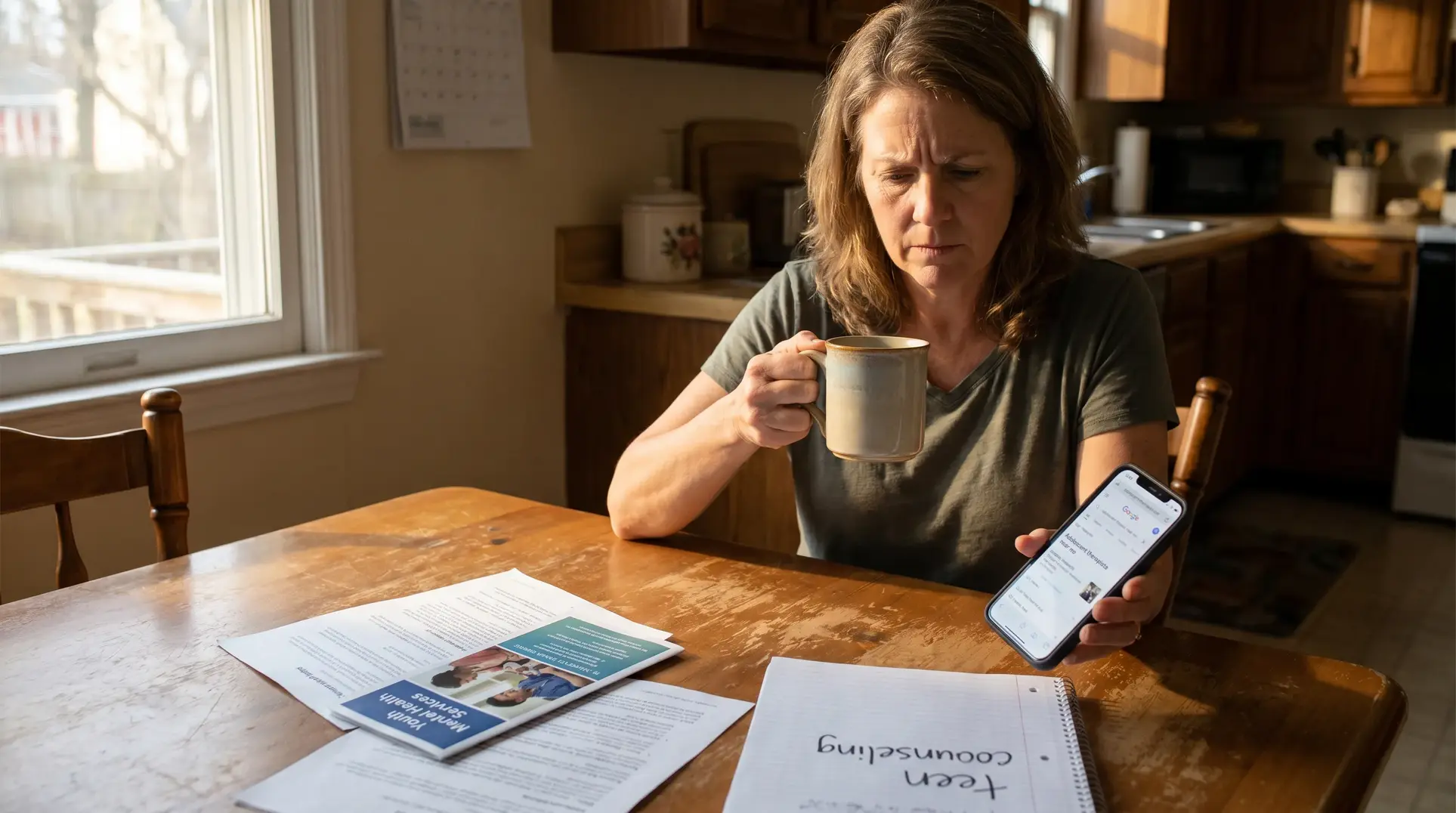
A person is seated at a wooden kitchen table, holding a mug and looking at a smartphone. On the table are papers, including a brochure titled 'Youth Mental Health Services' and a notebook labeled 'Teen Counseling.' Natural light streams in through a nearby window, indicating a home setting.

Few experiences are as isolating as watching your teenager struggle—maybe with anxiety that keeps them home from school, a persistent sadness that has stolen their spark, or emotional volatility that leaves the whole household walking on eggshells—while they flatly refuse the help you know could make a difference. You have done the research. You have found a therapist who seems like a good fit. And your teen has looked you in the eye and said, “I’m not going.” The frustration, fear, and helplessness that follow are real, and if you are reading this, we want you to know: you are not alone, and this situation is far more common than most parents realize.

At our practice, we work with families navigating exactly this tension every week. We have seen parents who feel like failures because their teen will not accept help, and we have seen teens whose resistance actually reflects something important about their developmental needs, their fears, and what they need from the adults in their lives before they can trust the therapeutic process. This article is designed to help you understand what is happening beneath your teen’s refusal, distinguish between resistance you can work with and refusal that requires a different approach, and discover concrete strategies—including alternatives to traditional therapy—that can support your family even when your adolescent is not ready to walk through a therapist’s door.

Teen alone in nature

Understanding Why Teens Resist Therapy: Their Perspective

Before we can address your teen’s refusal effectively, we need to understand what is driving it. Adolescent resistance to therapy is rarely simple stubbornness or a lack of caring about their own wellbeing. More often, it reflects a complex intersection of developmental needs, symptom-driven barriers, and legitimate concerns that deserve our attention.

Developmental Factors at Play

Adolescence is fundamentally about identity formation and autonomy-seeking. Your teen is in the process of figuring out who they are, separate from you, and asserting control over their internal world is a crucial part of that developmental task. When an adult—even a well-meaning parent—suggests that a stranger should have access to their thoughts and feelings, it can feel like a threat to the very independence they are working so hard to establish.

This is not defiance for its own sake. According to research published in the Journal of the American Academy of Child and Adolescent Psychiatry, when adolescents say they do not want help, they are often communicating something essential about autonomy, fear, and trust. Refusal can actually guide engagement if adults are willing to listen to what it means rather than simply trying to overcome it.

How Symptoms Fuel Resistance

The very conditions that make therapy necessary can also make it feel impossible to accept. Consider how different teen mental health concerns create their own barriers:

  • Depression often brings hopelessness—a genuine belief that nothing will help, so why bother trying
  • Anxiety can make the prospect of talking to a stranger feel overwhelming or even dangerous
  • Teenage depression frequently manifests as irritability in adolescents, making them more likely to push back against parental suggestions
  • Shame about their struggles can make the idea of discussing them feel unbearable

When you understand that your teen’s resistance may actually be a symptom of what they are struggling with—not a character flaw—it becomes easier to respond with compassion rather than frustration.

Stigma and Identity Concerns

Research consistently shows that perceived stigma is one of the most powerful deterrents to adolescent help-seeking. Your teen may fear being labeled as “crazy,” “broken,” or different from their peers. They may worry about what therapy says about them as a person, or whether information might somehow get back to friends or teachers. These concerns are not irrational—they reflect real social dynamics that adolescents navigate daily.

Resistance vs. Refusal: Reading the Difference

One of the most important distinctions we can make as parents is between resistance and refusal. These look similar on the surface but require very different responses.

Signs of Resistance (Workable Ambivalence)

Resistance typically involves ambivalence—your teen may say “no” but leave some door open. Watch for:

  • Statements like “Maybe later” or “Not right now” rather than absolute refusals
  • Asking questions about what therapy involves, even while expressing reluctance
  • Willingness to discuss their struggles with you, even if they reject professional help
  • Expressing specific concerns (confidentiality, stigma, logistics) that could potentially be addressed
  • Different responses depending on how the conversation is framed

Resistance suggests your teen is not ready yet but could become ready with the right approach, information, or timing.

Signs of Refusal (Firm Boundary)

True refusal is more absolute and may include:

  • Consistent, unwavering “no” responses regardless of how you approach the topic
  • Shutting down or leaving when therapy is mentioned
  • No engagement with questions or information about the process
  • Clear statements like “I will never talk to a therapist” with no apparent room for negotiation

When you are facing true refusal, continuing to push often damages your relationship without increasing the likelihood of engagement. In these cases, alternative strategies become essential.

Strategies for Increasing Teen Buy-In

If your teen shows signs of resistance rather than outright refusal, there are evidence-based approaches that can help shift their willingness. Think of these as experiments to try, not guaranteed solutions—different teens respond to different approaches.

Give Them Choice and Control

Since autonomy is central to adolescent development, building it into the process can reduce resistance:

  • Let them choose the therapist. Offer to set up brief consultations with two or three therapists and let your teen decide who feels like the best fit. Our Individual Therapy — Adolescents (11-19) services include initial sessions designed to help teens determine whether the therapeutic relationship feels right.
  • Offer format options. Some teens are more open to online sessions, walk-and-talk therapy, or creative approaches than traditional office-based talk therapy.
  • Propose a trial period. “Would you be willing to try three sessions and then decide?” is often more acceptable than an open-ended commitment.

Reframe What Therapy Is

Many teens resist therapy because they imagine it means lying on a couch while someone analyzes them. Reframing can help:

  • Position it as coaching or skill-building. The Child Mind Institute recommends presenting therapists as coaches who teach new skills to improve your teen’s “game”—whether that is managing stress, improving sleep, navigating relationships, or performing better academically.
  • Emphasize that it is time-limited. Once they have developed the skills they need, the “coach” is no longer necessary.
  • Focus on their goals, not yours. Ask what they would want to get out of therapy if they did go—better sleep, less conflict with friends, feeling less overwhelmed—and frame it around their priorities.

Teenager with school counselor

Address Specific Concerns Directly

If your teen has expressed particular worries, address them honestly:

  • Confidentiality: Explain that therapists are legally and ethically bound to keep what teens share private, with specific exceptions (imminent danger to self or others). Offer to have the therapist explain their confidentiality policies directly.
  • Stigma: Normalize therapy by sharing that many successful people work with therapists, or by being open about your own experiences with professional support if applicable.
  • Fear of being “fixed”: Clarify that how therapy helps teenagers is not about changing who they are but about giving them tools to feel better and function more effectively.

Use Conversations, Not Lectures

Research on motivational interviewing shows that exploring ambivalence collaboratively is more effective than persuasion. Try questions like:

  • “What worries you most about talking to someone?”
  • “If therapy could help with one thing, what would you want it to be?”
  • “What would need to be different for you to consider it?”

Listen more than you talk. Reflect back what you hear. Validate their concerns before offering information.

When to Respect Your Teen’s ‘No’ and When to Insist

This is perhaps the most difficult terrain for parents to navigate. We believe deeply in respecting adolescent autonomy, and we also know that sometimes teens need adults to step in—even over their objections—to keep them safe.

When Parental Override Is Necessary

Certain situations require intervention regardless of your teen’s willingness:

  • Active suicidal ideation with intent or a plan
  • Recent suicide attempts or serious self-harm
  • Severe functional impairment—inability to attend school, eat regularly, or maintain basic self-care
  • Psychotic symptoms such as hallucinations or delusions
  • Substance use that poses immediate danger

In these cases, safety trumps autonomy. You may need to pursue urgent evaluation, crisis services, or even involuntary hospitalization. This is not about control—it is about keeping your child alive until they are stable enough to participate in their own recovery.

When Respecting Autonomy May Be Appropriate

For milder presentations—moderate adolescent anxiety symptoms, low mood that does not prevent daily functioning, interpersonal conflicts—forcing therapy often backfires. Your teen may attend physically while refusing to engage meaningfully, or the power struggle may damage your relationship and make them less likely to seek help later.

Consider respecting their “no” (at least temporarily) when:

  • There is no immediate safety concern
  • Your teen has other sources of support they are using (trusted adult, school counselor, supportive friend)
  • They are functioning adequately in key domains (school, relationships, self-care)
  • The timing is particularly challenging (major life transition, recent loss)

How to Insist Without Destroying Trust

When you must override your teen’s objections:

  1. Be clear about your reasoning. “I hear that you do not want to go, and I am requiring this because your safety is my responsibility. This is not negotiable right now.”
  2. Acknowledge their feelings. “I know this feels unfair. I understand you are angry with me.”
  3. Offer what choice you can. “You do not get to skip the evaluation, but you can choose which parent comes with you.”
  4. Keep the door open. “We can revisit this when things are more stable. Right now, this is what has to happen.”

Alternatives When Traditional Therapy Is Not Working

Sometimes your teen genuinely is not ready for weekly office-based therapy—and that does not mean there is nothing you can do. These alternatives are not inferior substitutes; they are valid pathways that may provide sufficient support on their own or eventually lead to therapy readiness.

Parent Coaching

Here is something many parents do not realize: you can create meaningful change in your teen’s emotional environment even when they refuse direct treatment. Our parent coaching services help parents understand the “why” behind challenging behaviors, reduce escalation patterns, and create conditions where teens feel safer expressing vulnerability.

Parent coaching is particularly valuable when:

  • Your teen refuses all professional contact
  • Family conflict is high and you want to de-escalate
  • You want guidance on how to respond to your teen’s struggles
  • You need support managing your own anxiety about the situation

Programs like our parenting emotionally intense teens group specifically address the parent-side skills needed when adolescents are struggling but not engaging in their own therapy.

School-Based Supports

School counselors can serve as bridges to formal treatment. A teen who refuses to see a “therapist” may be willing to check in with a trusted counselor they already know. These relationships can:

  • Provide immediate support
  • Normalize talking about emotional struggles
  • Eventually facilitate referrals when your teen is more ready

Peer Support and Group Programs

Some teens who balk at individual therapy are more comfortable in group settings or peer support programs. These formats can reduce the intensity of one-on-one adult attention while providing meaningful connection and skill-building.

Digital and Self-Help Resources

Evidence shows that digital mental health interventions can produce significant improvements in anxiety and depression symptoms for young people. Apps, online programs, and self-help books may feel more acceptable to a teen who values privacy and control. While these are not replacements for therapy for adolescents with moderate to severe symptoms, they can be meaningful first steps.

Strategic Waiting

Sometimes the answer is patience. A teen who is not ready today may become ready in three months or a year. During this time, your job is to:

  • Keep communication open
  • Continue offering support without pressure
  • Monitor for worsening symptoms
  • Maintain your own wellbeing and regulation

Maintaining Your Relationship During the Conflict

Perhaps the most important thing we can tell you is this: the parent-teen relationship is itself therapeutic. Protecting it matters, even when—especially when—formal therapy is not happening.

Your Presence Is an Intervention

Staying connected, emotionally available, and regulated in the face of your teen’s struggles is valuable, measurable intervention. Research shows that adolescents who feel their parents are emotionally available and nonjudgmental are more likely to eventually accept some form of support.

Avoid Making Therapy the Only Conversation

If every interaction becomes about whether your teen will go to therapy, you risk losing connection entirely. Continue engaging around other topics—their interests, daily life, shared activities. Keep the relationship larger than this one conflict.

Manage Your Own Anxiety

Your fear for your teen is valid, but when it drives constant pressure, it often increases resistance. Consider what you need to manage your own anxiety about the situation. Parent consultation, your own therapy, support from friends—these resources help you show up more effectively for your teen.

Know That This Is Hard

Watching your child struggle while feeling unable to help is one of parenting’s most painful experiences. We see you. Your distress is legitimate. And your willingness to keep trying, to read articles like this one, to search for alternatives—that matters.

Teenager walking away in sunlight

Moving Forward

Resistance to therapy is common, and multiple pathways exist. Some teens who refuse treatment today become eager participants later. Others find sufficient support through alternatives. Many benefit from family-level changes even when they never engage in individual therapy.

What matters most is that you stay connected, stay regulated, and stay flexible about how support might arrive. The relationship you maintain with your teen through this difficult period is the foundation upon which future help-seeking can be built.

If you are navigating this challenge and want guidance—whether that means exploring how to help your teen become more open to therapy, pursuing parent coaching while they are not ready, or discussing whether your teen’s presentation requires more urgent intervention—we are here. Sometimes the most powerful step is not getting your teen into therapy but getting yourself the support you need to be the steady, regulated presence they require.

Frequently Asked Questions

You still have options including parent coaching to change how you respond and de-escalate conflict, school-based support, peer or group programs, and digital or self-help resources. These can shift the family environment and help your teen feel safer even without traditional weekly therapy.

If your teen still asks questions, shares worries, or says things like maybe later, that is workable resistance. A firm no every time, shutting down when therapy is mentioned, or I will never talk to a therapist with no openness to discussion points to true refusal and calls for a different approach.

Yes. Offer choices such as therapist, format, and trial number of sessions. Frame therapy as coaching or skill-building around their goals and have real conversations instead of lectures. Listening, validating their concerns, and giving them some control can make therapy feel less threatening.

Keep the relationship bigger than the therapy issue. Stay emotionally available, manage your own anxiety with support of your own, and make sure you still talk about their interests, daily life, and shared activities. Your calm steady presence is itself a powerful intervention.

If there are clear safety risks such as suicidal thoughts with a plan, recent attempts or serious self-harm, psychotic symptoms, or severe inability to function, your job is to override their refusal and get urgent help even if they are angry. In these situations keeping them alive and safe comes before respecting their no.

Dr. Zia Lakdawalla
Dr. Zia Lakdawalla
I am a registered clinical psychologist who specializes in working with children, adolescents, and parents. My goal is to help clients cope with uncomfortable feelings, improve relationships, and increase competency and efficacy in managing the demands of each new stage of development.I am also a strong believer that the environment in which kids are immersed is a critical factor in how they learn to regulate their emotions and build resilience.

Take the first step toward calm, connected parenting

You don’t have to keep guessing. With the right tools and support, parenting can feel easier—and your child can thrive.

Book a Free Consultation

How we Treat

What we Treat

When Your Teen Refuses Therapy: A Parent’s Guide to Resistance and Alternatives

Therapeutic Approaches

By: Dr. Zia

A person is seated at a wooden kitchen table, holding a mug and looking at a smartphone. On the table are papers, including a brochure titled 'Youth Mental Health Services' and a notebook labeled 'Teen Counseling.' Natural light streams in through a nearby window, indicating a home setting.

Few experiences are as isolating as watching your teenager struggle—maybe with anxiety that keeps them home from school, a persistent sadness that has stolen their spark, or emotional volatility that leaves the whole household walking on eggshells—while they flatly refuse the help you know could make a difference. You have done the research. You have found a therapist who seems like a good fit. And your teen has looked you in the eye and said, “I’m not going.” The frustration, fear, and helplessness that follow are real, and if you are reading this, we want you to know: you are not alone, and this situation is far more common than most parents realize.

At our practice, we work with families navigating exactly this tension every week. We have seen parents who feel like failures because their teen will not accept help, and we have seen teens whose resistance actually reflects something important about their developmental needs, their fears, and what they need from the adults in their lives before they can trust the therapeutic process. This article is designed to help you understand what is happening beneath your teen’s refusal, distinguish between resistance you can work with and refusal that requires a different approach, and discover concrete strategies—including alternatives to traditional therapy—that can support your family even when your adolescent is not ready to walk through a therapist’s door.

Teen alone in nature

Understanding Why Teens Resist Therapy: Their Perspective

Before we can address your teen’s refusal effectively, we need to understand what is driving it. Adolescent resistance to therapy is rarely simple stubbornness or a lack of caring about their own wellbeing. More often, it reflects a complex intersection of developmental needs, symptom-driven barriers, and legitimate concerns that deserve our attention.

Developmental Factors at Play

Adolescence is fundamentally about identity formation and autonomy-seeking. Your teen is in the process of figuring out who they are, separate from you, and asserting control over their internal world is a crucial part of that developmental task. When an adult—even a well-meaning parent—suggests that a stranger should have access to their thoughts and feelings, it can feel like a threat to the very independence they are working so hard to establish.

This is not defiance for its own sake. According to research published in the Journal of the American Academy of Child and Adolescent Psychiatry, when adolescents say they do not want help, they are often communicating something essential about autonomy, fear, and trust. Refusal can actually guide engagement if adults are willing to listen to what it means rather than simply trying to overcome it.

How Symptoms Fuel Resistance

The very conditions that make therapy necessary can also make it feel impossible to accept. Consider how different teen mental health concerns create their own barriers:

  • Depression often brings hopelessness—a genuine belief that nothing will help, so why bother trying
  • Anxiety can make the prospect of talking to a stranger feel overwhelming or even dangerous
  • Teenage depression frequently manifests as irritability in adolescents, making them more likely to push back against parental suggestions
  • Shame about their struggles can make the idea of discussing them feel unbearable

When you understand that your teen’s resistance may actually be a symptom of what they are struggling with—not a character flaw—it becomes easier to respond with compassion rather than frustration.

Stigma and Identity Concerns

Research consistently shows that perceived stigma is one of the most powerful deterrents to adolescent help-seeking. Your teen may fear being labeled as “crazy,” “broken,” or different from their peers. They may worry about what therapy says about them as a person, or whether information might somehow get back to friends or teachers. These concerns are not irrational—they reflect real social dynamics that adolescents navigate daily.

Resistance vs. Refusal: Reading the Difference

One of the most important distinctions we can make as parents is between resistance and refusal. These look similar on the surface but require very different responses.

Signs of Resistance (Workable Ambivalence)

Resistance typically involves ambivalence—your teen may say “no” but leave some door open. Watch for:

  • Statements like “Maybe later” or “Not right now” rather than absolute refusals
  • Asking questions about what therapy involves, even while expressing reluctance
  • Willingness to discuss their struggles with you, even if they reject professional help
  • Expressing specific concerns (confidentiality, stigma, logistics) that could potentially be addressed
  • Different responses depending on how the conversation is framed

Resistance suggests your teen is not ready yet but could become ready with the right approach, information, or timing.

Signs of Refusal (Firm Boundary)

True refusal is more absolute and may include:

  • Consistent, unwavering “no” responses regardless of how you approach the topic
  • Shutting down or leaving when therapy is mentioned
  • No engagement with questions or information about the process
  • Clear statements like “I will never talk to a therapist” with no apparent room for negotiation

When you are facing true refusal, continuing to push often damages your relationship without increasing the likelihood of engagement. In these cases, alternative strategies become essential.

Strategies for Increasing Teen Buy-In

If your teen shows signs of resistance rather than outright refusal, there are evidence-based approaches that can help shift their willingness. Think of these as experiments to try, not guaranteed solutions—different teens respond to different approaches.

Give Them Choice and Control

Since autonomy is central to adolescent development, building it into the process can reduce resistance:

  • Let them choose the therapist. Offer to set up brief consultations with two or three therapists and let your teen decide who feels like the best fit. Our Individual Therapy — Adolescents (11-19) services include initial sessions designed to help teens determine whether the therapeutic relationship feels right.
  • Offer format options. Some teens are more open to online sessions, walk-and-talk therapy, or creative approaches than traditional office-based talk therapy.
  • Propose a trial period. “Would you be willing to try three sessions and then decide?” is often more acceptable than an open-ended commitment.

Reframe What Therapy Is

Many teens resist therapy because they imagine it means lying on a couch while someone analyzes them. Reframing can help:

  • Position it as coaching or skill-building. The Child Mind Institute recommends presenting therapists as coaches who teach new skills to improve your teen’s “game”—whether that is managing stress, improving sleep, navigating relationships, or performing better academically.
  • Emphasize that it is time-limited. Once they have developed the skills they need, the “coach” is no longer necessary.
  • Focus on their goals, not yours. Ask what they would want to get out of therapy if they did go—better sleep, less conflict with friends, feeling less overwhelmed—and frame it around their priorities.

Teenager with school counselor

Address Specific Concerns Directly

If your teen has expressed particular worries, address them honestly:

  • Confidentiality: Explain that therapists are legally and ethically bound to keep what teens share private, with specific exceptions (imminent danger to self or others). Offer to have the therapist explain their confidentiality policies directly.
  • Stigma: Normalize therapy by sharing that many successful people work with therapists, or by being open about your own experiences with professional support if applicable.
  • Fear of being “fixed”: Clarify that how therapy helps teenagers is not about changing who they are but about giving them tools to feel better and function more effectively.

Use Conversations, Not Lectures

Research on motivational interviewing shows that exploring ambivalence collaboratively is more effective than persuasion. Try questions like:

  • “What worries you most about talking to someone?”
  • “If therapy could help with one thing, what would you want it to be?”
  • “What would need to be different for you to consider it?”

Listen more than you talk. Reflect back what you hear. Validate their concerns before offering information.

When to Respect Your Teen’s ‘No’ and When to Insist

This is perhaps the most difficult terrain for parents to navigate. We believe deeply in respecting adolescent autonomy, and we also know that sometimes teens need adults to step in—even over their objections—to keep them safe.

When Parental Override Is Necessary

Certain situations require intervention regardless of your teen’s willingness:

  • Active suicidal ideation with intent or a plan
  • Recent suicide attempts or serious self-harm
  • Severe functional impairment—inability to attend school, eat regularly, or maintain basic self-care
  • Psychotic symptoms such as hallucinations or delusions
  • Substance use that poses immediate danger

In these cases, safety trumps autonomy. You may need to pursue urgent evaluation, crisis services, or even involuntary hospitalization. This is not about control—it is about keeping your child alive until they are stable enough to participate in their own recovery.

When Respecting Autonomy May Be Appropriate

For milder presentations—moderate adolescent anxiety symptoms, low mood that does not prevent daily functioning, interpersonal conflicts—forcing therapy often backfires. Your teen may attend physically while refusing to engage meaningfully, or the power struggle may damage your relationship and make them less likely to seek help later.

Consider respecting their “no” (at least temporarily) when:

  • There is no immediate safety concern
  • Your teen has other sources of support they are using (trusted adult, school counselor, supportive friend)
  • They are functioning adequately in key domains (school, relationships, self-care)
  • The timing is particularly challenging (major life transition, recent loss)

How to Insist Without Destroying Trust

When you must override your teen’s objections:

  1. Be clear about your reasoning. “I hear that you do not want to go, and I am requiring this because your safety is my responsibility. This is not negotiable right now.”
  2. Acknowledge their feelings. “I know this feels unfair. I understand you are angry with me.”
  3. Offer what choice you can. “You do not get to skip the evaluation, but you can choose which parent comes with you.”
  4. Keep the door open. “We can revisit this when things are more stable. Right now, this is what has to happen.”

Alternatives When Traditional Therapy Is Not Working

Sometimes your teen genuinely is not ready for weekly office-based therapy—and that does not mean there is nothing you can do. These alternatives are not inferior substitutes; they are valid pathways that may provide sufficient support on their own or eventually lead to therapy readiness.

Parent Coaching

Here is something many parents do not realize: you can create meaningful change in your teen’s emotional environment even when they refuse direct treatment. Our parent coaching services help parents understand the “why” behind challenging behaviors, reduce escalation patterns, and create conditions where teens feel safer expressing vulnerability.

Parent coaching is particularly valuable when:

  • Your teen refuses all professional contact
  • Family conflict is high and you want to de-escalate
  • You want guidance on how to respond to your teen’s struggles
  • You need support managing your own anxiety about the situation

Programs like our parenting emotionally intense teens group specifically address the parent-side skills needed when adolescents are struggling but not engaging in their own therapy.

School-Based Supports

School counselors can serve as bridges to formal treatment. A teen who refuses to see a “therapist” may be willing to check in with a trusted counselor they already know. These relationships can:

  • Provide immediate support
  • Normalize talking about emotional struggles
  • Eventually facilitate referrals when your teen is more ready

Peer Support and Group Programs

Some teens who balk at individual therapy are more comfortable in group settings or peer support programs. These formats can reduce the intensity of one-on-one adult attention while providing meaningful connection and skill-building.

Digital and Self-Help Resources

Evidence shows that digital mental health interventions can produce significant improvements in anxiety and depression symptoms for young people. Apps, online programs, and self-help books may feel more acceptable to a teen who values privacy and control. While these are not replacements for therapy for adolescents with moderate to severe symptoms, they can be meaningful first steps.

Strategic Waiting

Sometimes the answer is patience. A teen who is not ready today may become ready in three months or a year. During this time, your job is to:

  • Keep communication open
  • Continue offering support without pressure
  • Monitor for worsening symptoms
  • Maintain your own wellbeing and regulation

Maintaining Your Relationship During the Conflict

Perhaps the most important thing we can tell you is this: the parent-teen relationship is itself therapeutic. Protecting it matters, even when—especially when—formal therapy is not happening.

Your Presence Is an Intervention

Staying connected, emotionally available, and regulated in the face of your teen’s struggles is valuable, measurable intervention. Research shows that adolescents who feel their parents are emotionally available and nonjudgmental are more likely to eventually accept some form of support.

Avoid Making Therapy the Only Conversation

If every interaction becomes about whether your teen will go to therapy, you risk losing connection entirely. Continue engaging around other topics—their interests, daily life, shared activities. Keep the relationship larger than this one conflict.

Manage Your Own Anxiety

Your fear for your teen is valid, but when it drives constant pressure, it often increases resistance. Consider what you need to manage your own anxiety about the situation. Parent consultation, your own therapy, support from friends—these resources help you show up more effectively for your teen.

Know That This Is Hard

Watching your child struggle while feeling unable to help is one of parenting’s most painful experiences. We see you. Your distress is legitimate. And your willingness to keep trying, to read articles like this one, to search for alternatives—that matters.

Teenager walking away in sunlight

Moving Forward

Resistance to therapy is common, and multiple pathways exist. Some teens who refuse treatment today become eager participants later. Others find sufficient support through alternatives. Many benefit from family-level changes even when they never engage in individual therapy.

What matters most is that you stay connected, stay regulated, and stay flexible about how support might arrive. The relationship you maintain with your teen through this difficult period is the foundation upon which future help-seeking can be built.

If you are navigating this challenge and want guidance—whether that means exploring how to help your teen become more open to therapy, pursuing parent coaching while they are not ready, or discussing whether your teen’s presentation requires more urgent intervention—we are here. Sometimes the most powerful step is not getting your teen into therapy but getting yourself the support you need to be the steady, regulated presence they require.

Group Therapy… Why I think it may be right for you

As we recover from the COVID 19 pandemic, many families are struggling. Children are facing challenges at school and at …

Read more

Empowering Parents: Effective Strategies for Parenting Anxious Children [Podcast]

In this enlightening YouTube video, child psychologist Dr. Zia Lakdawala shares her wealth of knowledge and experience i…

Read more

A Parent’s Guide to Starting Child/Teen Therapy at FFEW

Taking the first step towards your child’s mental health journey can feel overwhelming, but it’s also one of…

Read more