
Serving all Ontario residents | In-person and virtual appointments available

Call us today

(647) 360-3294

Skip to content
Back to Blog

Therapeutic Approaches

Children’s Anxiety Groups: How Group Therapy Helps Anxious Kids

A group of children sitting in a circle on colorful chairs with an adult, likely their teacher or caregiver, in a well-lit classroom or daycare. They appear to be engaged in a friendly conversation or activity, creating an interactive and welcoming atmosphere.

When we first mention group therapy to parents of anxious children, we often see a flicker of concern cross their faces. The thought of placing a child who already struggles with worry, social fears, or separation anxiety into a room full of peers can feel counterintuitive—even risky. We understand this protective instinct deeply. After all, if your child becomes overwhelmed at birthday parties or dreads raising their hand in class, how could sitting in a circle with other children possibly help?

Yet over years of clinical work with anxious children and their families, we have witnessed something remarkable happen in these group settings. Children who arrived convinced they were the only ones who felt this way discover they are not alone. Shy voices grow stronger as they realize their worries are shared by the child sitting next to them. Skills that felt impossible to practice in a therapist’s office suddenly become manageable when a peer demonstrates them first. The very thing parents fear—exposure to a social situation—becomes the mechanism through which healing occurs.
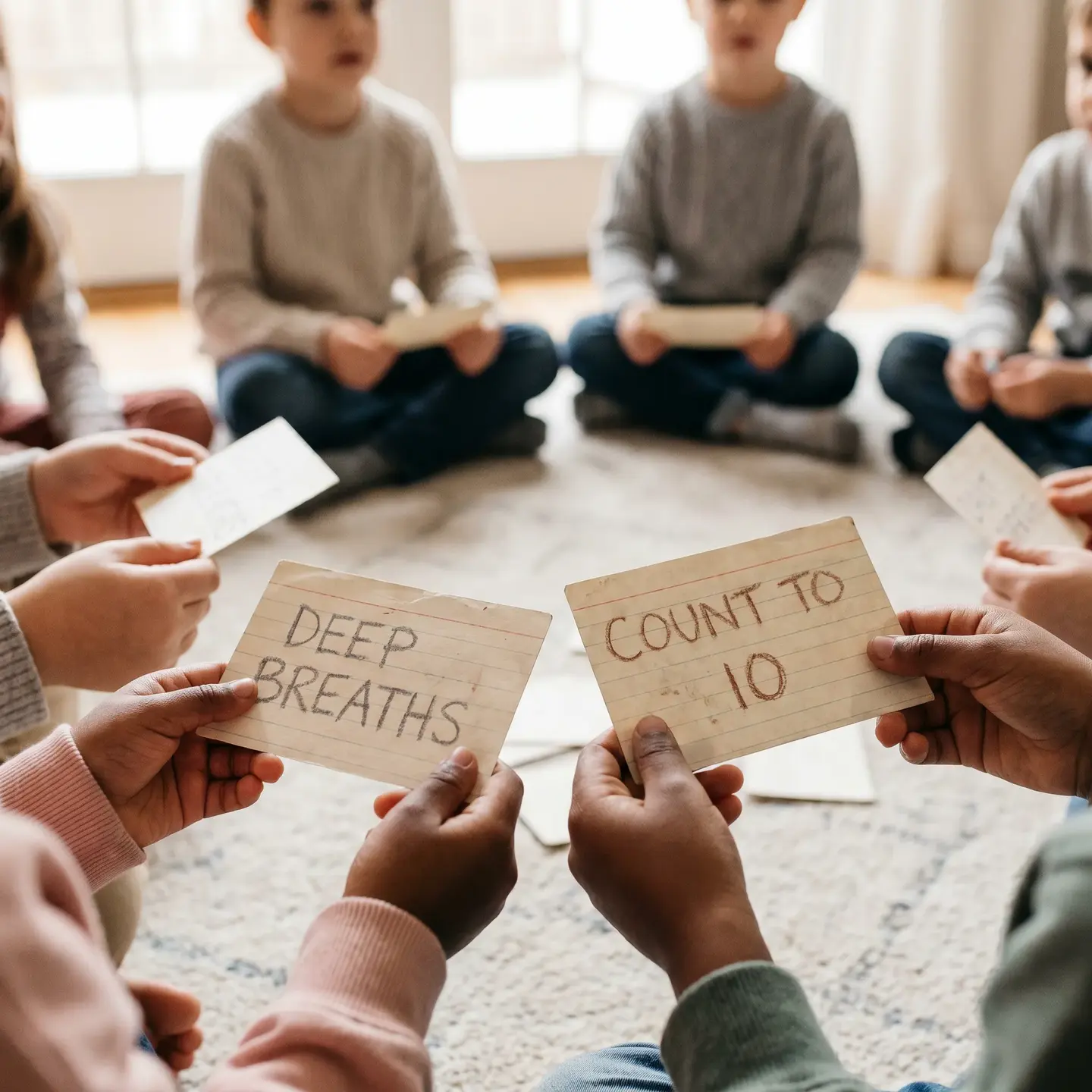
Hands holding therapy cards

Who This Article Is For

This article is written for parents and caregivers who are actively considering whether group therapy might help their anxious child but feel uncertain about whether the group format is appropriate. You may be wondering if your child’s anxiety is “too severe” for a group, or whether they would simply shut down in a room full of unfamiliar faces.

This is not for parents seeking general parenting advice for everyday childhood worries, nor is it a comprehensive guide to all types of therapy for children. If your child is experiencing a mental health crisis, severe school refusal, or complex trauma, individual therapy for children may be a more appropriate starting point before considering group work.

Why Group Therapy Works for Childhood Anxiety (Not Despite It)

The assumption that anxious children will feel worse in a group setting misunderstands how therapeutic groups actually function. Unlike a classroom or birthday party where a child must navigate unpredictable social dynamics, a children’s anxiety group is carefully structured to create safety from the very first moment.

The Power of Shared Experience

One of the most profound shifts we observe happens within the first few sessions: children realize they are not uniquely broken. Many anxious children carry a secret belief that something is fundamentally wrong with them—that other kids don’t have racing hearts before tests, don’t worry about their parents’ safety, don’t feel sick before social events. When they hear a peer describe the exact same experience, something releases.

This normalization effect cannot be replicated in individual therapy, no matter how skilled the therapist. When an adult says, “Many children feel this way,” it lands differently than when a child the same age says, “I do that too.” Research consistently shows that why anxious children benefit from group settings relates directly to this peer validation—it reduces shame and isolation in ways that adult reassurance simply cannot.

Peer Modeling Creates Generalizable Learning

In individual therapy, a child learns coping strategies from an adult professional. While valuable, this learning can feel disconnected from real life. In a group, children watch peers—kids just like them—try a breathing technique or complete an exposure challenge. When they see another nervous child successfully order food at a pretend restaurant or share a worry aloud, they think: If they can do it, maybe I can too.

This peer modeling accelerates learning and builds confidence in ways that individual instruction often cannot. Children are also more likely to try a coping strategy suggested by another child who “gets it” than one recommended by an adult who seems to have everything under control.

Built-In Exposure Practice

For children whose anxiety includes social components—worry about being judged, fear of speaking up, discomfort with unfamiliar people—the group setting itself provides gentle, graduated exposure. Simply attending each week, speaking in a circle, and eventually participating in group activities constitutes meaningful practice.

This is exposure that generalizes. Unlike practicing skills alone with a therapist, practicing with peers more closely mirrors the situations that trigger anxiety in daily life: classrooms, playgrounds, group projects, and social gatherings.

What Happens in a Children’s Anxiety Group: Typical Structure and Activities

Understanding the concrete details of how sessions unfold can ease concerns about what your child will experience. While specific programs vary, most evidence-based children’s anxiety groups follow a similar structure grounded in cognitive behavioral therapy for anxiety.

Creating Safety First

Skilled facilitators never throw anxious children into the deep end. Early sessions focus on:

  • Establishing group agreements about confidentiality and respect
  • Low-pressure introductions and connection-building activities
  • Psychoeducation about anxiety—what it is, why our brains create it, and how it shows up in our bodies
  • Normalizing the experience of anxiety through shared discussion

These foundational sessions build trust and cohesion before any challenging work begins. Children learn that this space is different from other group settings they may have found overwhelming.

Core CBT Components

As the group progresses, sessions typically address:

  1. Identifying triggers: Children learn to recognize what situations, thoughts, or sensations spark their anxiety
  2. Understanding body sensations: Connecting physical feelings (racing heart, stomach aches, sweaty palms) to the anxiety response
  3. Recognizing cognitive distortions: Age-appropriate exploration of thinking traps like catastrophizing or mind-reading
  4. Thought records: Simple frameworks for examining worried thoughts and generating alternatives
  5. Coping strategies: Practical tools including breathing techniques, grounding exercises, and problem-solving approaches

Children practicing breathing

These concepts are taught through activities, games, and discussions rather than lectures, making them accessible and engaging for children.

Graduated Exposure Exercises

The heart of effective anxiety treatment is exposure—gradually facing feared situations in manageable steps. In a group setting, this might include:

  • Sharing a worry aloud with the group
  • Role-playing challenging social situations
  • Practicing coping skills while experiencing mild anxiety
  • Completing small challenges that build toward larger goals

Facilitators carefully calibrate these activities so children feel challenged but not overwhelmed. The group celebrates small victories together, reinforcing that brave behavior is possible and valued.

Typical Program Structure

Most children’s anxiety group programs run for 7 to 10 weeks, with sessions lasting 60 to 90 minutes. Groups are typically organized by age or grade level, with common groupings including ages 7-9, 9-12, or middle school-aged children. This ensures developmental appropriateness and helps children connect with true peers.

Research on structured anxiety programs shows promising outcomes. According to studies on established programs like the Cool Kids Anxiety Program, approximately 65-75% of children who complete treatment are disorder-free afterward, with improved quality of life and reduced rates of anxiety symptoms. Such programs have been validated across diverse settings—the Cool Kids program alone has been translated into 15 languages and used in 24 countries, demonstrating the robustness of group therapy outcomes for childhood anxiety disorders.

How Groups Help Anxious Children Feel Less Alone

The isolation that accompanies childhood anxiety is often invisible to adults. A child may appear to have friends and participate in activities while privately believing that no one truly understands what they experience inside. This hidden loneliness compounds anxiety, creating a cycle of shame and secrecy.

The Difference Between Adult and Peer Validation

When a parent or therapist says, “It’s okay to feel anxious,” a child may hear it as well-meaning but not quite true. Adults seem to have it together. They don’t understand what it really feels like.

When another child says, “I thought I was the only one who worried about that,” something different happens. There is no hierarchy of competence to dismiss. A peer’s validation carries the weight of shared reality. Children often describe this moment as a turning point—the first time they believed they might actually be normal.

From Shame to Connection

Many anxious children have learned to hide their fears, sensing that their worries are excessive or embarrassing. In a group specifically designed for anxious children, hiding becomes unnecessary. The very experiences they have concealed become points of connection rather than sources of shame.

This shift fundamentally changes a child’s relationship with their anxiety. Instead of fighting against a shameful secret, they begin to see their anxiety as a common human experience that can be understood and managed—a perspective central to our evidence-based approach to child anxiety.

Preparing Your Anxious Child for Their First Group Session

How you introduce the idea of group therapy can significantly impact your child’s initial experience. Here are practical strategies we recommend to parents.

What to Say

  • Frame it accurately: “This is a group where kids learn about worry and practice ways to feel braver. Everyone there is learning the same things.”
  • Normalize the purpose: “Lots of kids have big worries, and this group is designed just for them.”
  • Acknowledge their feelings: “It makes sense you might feel nervous about going. That’s actually really normal.”
  • Express confidence: “I believe you can do this, and the grown-ups running the group are really good at helping kids feel comfortable.”

What to Avoid

  • Overselling (“You’re going to love it!”)
  • Minimizing (“It’s no big deal, don’t worry about it”)
  • Excessive details that may increase anticipatory anxiety
  • Presenting it as a choice when you have decided they will attend—this can create power struggles

Practical Preparation

  1. Arrive early: Give your child time to settle into the space before the group begins
  2. Meet the facilitator: If possible, arrange for your child to briefly meet the group leader beforehand
  3. Create a transition ritual: A consistent goodbye phrase or small object they can bring can provide comfort
  4. Plan something neutral afterward: Avoid interrogation; a simple snack or quiet drive home allows processing time

Handling Resistance

It would be unusual for an anxious child not to express some hesitation. Validate their feelings while maintaining gentle confidence in the plan. Avoid excessive reassurance-seeking cycles where you repeatedly promise everything will be fine—this can inadvertently reinforce anxiety. Instead, acknowledge the worry and express belief in their ability to handle it.

If resistance is significant, discussing concerns with the group facilitator or exploring whether parent coaching services might help you navigate this transition can be valuable.

Signs That Group Therapy Is Helping Your Child

Progress in anxiety treatment rarely follows a straight line. Understanding what improvement looks like—including its non-linear nature—helps parents maintain realistic expectations.

Observable Changes

  • Increased willingness to discuss anxiety: Your child may begin using vocabulary from group (“thinking traps,” “brave challenges”) or spontaneously share what they’re learning
  • Independent use of coping strategies: You notice them taking deep breaths before a test or talking themselves through a worry without prompting
  • Reduced avoidance: They show more willingness to try things they previously refused or escaped from
  • Greater self-compassion: Less self-criticism when they feel anxious; understanding that worrying doesn’t make them “weird”
  • Improved peer connections: Sometimes friendships form within the group, or skills learned there translate to other social relationships

What Setbacks Look Like

It is entirely normal for anxiety to temporarily increase during treatment, particularly when exposure work intensifies. Your child might seem more anxious in weeks four through six than they were at the beginning. This is not failure—it often indicates they are doing the hard work of facing fears rather than avoiding them.

Other temporary setbacks might include:

  • Resistance to attending after an initial honeymoon period
  • Increased irritability after challenging sessions
  • Generalization of fears (noticing worries they hadn’t articulated before)

These patterns typically resolve as skills consolidate. If concerns persist, communicating with the group facilitator allows for adjustments and support.

Is Group Therapy Right for Your Child? Key Considerations

While group therapy benefits many anxious children, it is not the right fit for every child at every moment. Here are factors to consider.

Good Candidates for Anxiety Groups

  • Children with mild to moderate anxiety who are functioning in daily life (attending school, maintaining some peer relationships)
  • Children whose anxiety includes social components that would benefit from peer exposure
  • Children who respond well to peer connection and learning from others
  • Families seeking a more affordable option than weekly individual therapy
  • Children who have completed some individual work and are ready to practice skills in a social context

When Individual Therapy May Be Needed First

  • Severe anxiety that prevents the child from separating from parents or entering new settings
  • Significant comorbid conditions (depression, trauma, behavioral challenges) requiring individualized attention
  • Children who are unable to function in school or maintain basic daily routines
  • Situations where the child needs intensive work on foundational coping skills before group exposure

In these cases, individual therapy can build readiness for eventual group participation. Many children benefit from a combination—individual work to establish foundational skills, then group work to practice and generalize them.

Common Parent Questions

How are groups composed? Children are typically grouped by age or developmental level. Facilitators also consider anxiety severity and presentation when forming groups to ensure a good fit.

What about confidentiality? Group agreements about confidentiality are established in age-appropriate ways. Children learn that what is shared in group stays in group, creating a safe space for honest participation.

What if my child is too anxious to participate initially? Skilled facilitators expect this and have strategies for gradual engagement. A child might observe before participating, respond nonverbally at first, or work with a co-facilitator individually while still in the group space. Forcing participation is never the approach.

Writing worry thoughts notes

Taking the Next Step

Deciding whether group therapy is right for your anxious child involves weighing your child’s specific needs, your family’s circumstances, and the available options. The counterintuitive truth is that for many children, the group setting that seems frightening becomes the very context in which they discover courage, connection, and competence.

If you are curious about whether a children’s anxiety group might help your child, exploring our Group Therapy (Hub) page provides more information about our group therapy programs, including current offerings and how to determine fit. For families who want to discuss their child’s specific situation, a consultation can help clarify whether group therapy, individual therapy, or a combination approach makes the most sense.

We have seen anxious children transform in these groups—not because anxiety disappears, but because they learn it does not have to control their lives. They discover they are not alone, that courage is possible, and that the skills they build together with peers can carry them through challenges far beyond the therapy room. That possibility is worth exploring.

Frequently Asked Questions

Groups are usually best for kids with mild to moderate anxiety who can still attend school, manage basic routines, and tolerate being in a room with peers, even if it feels hard. If your child cannot separate from you, is in crisis, has complex trauma, or struggles to function day to day, starting with individual therapy to build basic coping skills and safety is often recommended before joining a group.

Keep your explanation simple and honest: it is a group where kids who worry learn skills to feel braver, and it is normal to be nervous at first. Avoid overselling or minimizing their feelings. Instead, acknowledge their nerves, express confidence that they can handle it, arrive a bit early, and if possible let them briefly meet the facilitator so the first session does not feel like a total unknown.

Helpful changes often start small: your child may talk more openly about worries, use group language like thinking traps or brave challenges, or try coping skills on their own before tests, parties, or drop-offs. You may also notice less avoidance where they attempt things they used to refuse, and a kinder inner voice about their anxiety. Even if they still feel nervous sometimes, they see it as something common and manageable rather than something wrong with them.

Most groups follow a CBT-based structure: building safety and trust, teaching kids to notice triggers and body sensations, spotting thinking traps, and practicing coping tools like breathing and grounding through games, role-plays, and discussion. As the group progresses, kids do small, planned exposure exercises such as sharing a worry or role-playing a scary situation so they can face fears in manageable steps with lots of support.

Unlike a classroom or party, anxiety groups are carefully structured and led by trained facilitators who create safety from the first session. Kids start with low-pressure introductions, clear ground rules, and simple activities so they are never thrown in the deep end. Over time, the very social setting parents worry about becomes a gentle, supported way to practice speaking up, trying coping skills, and realizing other kids feel the same way.

Dr. Zia Lakdawalla
Dr. Zia Lakdawalla
I am a registered clinical psychologist who specializes in working with children, adolescents, and parents. My goal is to help clients cope with uncomfortable feelings, improve relationships, and increase competency and efficacy in managing the demands of each new stage of development.I am also a strong believer that the environment in which kids are immersed is a critical factor in how they learn to regulate their emotions and build resilience.

Take the first step toward calm, connected parenting

You don’t have to keep guessing. With the right tools and support, parenting can feel easier—and your child can thrive.

Book a Free Consultation

How we Treat

What we Treat

Children’s Anxiety Groups: How Group Therapy Helps Anxious Kids

Therapeutic Approaches

By: Dr. Zia

A group of children sitting in a circle on colorful chairs with an adult, likely their teacher or caregiver, in a well-lit classroom or daycare. They appear to be engaged in a friendly conversation or activity, creating an interactive and welcoming atmosphere.

When we first mention group therapy to parents of anxious children, we often see a flicker of concern cross their faces. The thought of placing a child who already struggles with worry, social fears, or separation anxiety into a room full of peers can feel counterintuitive—even risky. We understand this protective instinct deeply. After all, if your child becomes overwhelmed at birthday parties or dreads raising their hand in class, how could sitting in a circle with other children possibly help?

Yet over years of clinical work with anxious children and their families, we have witnessed something remarkable happen in these group settings. Children who arrived convinced they were the only ones who felt this way discover they are not alone. Shy voices grow stronger as they realize their worries are shared by the child sitting next to them. Skills that felt impossible to practice in a therapist’s office suddenly become manageable when a peer demonstrates them first. The very thing parents fear—exposure to a social situation—becomes the mechanism through which healing occurs.

Hands holding therapy cards

Who This Article Is For

This article is written for parents and caregivers who are actively considering whether group therapy might help their anxious child but feel uncertain about whether the group format is appropriate. You may be wondering if your child’s anxiety is “too severe” for a group, or whether they would simply shut down in a room full of unfamiliar faces.

This is not for parents seeking general parenting advice for everyday childhood worries, nor is it a comprehensive guide to all types of therapy for children. If your child is experiencing a mental health crisis, severe school refusal, or complex trauma, individual therapy for children may be a more appropriate starting point before considering group work.

Why Group Therapy Works for Childhood Anxiety (Not Despite It)

The assumption that anxious children will feel worse in a group setting misunderstands how therapeutic groups actually function. Unlike a classroom or birthday party where a child must navigate unpredictable social dynamics, a children’s anxiety group is carefully structured to create safety from the very first moment.

The Power of Shared Experience

One of the most profound shifts we observe happens within the first few sessions: children realize they are not uniquely broken. Many anxious children carry a secret belief that something is fundamentally wrong with them—that other kids don’t have racing hearts before tests, don’t worry about their parents’ safety, don’t feel sick before social events. When they hear a peer describe the exact same experience, something releases.

This normalization effect cannot be replicated in individual therapy, no matter how skilled the therapist. When an adult says, “Many children feel this way,” it lands differently than when a child the same age says, “I do that too.” Research consistently shows that why anxious children benefit from group settings relates directly to this peer validation—it reduces shame and isolation in ways that adult reassurance simply cannot.

Peer Modeling Creates Generalizable Learning

In individual therapy, a child learns coping strategies from an adult professional. While valuable, this learning can feel disconnected from real life. In a group, children watch peers—kids just like them—try a breathing technique or complete an exposure challenge. When they see another nervous child successfully order food at a pretend restaurant or share a worry aloud, they think: If they can do it, maybe I can too.

This peer modeling accelerates learning and builds confidence in ways that individual instruction often cannot. Children are also more likely to try a coping strategy suggested by another child who “gets it” than one recommended by an adult who seems to have everything under control.

Built-In Exposure Practice

For children whose anxiety includes social components—worry about being judged, fear of speaking up, discomfort with unfamiliar people—the group setting itself provides gentle, graduated exposure. Simply attending each week, speaking in a circle, and eventually participating in group activities constitutes meaningful practice.

This is exposure that generalizes. Unlike practicing skills alone with a therapist, practicing with peers more closely mirrors the situations that trigger anxiety in daily life: classrooms, playgrounds, group projects, and social gatherings.

What Happens in a Children’s Anxiety Group: Typical Structure and Activities

Understanding the concrete details of how sessions unfold can ease concerns about what your child will experience. While specific programs vary, most evidence-based children’s anxiety groups follow a similar structure grounded in cognitive behavioral therapy for anxiety.

Creating Safety First

Skilled facilitators never throw anxious children into the deep end. Early sessions focus on:

  • Establishing group agreements about confidentiality and respect
  • Low-pressure introductions and connection-building activities
  • Psychoeducation about anxiety—what it is, why our brains create it, and how it shows up in our bodies
  • Normalizing the experience of anxiety through shared discussion

These foundational sessions build trust and cohesion before any challenging work begins. Children learn that this space is different from other group settings they may have found overwhelming.

Core CBT Components

As the group progresses, sessions typically address:

  1. Identifying triggers: Children learn to recognize what situations, thoughts, or sensations spark their anxiety
  2. Understanding body sensations: Connecting physical feelings (racing heart, stomach aches, sweaty palms) to the anxiety response
  3. Recognizing cognitive distortions: Age-appropriate exploration of thinking traps like catastrophizing or mind-reading
  4. Thought records: Simple frameworks for examining worried thoughts and generating alternatives
  5. Coping strategies: Practical tools including breathing techniques, grounding exercises, and problem-solving approaches

Children practicing breathing

These concepts are taught through activities, games, and discussions rather than lectures, making them accessible and engaging for children.

Graduated Exposure Exercises

The heart of effective anxiety treatment is exposure—gradually facing feared situations in manageable steps. In a group setting, this might include:

  • Sharing a worry aloud with the group
  • Role-playing challenging social situations
  • Practicing coping skills while experiencing mild anxiety
  • Completing small challenges that build toward larger goals

Facilitators carefully calibrate these activities so children feel challenged but not overwhelmed. The group celebrates small victories together, reinforcing that brave behavior is possible and valued.

Typical Program Structure

Most children’s anxiety group programs run for 7 to 10 weeks, with sessions lasting 60 to 90 minutes. Groups are typically organized by age or grade level, with common groupings including ages 7-9, 9-12, or middle school-aged children. This ensures developmental appropriateness and helps children connect with true peers.

Research on structured anxiety programs shows promising outcomes. According to studies on established programs like the Cool Kids Anxiety Program, approximately 65-75% of children who complete treatment are disorder-free afterward, with improved quality of life and reduced rates of anxiety symptoms. Such programs have been validated across diverse settings—the Cool Kids program alone has been translated into 15 languages and used in 24 countries, demonstrating the robustness of group therapy outcomes for childhood anxiety disorders.

How Groups Help Anxious Children Feel Less Alone

The isolation that accompanies childhood anxiety is often invisible to adults. A child may appear to have friends and participate in activities while privately believing that no one truly understands what they experience inside. This hidden loneliness compounds anxiety, creating a cycle of shame and secrecy.

The Difference Between Adult and Peer Validation

When a parent or therapist says, “It’s okay to feel anxious,” a child may hear it as well-meaning but not quite true. Adults seem to have it together. They don’t understand what it really feels like.

When another child says, “I thought I was the only one who worried about that,” something different happens. There is no hierarchy of competence to dismiss. A peer’s validation carries the weight of shared reality. Children often describe this moment as a turning point—the first time they believed they might actually be normal.

From Shame to Connection

Many anxious children have learned to hide their fears, sensing that their worries are excessive or embarrassing. In a group specifically designed for anxious children, hiding becomes unnecessary. The very experiences they have concealed become points of connection rather than sources of shame.

This shift fundamentally changes a child’s relationship with their anxiety. Instead of fighting against a shameful secret, they begin to see their anxiety as a common human experience that can be understood and managed—a perspective central to our evidence-based approach to child anxiety.

Preparing Your Anxious Child for Their First Group Session

How you introduce the idea of group therapy can significantly impact your child’s initial experience. Here are practical strategies we recommend to parents.

What to Say

  • Frame it accurately: “This is a group where kids learn about worry and practice ways to feel braver. Everyone there is learning the same things.”
  • Normalize the purpose: “Lots of kids have big worries, and this group is designed just for them.”
  • Acknowledge their feelings: “It makes sense you might feel nervous about going. That’s actually really normal.”
  • Express confidence: “I believe you can do this, and the grown-ups running the group are really good at helping kids feel comfortable.”

What to Avoid

  • Overselling (“You’re going to love it!”)
  • Minimizing (“It’s no big deal, don’t worry about it”)
  • Excessive details that may increase anticipatory anxiety
  • Presenting it as a choice when you have decided they will attend—this can create power struggles

Practical Preparation

  1. Arrive early: Give your child time to settle into the space before the group begins
  2. Meet the facilitator: If possible, arrange for your child to briefly meet the group leader beforehand
  3. Create a transition ritual: A consistent goodbye phrase or small object they can bring can provide comfort
  4. Plan something neutral afterward: Avoid interrogation; a simple snack or quiet drive home allows processing time

Handling Resistance

It would be unusual for an anxious child not to express some hesitation. Validate their feelings while maintaining gentle confidence in the plan. Avoid excessive reassurance-seeking cycles where you repeatedly promise everything will be fine—this can inadvertently reinforce anxiety. Instead, acknowledge the worry and express belief in their ability to handle it.

If resistance is significant, discussing concerns with the group facilitator or exploring whether parent coaching services might help you navigate this transition can be valuable.

Signs That Group Therapy Is Helping Your Child

Progress in anxiety treatment rarely follows a straight line. Understanding what improvement looks like—including its non-linear nature—helps parents maintain realistic expectations.

Observable Changes

  • Increased willingness to discuss anxiety: Your child may begin using vocabulary from group (“thinking traps,” “brave challenges”) or spontaneously share what they’re learning
  • Independent use of coping strategies: You notice them taking deep breaths before a test or talking themselves through a worry without prompting
  • Reduced avoidance: They show more willingness to try things they previously refused or escaped from
  • Greater self-compassion: Less self-criticism when they feel anxious; understanding that worrying doesn’t make them “weird”
  • Improved peer connections: Sometimes friendships form within the group, or skills learned there translate to other social relationships

What Setbacks Look Like

It is entirely normal for anxiety to temporarily increase during treatment, particularly when exposure work intensifies. Your child might seem more anxious in weeks four through six than they were at the beginning. This is not failure—it often indicates they are doing the hard work of facing fears rather than avoiding them.

Other temporary setbacks might include:

  • Resistance to attending after an initial honeymoon period
  • Increased irritability after challenging sessions
  • Generalization of fears (noticing worries they hadn’t articulated before)

These patterns typically resolve as skills consolidate. If concerns persist, communicating with the group facilitator allows for adjustments and support.

Is Group Therapy Right for Your Child? Key Considerations

While group therapy benefits many anxious children, it is not the right fit for every child at every moment. Here are factors to consider.

Good Candidates for Anxiety Groups

  • Children with mild to moderate anxiety who are functioning in daily life (attending school, maintaining some peer relationships)
  • Children whose anxiety includes social components that would benefit from peer exposure
  • Children who respond well to peer connection and learning from others
  • Families seeking a more affordable option than weekly individual therapy
  • Children who have completed some individual work and are ready to practice skills in a social context

When Individual Therapy May Be Needed First

  • Severe anxiety that prevents the child from separating from parents or entering new settings
  • Significant comorbid conditions (depression, trauma, behavioral challenges) requiring individualized attention
  • Children who are unable to function in school or maintain basic daily routines
  • Situations where the child needs intensive work on foundational coping skills before group exposure

In these cases, individual therapy can build readiness for eventual group participation. Many children benefit from a combination—individual work to establish foundational skills, then group work to practice and generalize them.

Common Parent Questions

How are groups composed? Children are typically grouped by age or developmental level. Facilitators also consider anxiety severity and presentation when forming groups to ensure a good fit.

What about confidentiality? Group agreements about confidentiality are established in age-appropriate ways. Children learn that what is shared in group stays in group, creating a safe space for honest participation.

What if my child is too anxious to participate initially? Skilled facilitators expect this and have strategies for gradual engagement. A child might observe before participating, respond nonverbally at first, or work with a co-facilitator individually while still in the group space. Forcing participation is never the approach.

Writing worry thoughts notes

Taking the Next Step

Deciding whether group therapy is right for your anxious child involves weighing your child’s specific needs, your family’s circumstances, and the available options. The counterintuitive truth is that for many children, the group setting that seems frightening becomes the very context in which they discover courage, connection, and competence.

If you are curious about whether a children’s anxiety group might help your child, exploring our Group Therapy (Hub) page provides more information about our group therapy programs, including current offerings and how to determine fit. For families who want to discuss their child’s specific situation, a consultation can help clarify whether group therapy, individual therapy, or a combination approach makes the most sense.

We have seen anxious children transform in these groups—not because anxiety disappears, but because they learn it does not have to control their lives. They discover they are not alone, that courage is possible, and that the skills they build together with peers can carry them through challenges far beyond the therapy room. That possibility is worth exploring.

Group Therapy… Why I think it may be right for you

As we recover from the COVID 19 pandemic, many families are struggling. Children are facing challenges at school and at …

Read more

Empowering Parents: Effective Strategies for Parenting Anxious Children [Podcast]

In this enlightening YouTube video, child psychologist Dr. Zia Lakdawala shares her wealth of knowledge and experience i…

Read more

A Parent’s Guide to Starting Child/Teen Therapy at FFEW

Taking the first step towards your child’s mental health journey can feel overwhelming, but it’s also one of…

Read more