

Group Therapy… Why I think it may be right for you
As we recover from the COVID 19 pandemic, many families are struggling. Children are facing challenges at school and at …
Read more
Therapeutic Approaches
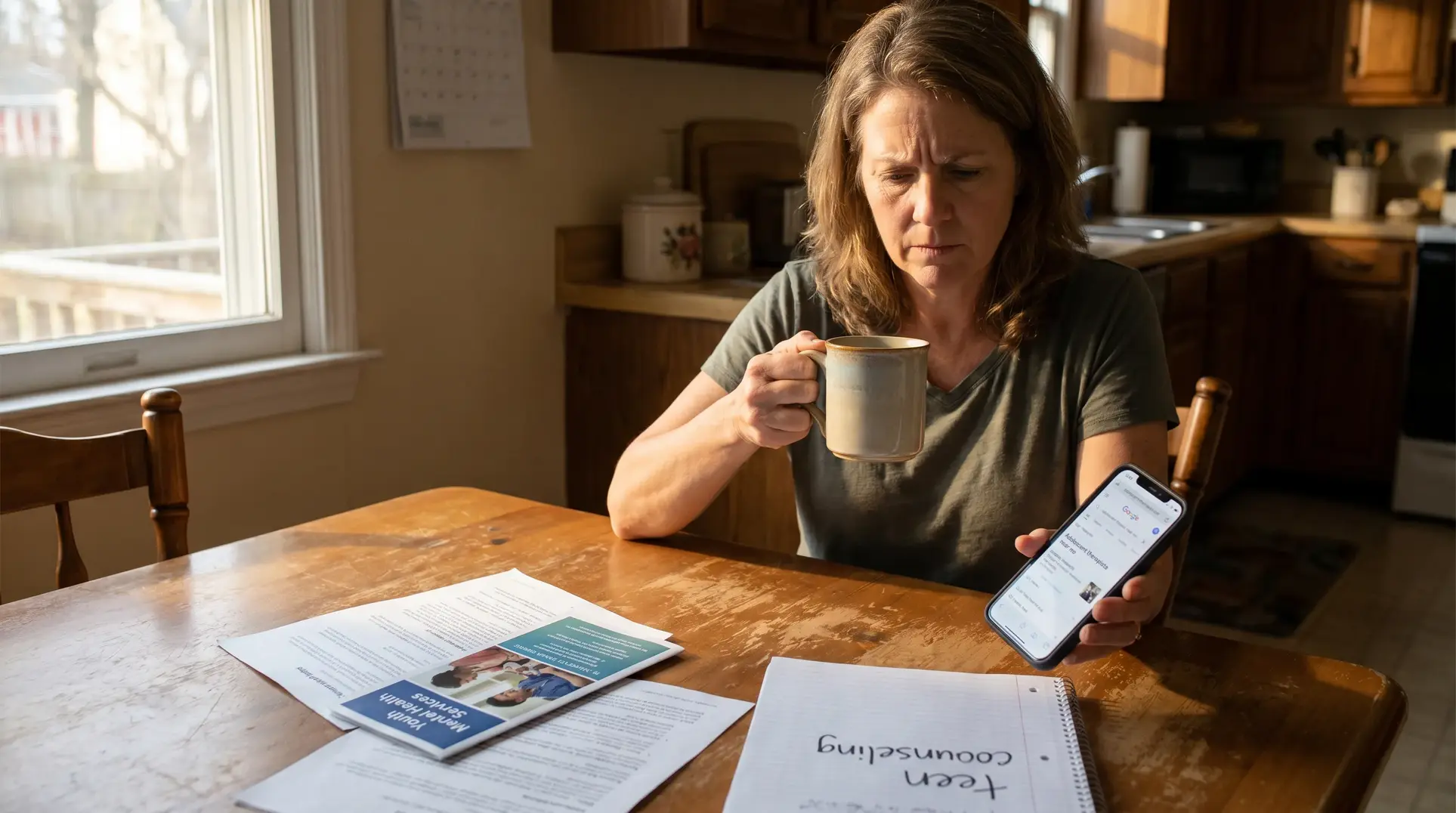
Few experiences are as isolating as watching your teenager struggle—maybe with anxiety that keeps them home from school, a persistent sadness that has stolen their spark, or emotional volatility that leaves the whole household walking on eggshells—while they flatly refuse the help you know could make a difference. You have done the research. You have found a therapist who seems like a good fit. And your teen has looked you in the eye and said, “I’m not going.” The frustration, fear, and helplessness that follow are real, and if you are reading this, we want you to know: you are not alone, and this situation is far more common than most parents realize.
At our practice, we work with families navigating exactly this tension every week. We have seen parents who feel like failures because their teen will not accept help, and we have seen teens whose resistance actually reflects something important about their developmental needs, their fears, and what they need from the adults in their lives before they can trust the therapeutic process. This article is designed to help you understand what is happening beneath your teen’s refusal, distinguish between resistance you can work with and refusal that requires a different approach, and discover concrete strategies—including alternatives to traditional therapy—that can support your family even when your adolescent is not ready to walk through a therapist’s door.

Before we can address your teen’s refusal effectively, we need to understand what is driving it. Adolescent resistance to therapy is rarely simple stubbornness or a lack of caring about their own wellbeing. More often, it reflects a complex intersection of developmental needs, symptom-driven barriers, and legitimate concerns that deserve our attention.
Adolescence is fundamentally about identity formation and autonomy-seeking. Your teen is in the process of figuring out who they are, separate from you, and asserting control over their internal world is a crucial part of that developmental task. When an adult—even a well-meaning parent—suggests that a stranger should have access to their thoughts and feelings, it can feel like a threat to the very independence they are working so hard to establish.
This is not defiance for its own sake. According to research published in the Journal of the American Academy of Child and Adolescent Psychiatry, when adolescents say they do not want help, they are often communicating something essential about autonomy, fear, and trust. Refusal can actually guide engagement if adults are willing to listen to what it means rather than simply trying to overcome it.
The very conditions that make therapy necessary can also make it feel impossible to accept. Consider how different teen mental health concerns create their own barriers:
When you understand that your teen’s resistance may actually be a symptom of what they are struggling with—not a character flaw—it becomes easier to respond with compassion rather than frustration.
Research consistently shows that perceived stigma is one of the most powerful deterrents to adolescent help-seeking. Your teen may fear being labeled as “crazy,” “broken,” or different from their peers. They may worry about what therapy says about them as a person, or whether information might somehow get back to friends or teachers. These concerns are not irrational—they reflect real social dynamics that adolescents navigate daily.
One of the most important distinctions we can make as parents is between resistance and refusal. These look similar on the surface but require very different responses.
Resistance typically involves ambivalence—your teen may say “no” but leave some door open. Watch for:
Resistance suggests your teen is not ready yet but could become ready with the right approach, information, or timing.
True refusal is more absolute and may include:
When you are facing true refusal, continuing to push often damages your relationship without increasing the likelihood of engagement. In these cases, alternative strategies become essential.
If your teen shows signs of resistance rather than outright refusal, there are evidence-based approaches that can help shift their willingness. Think of these as experiments to try, not guaranteed solutions—different teens respond to different approaches.
Since autonomy is central to adolescent development, building it into the process can reduce resistance:
Many teens resist therapy because they imagine it means lying on a couch while someone analyzes them. Reframing can help:

If your teen has expressed particular worries, address them honestly:
Research on motivational interviewing shows that exploring ambivalence collaboratively is more effective than persuasion. Try questions like:
Listen more than you talk. Reflect back what you hear. Validate their concerns before offering information.
This is perhaps the most difficult terrain for parents to navigate. We believe deeply in respecting adolescent autonomy, and we also know that sometimes teens need adults to step in—even over their objections—to keep them safe.
Certain situations require intervention regardless of your teen’s willingness:
In these cases, safety trumps autonomy. You may need to pursue urgent evaluation, crisis services, or even involuntary hospitalization. This is not about control—it is about keeping your child alive until they are stable enough to participate in their own recovery.
For milder presentations—moderate adolescent anxiety symptoms, low mood that does not prevent daily functioning, interpersonal conflicts—forcing therapy often backfires. Your teen may attend physically while refusing to engage meaningfully, or the power struggle may damage your relationship and make them less likely to seek help later.
Consider respecting their “no” (at least temporarily) when:
When you must override your teen’s objections:
Sometimes your teen genuinely is not ready for weekly office-based therapy—and that does not mean there is nothing you can do. These alternatives are not inferior substitutes; they are valid pathways that may provide sufficient support on their own or eventually lead to therapy readiness.
Here is something many parents do not realize: you can create meaningful change in your teen’s emotional environment even when they refuse direct treatment. Our parent coaching services help parents understand the “why” behind challenging behaviors, reduce escalation patterns, and create conditions where teens feel safer expressing vulnerability.
Parent coaching is particularly valuable when:
Programs like our parenting emotionally intense teens group specifically address the parent-side skills needed when adolescents are struggling but not engaging in their own therapy.
School counselors can serve as bridges to formal treatment. A teen who refuses to see a “therapist” may be willing to check in with a trusted counselor they already know. These relationships can:
Some teens who balk at individual therapy are more comfortable in group settings or peer support programs. These formats can reduce the intensity of one-on-one adult attention while providing meaningful connection and skill-building.
Evidence shows that digital mental health interventions can produce significant improvements in anxiety and depression symptoms for young people. Apps, online programs, and self-help books may feel more acceptable to a teen who values privacy and control. While these are not replacements for therapy for adolescents with moderate to severe symptoms, they can be meaningful first steps.
Sometimes the answer is patience. A teen who is not ready today may become ready in three months or a year. During this time, your job is to:
Perhaps the most important thing we can tell you is this: the parent-teen relationship is itself therapeutic. Protecting it matters, even when—especially when—formal therapy is not happening.
Staying connected, emotionally available, and regulated in the face of your teen’s struggles is valuable, measurable intervention. Research shows that adolescents who feel their parents are emotionally available and nonjudgmental are more likely to eventually accept some form of support.
If every interaction becomes about whether your teen will go to therapy, you risk losing connection entirely. Continue engaging around other topics—their interests, daily life, shared activities. Keep the relationship larger than this one conflict.
Your fear for your teen is valid, but when it drives constant pressure, it often increases resistance. Consider what you need to manage your own anxiety about the situation. Parent consultation, your own therapy, support from friends—these resources help you show up more effectively for your teen.
Watching your child struggle while feeling unable to help is one of parenting’s most painful experiences. We see you. Your distress is legitimate. And your willingness to keep trying, to read articles like this one, to search for alternatives—that matters.

Resistance to therapy is common, and multiple pathways exist. Some teens who refuse treatment today become eager participants later. Others find sufficient support through alternatives. Many benefit from family-level changes even when they never engage in individual therapy.
What matters most is that you stay connected, stay regulated, and stay flexible about how support might arrive. The relationship you maintain with your teen through this difficult period is the foundation upon which future help-seeking can be built.
If you are navigating this challenge and want guidance—whether that means exploring how to help your teen become more open to therapy, pursuing parent coaching while they are not ready, or discussing whether your teen’s presentation requires more urgent intervention—we are here. Sometimes the most powerful step is not getting your teen into therapy but getting yourself the support you need to be the steady, regulated presence they require.
You still have options including parent coaching to change how you respond and de-escalate conflict, school-based support, peer or group programs, and digital or self-help resources. These can shift the family environment and help your teen feel safer even without traditional weekly therapy.
If your teen still asks questions, shares worries, or says things like maybe later, that is workable resistance. A firm no every time, shutting down when therapy is mentioned, or I will never talk to a therapist with no openness to discussion points to true refusal and calls for a different approach.
Yes. Offer choices such as therapist, format, and trial number of sessions. Frame therapy as coaching or skill-building around their goals and have real conversations instead of lectures. Listening, validating their concerns, and giving them some control can make therapy feel less threatening.
Keep the relationship bigger than the therapy issue. Stay emotionally available, manage your own anxiety with support of your own, and make sure you still talk about their interests, daily life, and shared activities. Your calm steady presence is itself a powerful intervention.
If there are clear safety risks such as suicidal thoughts with a plan, recent attempts or serious self-harm, psychotic symptoms, or severe inability to function, your job is to override their refusal and get urgent help even if they are angry. In these situations keeping them alive and safe comes before respecting their no.

You don’t have to keep guessing. With the right tools and support, parenting can feel easier—and your child can thrive.
Book a Free Consultation
