
Serving all Ontario residents | In-person and virtual appointments available

Call us today

(647) 360-3294

Skip to content
Back to Blog

Confidence & Independence

Building Confidence in Children: A Psychologist’s Guide to Raising Resilient, Capable Kids

Two adults and two children walking together on a fallen tree trunk in a wooded area. The adults are holding the children's hands, helping them balance. Sunlight filters through the trees, creating a lighthearted and playful atmosphere.

Every parent wants their child to approach life with a sense of “I can handle this.” Yet one of the most common concerns I hear in my practice is from parents watching their child hesitate at the edge of new experiences, give up quickly when things get hard, or express persistent self-doubt that seems to overshadow their genuine capabilities. If this sounds familiar, I want you to know you’re not alone—and more importantly, there’s a clear path forward that doesn’t involve empty encouragement or pushing your child before they’re ready.

Building confidence in children is one of the most misunderstood aspects of parenting. Many well-meaning parents believe that confidence comes from praise, protection from failure, or ensuring their child succeeds at everything they try. But after years of working with families navigating these exact challenges, I’ve seen that genuine, lasting confidence develops through an entirely different process—one rooted in secure relationships, manageable challenges, and the gradual accumulation of real experiences where children discover their own capability.

Child building confidence by tying shoes

This guide offers a psychologist’s perspective on raising resilient, capable kids. I’ll walk you through what confidence actually is, why some children struggle more than others, and most importantly, what you can do at home to create the conditions where your child’s confidence can genuinely flourish.

Who This Guide Is For

This article is written specifically for parents of children ages 4 to 14 who notice patterns like avoidance of new activities, expressions of “I can’t” before even trying, quick frustration when tasks become challenging, or persistent comparison to peers. If you’ve tried various strategies from books or social media and found that nothing seems to create lasting change, this deeper look at confidence development will offer a fresh framework.

This guide is not intended to replace professional support for children experiencing significant anxiety, depression, or other mental health concerns that require clinical intervention. If your child’s struggles are affecting their ability to function at school, maintain friendships, or participate in family life, I encourage you to schedule a consultation to determine whether additional support would be beneficial.

Understanding Confidence vs. Self-Esteem: A Critical Distinction

Before diving into strategies, let’s clarify what we’re actually trying to build. Parents often use “confidence” and “self-esteem” interchangeably, but they’re meaningfully different—and understanding this distinction changes how we approach helping our children.

Self-esteem refers to how we think and feel about ourselves overall—our sense of worth and the belief that we deserve respect and care. Confidence, on the other hand, is about believing in our abilities—trusting that we can handle challenges, learn new skills, and navigate difficult situations.

Here’s why this matters: many parenting approaches focus on boosting self-esteem through frequent praise and positive affirmations. While these certainly have their place, they don’t automatically translate into confidence. A child can know they’re loved and valued (healthy self-esteem) while still feeling incapable of handling challenges (low confidence). True confidence develops not from what we tell children about themselves, but from their own accumulated experiences of facing something difficult and discovering they could manage it.

This is what psychologists call self-efficacy—the belief in one’s ability to succeed in specific situations. Research consistently shows that self-efficacy develops through mastery experiences, not through praise alone. When children repeatedly experience the cycle of encountering a challenge, putting in effort, struggling through difficulty, and eventually succeeding, they build a deep internal sense of “I am capable” that no amount of external encouragement can replicate.

The Anxiety-Confidence Connection

One of the most important insights I can share is this: what looks like lack of confidence is often anxiety in disguise. When a child refuses to try something new, gives up immediately, or says “I can’t” before making any attempt, parents often interpret this as low confidence. But frequently, the underlying driver is anxiety, perfectionism, or an overwhelming fear of judgment.

Consider the difference in how we might respond:

  • If we see a confidence problem, we might encourage more, praise more, or try to convince the child they’re capable.
  • If we recognize an anxiety problem, we understand the child needs help managing uncomfortable feelings, not just reassurance about their abilities.

Children with perfectionist tendencies often appear under-confident because they’d rather not try than risk imperfect results. Research indicates that approximately 25 to 30 percent of adolescents experience what psychologists call “maladaptive perfectionism”—striving for unrealistic perfection to the point where it causes psychological pain. These children aren’t lacking confidence so much as they’re protecting themselves from the intolerable feeling of falling short.

When parents recognize this pattern, the approach shifts. Instead of trying to convince the child they can do it, we help them tolerate the uncertainty of not knowing how something will turn out. We normalize struggle, imperfection, and the learning process itself. This distinction is crucial because standard confidence-building strategies often backfire with anxious children—constant reassurance can actually maintain anxiety rather than resolve it.

The Foundation: Why Relationships Come First

Before any confidence-building strategy can work, children need a secure foundation. Research from developmental psychology converges on a striking finding: the quality of a child’s relationship with their primary caregivers is the single most powerful determinant of confidence and resilience development. This remains true across cultures, socioeconomic backgrounds, and individual temperaments.

According to research on resilience in children, having at least one stable, supportive relationship with a caring adult provides a crucial buffer against adversity and creates the foundation for healthy development. This isn’t just about love—it’s about what attachment researchers call a “secure base.”

When children have a secure attachment, they internalize the message: “I am worthy of care, and the world is safe enough to explore.” This security allows them to take the risks necessary for confidence development. They can venture out to try new things, knowing they have a safe person to return to when things go wrong. Without this foundation, children remain in a protective stance, too focused on maintaining safety to take growth-oriented risks.

What does this mean practically? It means that connection must come before correction, and relationship must come before strategy. If your child is struggling with confidence, the first question isn’t “What technique should I try?” but “How is our relationship? Does my child feel truly safe with me—safe enough to fail, to be imperfect, to show vulnerability?”

To learn more about our relationship-centered philosophy, explore Dr. Zia’s approach to child development.

Creating a “Safe to Fail” Environment at Home

One of the most powerful things parents can do is create an environment where failure isn’t just tolerated—it’s genuinely normalized as part of learning. This sounds simple but goes against many of our protective instincts.

Model Your Own Imperfection

Children learn confidence not primarily from what we tell them, but from watching how we handle our own challenges and setbacks. When you make a mistake, narrate it:

  • “Oh, I forgot to pick up milk at the store. That’s frustrating, but it’s okay—I’ll remember tomorrow.”
  • “This recipe didn’t turn out like I hoped. I wonder what I might try differently next time.”
  • “I was nervous about that presentation at work, but I did it anyway and it was fine.”

This kind of modeling teaches children that competent adults also make mistakes, feel nervous, and encounter challenges—and that none of these things are catastrophic.

Respond to Failure with Curiosity, Not Disappointment

How you respond when your child fails sends powerful messages about what failure means. Try responses like:

  • “That didn’t work out like you hoped. What did you learn?”
  • “It makes sense you’re disappointed. What do you want to try next?”
  • “Struggling is how your brain grows. This is actually a good thing.”

Avoid rescuing, over-sympathizing, or immediately problem-solving. Children need to sit with the discomfort of disappointment long enough to discover they can handle it.
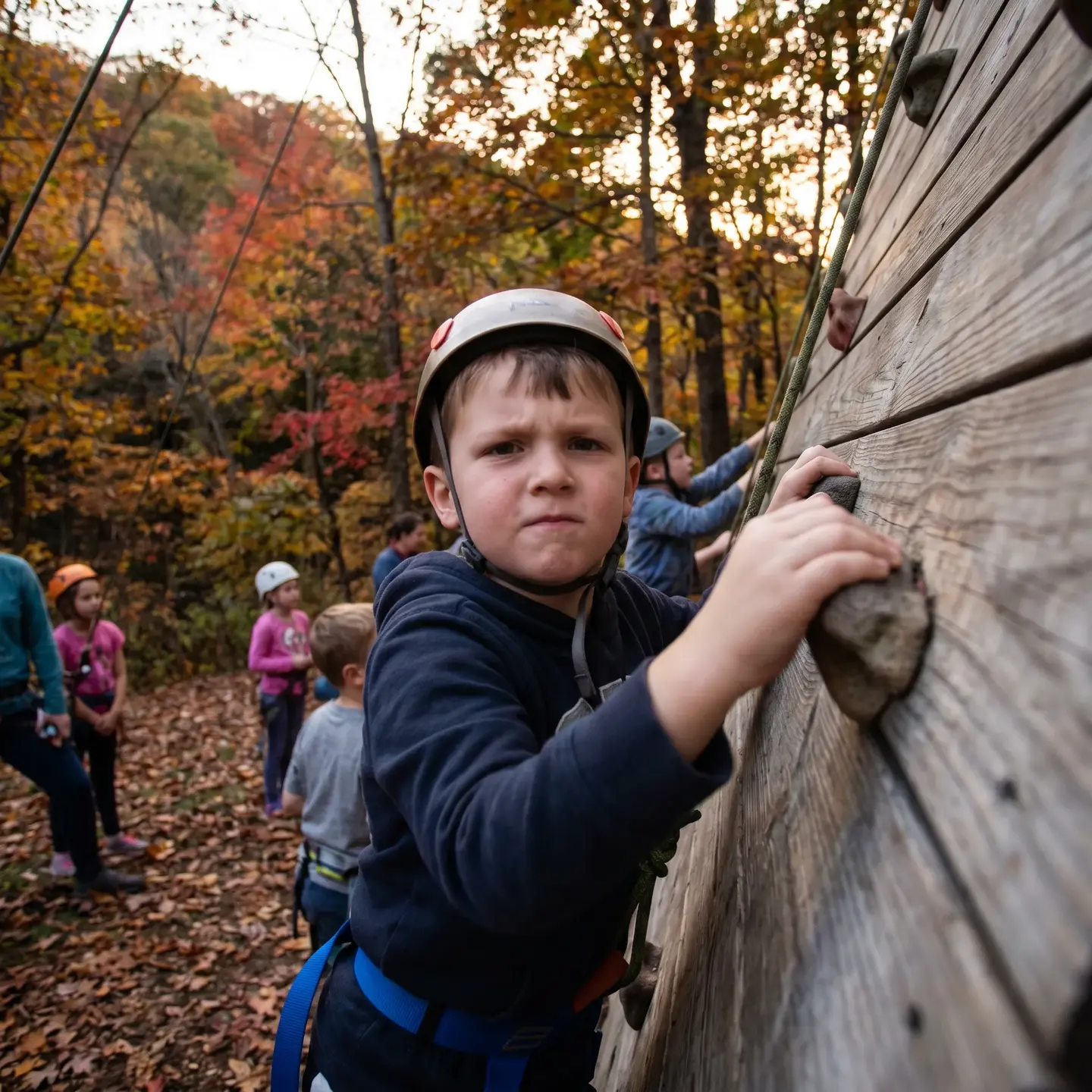
Child overcoming anxiety through climbing activity

Separate Effort from Outcome

Create family conversations that celebrate the process: “What’s something hard you worked on today?” rather than “What did you accomplish?” This shifts the focus from performance to growth and helps children value persistence regardless of results.

The Mastery Cycle: How Genuine Confidence Develops

Confidence isn’t built through pep talks—it’s built through a repeated cycle of experiences that I think of as the mastery cycle:

  1. Encounter a challenge that feels slightly outside the comfort zone
  2. Experience struggle and the uncomfortable feelings that come with it
  3. Persist through difficulty with appropriate support
  4. Achieve some level of success (even partial success counts)
  5. Internalize the experience: “I did something hard”

The key is finding what developmental psychologists call the “zone of proximal development”—challenges that are difficult enough to require effort but achievable with some support. Tasks that are too easy don’t build confidence because success feels meaningless. Tasks that are too hard lead to failure and reinforce the belief that trying is pointless.

Your role as a parent is to calibrate: identify opportunities for manageable challenge, provide scaffolding (support that can be gradually withdrawn), and help your child recognize their own progress.

Praise That Builds vs. Praise That Undermines

Most parents have heard “praise effort, not outcome.” But effective praise goes deeper than this simple formula. Children are remarkably perceptive—they know when praise doesn’t match reality, and hollow encouragement can actually undermine the trust essential for confidence development.

What Effective Praise Looks Like

Effective praise is specific, genuine, and focused on the process:

  • Instead of “Great job!” → Try “I noticed you kept trying even when that puzzle got really tricky.”
  • Instead of “You’re so smart!” → Try “The way you figured out that problem showed real thinking.”
  • Instead of “That’s beautiful!” → Try “I see you used three different shades of blue. Tell me about your choice.”

The goal is to help children notice their own effort, strategy, and progress—building internal motivation rather than dependence on external validation.

When Praise Backfires

Be cautious with:

  • Inflated praise (“That’s the best drawing I’ve ever seen!”) that children recognize as unrealistic
  • Comparative praise (“You’re the best reader in your class”) that creates pressure and anxiety
  • Praise for easy tasks that can inadvertently communicate low expectations

Interestingly, research shows that excessive effort praise after failure can sometimes backfire, as children may interpret it as confirmation that they’re incapable if they failed despite trying hard. The key is to acknowledge the effort while also normalizing that sometimes we try hard and still don’t succeed—and that’s okay.

Age-Appropriate Independence and Challenge

What constitutes appropriate challenge varies significantly by developmental stage. Here’s a general framework:

Early Childhood (Ages 4-6)

At this age, confidence builds through:

  • Simple household responsibilities (feeding pets, setting napkins at dinner, putting clothes in hamper)
  • Attempting self-care tasks with patience for imperfect results
  • Making small choices (which shirt to wear, which fruit for snack)
  • Physical challenges appropriate to developing coordination

Your role: Provide abundant opportunities for “I did it myself” moments while expecting imperfect execution. A three-year-old who waters the plants—and spills some water—is building confidence.

Middle Childhood (Ages 7-10)

Confidence develops through:

  • Managing their own belongings and schedules with decreasing reminders
  • Navigating peer conflicts with coaching rather than adult intervention
  • Taking on multi-step responsibilities
  • Pursuing interests that require sustained practice

Your role: Step back more than feels comfortable. Allow natural consequences. Ask “What do you think you should do?” before offering solutions.

Early Adolescence (Ages 11-14)

Confidence requires:

  • Increasing autonomy in academic work and extracurricular choices
  • Navigating more complex social situations
  • Taking responsibility for personal wellness (sleep, nutrition, screen time)
  • Contributing meaningfully to family functioning

Your role: Shift from manager to consultant. Express trust in their capability to handle things. Be available for guidance without hovering.

For additional guidance tailored to your child’s specific stage, explore our additional parenting resources.

When Your Own Anxiety Gets in the Way

Here’s something most parenting articles don’t address: your own anxiety directly impacts your child’s confidence development. Children are remarkably attuned to their parents’ emotional states. When we hover, rescue, over-prepare, or communicate excessive worry, our children receive the message: “The world is dangerous, and I don’t believe you can handle it.”

This isn’t about blame—parental anxiety often comes from a place of deep love and legitimate concern. But recognizing this pattern is essential because:

  • Overprotective parenting prevents children from accumulating the mastery experiences that build confidence
  • Parental anxiety is “contagious”—children pick up on and internalize our worry
  • Constant intervention communicates lack of faith in the child’s capability

Research confirms that children of highly anxious parents are more likely to develop their own anxiety, creating a cycle that undermines confidence across generations.

What to Do If This Resonates

First, practice self-compassion. Parental anxiety usually stems from wanting to protect children we love fiercely. Then, consider:

  • Noticing when you’re tempted to intervene—pause and ask if intervention is truly necessary
  • Working on your own anxiety through therapy, mindfulness practices, or support groups
  • Identifying one area where you can practice stepping back
  • Finding supportive community with other parents working on similar challenges

Our parent education workshops provide both strategies and community for parents navigating these challenges.

Building Confidence in Different Domains

Confidence is often domain-specific rather than global. A child might feel perfectly capable on the soccer field but fall apart over math homework, or navigate friendships with ease while dreading new physical challenges. Understanding this helps parents target support appropriately.

Social Confidence

For children who struggle in social situations:

  • Practice social scenarios through role-play at home
  • Arrange low-stakes playdates with one other child rather than group situations
  • Coach specific skills (how to join a game, how to start a conversation)
  • Validate that social situations can feel hard while expressing confidence they can learn

Academic Confidence

For children who become easily frustrated with learning:

  • Break tasks into smaller, manageable chunks
  • Celebrate progress rather than perfection
  • Teach growth mindset explicitly (“Your brain is like a muscle—it grows when you struggle”)
  • Identify their learning style and advocate for appropriate accommodations if needed

Physical Confidence

For children who avoid physical challenges:

  • Find activities that match their temperament (individual vs. team, competitive vs. recreational)
  • Focus on mastery rather than comparison to others
  • Acknowledge that learning new physical skills feels awkward at first
  • Celebrate effort and improvement rather than natural ability

When to Seek Professional Support

While many confidence challenges respond to parenting strategies, some situations benefit from professional guidance. Consider seeking support if:

  • Your child’s avoidance significantly interferes with daily functioning (school attendance, friendships, family activities)
  • Standard strategies haven’t produced progress after consistent effort over several months
  • Your child expresses persistent negative self-talk or hopelessness
  • Anxiety or perfectionism seems to dominate your child’s experience
  • You’re finding it difficult to step back from protective patterns
  • Family conflict around these issues is escalating

According to child mental health resources, seeking early support leads to better outcomes. Evidence-based approaches like Cognitive Behavioral Therapy (CBT) and the SPACE model (Supportive Parenting for Anxious Childhood Emotions) have strong research support for helping children develop confidence while addressing underlying anxiety.

Our team specializes in exactly these situations—helping children build genuine confidence through a combination of direct child therapy services and parent coaching that equips you with effective tools. We understand that seeking help is a sign of strength, not failure, and that you’re doing your best with complex challenges.
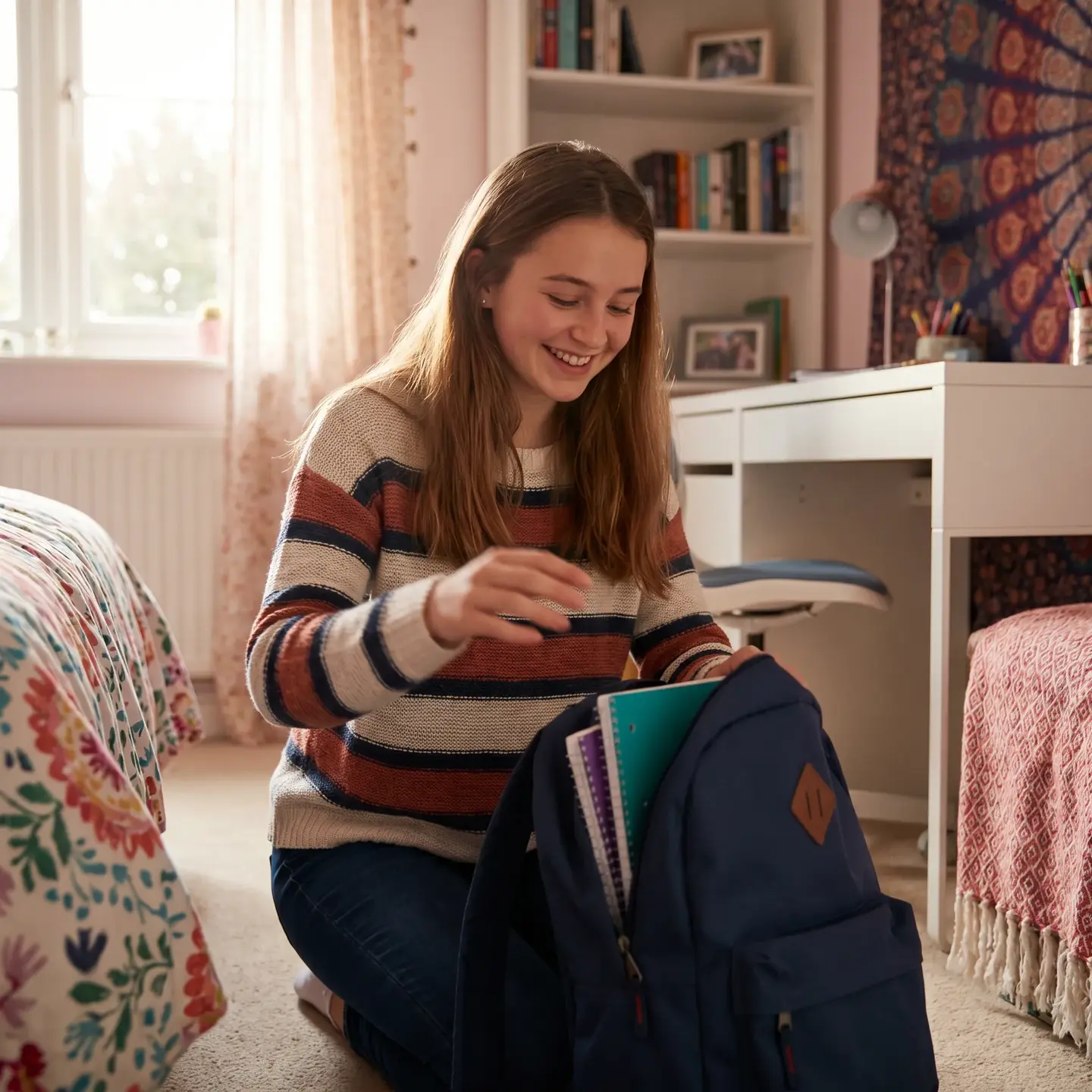
Child developing independence through organization task

Moving Forward: Your Next Steps

Building confidence in children is genuinely a marathon, not a sprint. It requires patience, consistency, and the willingness to tolerate our children’s discomfort while trusting in their capacity to grow. Remember:

  1. Connection comes first. Strengthen your relationship as the foundation for everything else.
  2. Look beneath the surface. Consider whether anxiety, perfectionism, or fear might be driving what looks like low confidence.
  3. Create mastery opportunities. Find the right level of challenge where success is possible but not guaranteed.
  4. Step back strategically. Your restraint creates space for your child’s growth.
  5. Work on your own patterns. Your confidence in your child’s capability matters.

Every child has the capacity to develop confidence. Sometimes they just need the right conditions—and the right support—to discover what they’re truly capable of.

If you’re ready to explore how professional support might help your family, I invite you to schedule a consultation. Together, we can create a path forward that honors your child’s unique temperament while building the resilience they need to thrive.

Frequently Asked Questions

Skip vague “great job!” or inflated compliments; say specific things like “I saw you keep trying when the puzzle got tricky.” This highlights their process and effort, helping them notice their own progress without creating pressure or false expectations.

If avoidance disrupts school, friends, or family life, or if anxiety/perfectionism dominates despite your efforts, get support early. Therapies like CBT or SPACE work well—schedule a consult to tailor tools for your family without waiting for things to worsen.

Look for avoidance of new things, quick giving up, or “I can’t” statements before trying—these often mask anxiety or perfectionism. Instead of more encouragement, help them tolerate uncertainty and normalize struggle to break the cycle without making it worse.

A secure attachment with you acts as a “safe base” for risk-taking and growth. Check if your child feels safe to fail with you first—strengthen that connection before strategies, as it’s the top predictor of resilience no matter their age or background.

Confidence is believing you can handle specific challenges through your own efforts, while self-esteem is your overall sense of worth. Building confidence comes from mastery experiences like tackling hard tasks, not just praise—focus on those to help your child feel capable without empty pep talks.

Dr. Zia Lakdawalla
Dr. Zia Lakdawalla
I am a registered clinical psychologist who specializes in working with children, adolescents, and parents. My goal is to help clients cope with uncomfortable feelings, improve relationships, and increase competency and efficacy in managing the demands of each new stage of development.I am also a strong believer that the environment in which kids are immersed is a critical factor in how they learn to regulate their emotions and build resilience.

Take the first step toward calm, connected parenting

You don’t have to keep guessing. With the right tools and support, parenting can feel easier—and your child can thrive.

Book a Free Consultation

How we Treat

What we Treat

Building Confidence in Children: A Psychologist’s Guide to Raising Resilient, Capable Kids

Confidence & Independence

By: Dr. Zia

Two adults and two children walking together on a fallen tree trunk in a wooded area. The adults are holding the children's hands, helping them balance. Sunlight filters through the trees, creating a lighthearted and playful atmosphere.

Every parent wants their child to approach life with a sense of “I can handle this.” Yet one of the most common concerns I hear in my practice is from parents watching their child hesitate at the edge of new experiences, give up quickly when things get hard, or express persistent self-doubt that seems to overshadow their genuine capabilities. If this sounds familiar, I want you to know you’re not alone—and more importantly, there’s a clear path forward that doesn’t involve empty encouragement or pushing your child before they’re ready.

Building confidence in children is one of the most misunderstood aspects of parenting. Many well-meaning parents believe that confidence comes from praise, protection from failure, or ensuring their child succeeds at everything they try. But after years of working with families navigating these exact challenges, I’ve seen that genuine, lasting confidence develops through an entirely different process—one rooted in secure relationships, manageable challenges, and the gradual accumulation of real experiences where children discover their own capability.

Child building confidence by tying shoes

This guide offers a psychologist’s perspective on raising resilient, capable kids. I’ll walk you through what confidence actually is, why some children struggle more than others, and most importantly, what you can do at home to create the conditions where your child’s confidence can genuinely flourish.

Who This Guide Is For

This article is written specifically for parents of children ages 4 to 14 who notice patterns like avoidance of new activities, expressions of “I can’t” before even trying, quick frustration when tasks become challenging, or persistent comparison to peers. If you’ve tried various strategies from books or social media and found that nothing seems to create lasting change, this deeper look at confidence development will offer a fresh framework.

This guide is not intended to replace professional support for children experiencing significant anxiety, depression, or other mental health concerns that require clinical intervention. If your child’s struggles are affecting their ability to function at school, maintain friendships, or participate in family life, I encourage you to schedule a consultation to determine whether additional support would be beneficial.

Understanding Confidence vs. Self-Esteem: A Critical Distinction

Before diving into strategies, let’s clarify what we’re actually trying to build. Parents often use “confidence” and “self-esteem” interchangeably, but they’re meaningfully different—and understanding this distinction changes how we approach helping our children.

Self-esteem refers to how we think and feel about ourselves overall—our sense of worth and the belief that we deserve respect and care. Confidence, on the other hand, is about believing in our abilities—trusting that we can handle challenges, learn new skills, and navigate difficult situations.

Here’s why this matters: many parenting approaches focus on boosting self-esteem through frequent praise and positive affirmations. While these certainly have their place, they don’t automatically translate into confidence. A child can know they’re loved and valued (healthy self-esteem) while still feeling incapable of handling challenges (low confidence). True confidence develops not from what we tell children about themselves, but from their own accumulated experiences of facing something difficult and discovering they could manage it.

This is what psychologists call self-efficacy—the belief in one’s ability to succeed in specific situations. Research consistently shows that self-efficacy develops through mastery experiences, not through praise alone. When children repeatedly experience the cycle of encountering a challenge, putting in effort, struggling through difficulty, and eventually succeeding, they build a deep internal sense of “I am capable” that no amount of external encouragement can replicate.

The Anxiety-Confidence Connection

One of the most important insights I can share is this: what looks like lack of confidence is often anxiety in disguise. When a child refuses to try something new, gives up immediately, or says “I can’t” before making any attempt, parents often interpret this as low confidence. But frequently, the underlying driver is anxiety, perfectionism, or an overwhelming fear of judgment.

Consider the difference in how we might respond:

  • If we see a confidence problem, we might encourage more, praise more, or try to convince the child they’re capable.
  • If we recognize an anxiety problem, we understand the child needs help managing uncomfortable feelings, not just reassurance about their abilities.

Children with perfectionist tendencies often appear under-confident because they’d rather not try than risk imperfect results. Research indicates that approximately 25 to 30 percent of adolescents experience what psychologists call “maladaptive perfectionism”—striving for unrealistic perfection to the point where it causes psychological pain. These children aren’t lacking confidence so much as they’re protecting themselves from the intolerable feeling of falling short.

When parents recognize this pattern, the approach shifts. Instead of trying to convince the child they can do it, we help them tolerate the uncertainty of not knowing how something will turn out. We normalize struggle, imperfection, and the learning process itself. This distinction is crucial because standard confidence-building strategies often backfire with anxious children—constant reassurance can actually maintain anxiety rather than resolve it.

The Foundation: Why Relationships Come First

Before any confidence-building strategy can work, children need a secure foundation. Research from developmental psychology converges on a striking finding: the quality of a child’s relationship with their primary caregivers is the single most powerful determinant of confidence and resilience development. This remains true across cultures, socioeconomic backgrounds, and individual temperaments.

According to research on resilience in children, having at least one stable, supportive relationship with a caring adult provides a crucial buffer against adversity and creates the foundation for healthy development. This isn’t just about love—it’s about what attachment researchers call a “secure base.”

When children have a secure attachment, they internalize the message: “I am worthy of care, and the world is safe enough to explore.” This security allows them to take the risks necessary for confidence development. They can venture out to try new things, knowing they have a safe person to return to when things go wrong. Without this foundation, children remain in a protective stance, too focused on maintaining safety to take growth-oriented risks.

What does this mean practically? It means that connection must come before correction, and relationship must come before strategy. If your child is struggling with confidence, the first question isn’t “What technique should I try?” but “How is our relationship? Does my child feel truly safe with me—safe enough to fail, to be imperfect, to show vulnerability?”

To learn more about our relationship-centered philosophy, explore Dr. Zia’s approach to child development.

Creating a “Safe to Fail” Environment at Home

One of the most powerful things parents can do is create an environment where failure isn’t just tolerated—it’s genuinely normalized as part of learning. This sounds simple but goes against many of our protective instincts.

Model Your Own Imperfection

Children learn confidence not primarily from what we tell them, but from watching how we handle our own challenges and setbacks. When you make a mistake, narrate it:

  • “Oh, I forgot to pick up milk at the store. That’s frustrating, but it’s okay—I’ll remember tomorrow.”
  • “This recipe didn’t turn out like I hoped. I wonder what I might try differently next time.”
  • “I was nervous about that presentation at work, but I did it anyway and it was fine.”

This kind of modeling teaches children that competent adults also make mistakes, feel nervous, and encounter challenges—and that none of these things are catastrophic.

Respond to Failure with Curiosity, Not Disappointment

How you respond when your child fails sends powerful messages about what failure means. Try responses like:

  • “That didn’t work out like you hoped. What did you learn?”
  • “It makes sense you’re disappointed. What do you want to try next?”
  • “Struggling is how your brain grows. This is actually a good thing.”

Avoid rescuing, over-sympathizing, or immediately problem-solving. Children need to sit with the discomfort of disappointment long enough to discover they can handle it.

Child overcoming anxiety through climbing activity

Separate Effort from Outcome

Create family conversations that celebrate the process: “What’s something hard you worked on today?” rather than “What did you accomplish?” This shifts the focus from performance to growth and helps children value persistence regardless of results.

The Mastery Cycle: How Genuine Confidence Develops

Confidence isn’t built through pep talks—it’s built through a repeated cycle of experiences that I think of as the mastery cycle:

  1. Encounter a challenge that feels slightly outside the comfort zone
  2. Experience struggle and the uncomfortable feelings that come with it
  3. Persist through difficulty with appropriate support
  4. Achieve some level of success (even partial success counts)
  5. Internalize the experience: “I did something hard”

The key is finding what developmental psychologists call the “zone of proximal development”—challenges that are difficult enough to require effort but achievable with some support. Tasks that are too easy don’t build confidence because success feels meaningless. Tasks that are too hard lead to failure and reinforce the belief that trying is pointless.

Your role as a parent is to calibrate: identify opportunities for manageable challenge, provide scaffolding (support that can be gradually withdrawn), and help your child recognize their own progress.

Praise That Builds vs. Praise That Undermines

Most parents have heard “praise effort, not outcome.” But effective praise goes deeper than this simple formula. Children are remarkably perceptive—they know when praise doesn’t match reality, and hollow encouragement can actually undermine the trust essential for confidence development.

What Effective Praise Looks Like

Effective praise is specific, genuine, and focused on the process:

  • Instead of “Great job!” → Try “I noticed you kept trying even when that puzzle got really tricky.”
  • Instead of “You’re so smart!” → Try “The way you figured out that problem showed real thinking.”
  • Instead of “That’s beautiful!” → Try “I see you used three different shades of blue. Tell me about your choice.”

The goal is to help children notice their own effort, strategy, and progress—building internal motivation rather than dependence on external validation.

When Praise Backfires

Be cautious with:

  • Inflated praise (“That’s the best drawing I’ve ever seen!”) that children recognize as unrealistic
  • Comparative praise (“You’re the best reader in your class”) that creates pressure and anxiety
  • Praise for easy tasks that can inadvertently communicate low expectations

Interestingly, research shows that excessive effort praise after failure can sometimes backfire, as children may interpret it as confirmation that they’re incapable if they failed despite trying hard. The key is to acknowledge the effort while also normalizing that sometimes we try hard and still don’t succeed—and that’s okay.

Age-Appropriate Independence and Challenge

What constitutes appropriate challenge varies significantly by developmental stage. Here’s a general framework:

Early Childhood (Ages 4-6)

At this age, confidence builds through:

  • Simple household responsibilities (feeding pets, setting napkins at dinner, putting clothes in hamper)
  • Attempting self-care tasks with patience for imperfect results
  • Making small choices (which shirt to wear, which fruit for snack)
  • Physical challenges appropriate to developing coordination

Your role: Provide abundant opportunities for “I did it myself” moments while expecting imperfect execution. A three-year-old who waters the plants—and spills some water—is building confidence.

Middle Childhood (Ages 7-10)

Confidence develops through:

  • Managing their own belongings and schedules with decreasing reminders
  • Navigating peer conflicts with coaching rather than adult intervention
  • Taking on multi-step responsibilities
  • Pursuing interests that require sustained practice

Your role: Step back more than feels comfortable. Allow natural consequences. Ask “What do you think you should do?” before offering solutions.

Early Adolescence (Ages 11-14)

Confidence requires:

  • Increasing autonomy in academic work and extracurricular choices
  • Navigating more complex social situations
  • Taking responsibility for personal wellness (sleep, nutrition, screen time)
  • Contributing meaningfully to family functioning

Your role: Shift from manager to consultant. Express trust in their capability to handle things. Be available for guidance without hovering.

For additional guidance tailored to your child’s specific stage, explore our additional parenting resources.

When Your Own Anxiety Gets in the Way

Here’s something most parenting articles don’t address: your own anxiety directly impacts your child’s confidence development. Children are remarkably attuned to their parents’ emotional states. When we hover, rescue, over-prepare, or communicate excessive worry, our children receive the message: “The world is dangerous, and I don’t believe you can handle it.”

This isn’t about blame—parental anxiety often comes from a place of deep love and legitimate concern. But recognizing this pattern is essential because:

  • Overprotective parenting prevents children from accumulating the mastery experiences that build confidence
  • Parental anxiety is “contagious”—children pick up on and internalize our worry
  • Constant intervention communicates lack of faith in the child’s capability

Research confirms that children of highly anxious parents are more likely to develop their own anxiety, creating a cycle that undermines confidence across generations.

What to Do If This Resonates

First, practice self-compassion. Parental anxiety usually stems from wanting to protect children we love fiercely. Then, consider:

  • Noticing when you’re tempted to intervene—pause and ask if intervention is truly necessary
  • Working on your own anxiety through therapy, mindfulness practices, or support groups
  • Identifying one area where you can practice stepping back
  • Finding supportive community with other parents working on similar challenges

Our parent education workshops provide both strategies and community for parents navigating these challenges.

Building Confidence in Different Domains

Confidence is often domain-specific rather than global. A child might feel perfectly capable on the soccer field but fall apart over math homework, or navigate friendships with ease while dreading new physical challenges. Understanding this helps parents target support appropriately.

Social Confidence

For children who struggle in social situations:

  • Practice social scenarios through role-play at home
  • Arrange low-stakes playdates with one other child rather than group situations
  • Coach specific skills (how to join a game, how to start a conversation)
  • Validate that social situations can feel hard while expressing confidence they can learn

Academic Confidence

For children who become easily frustrated with learning:

  • Break tasks into smaller, manageable chunks
  • Celebrate progress rather than perfection
  • Teach growth mindset explicitly (“Your brain is like a muscle—it grows when you struggle”)
  • Identify their learning style and advocate for appropriate accommodations if needed

Physical Confidence

For children who avoid physical challenges:

  • Find activities that match their temperament (individual vs. team, competitive vs. recreational)
  • Focus on mastery rather than comparison to others
  • Acknowledge that learning new physical skills feels awkward at first
  • Celebrate effort and improvement rather than natural ability

When to Seek Professional Support

While many confidence challenges respond to parenting strategies, some situations benefit from professional guidance. Consider seeking support if:

  • Your child’s avoidance significantly interferes with daily functioning (school attendance, friendships, family activities)
  • Standard strategies haven’t produced progress after consistent effort over several months
  • Your child expresses persistent negative self-talk or hopelessness
  • Anxiety or perfectionism seems to dominate your child’s experience
  • You’re finding it difficult to step back from protective patterns
  • Family conflict around these issues is escalating

According to child mental health resources, seeking early support leads to better outcomes. Evidence-based approaches like Cognitive Behavioral Therapy (CBT) and the SPACE model (Supportive Parenting for Anxious Childhood Emotions) have strong research support for helping children develop confidence while addressing underlying anxiety.

Our team specializes in exactly these situations—helping children build genuine confidence through a combination of direct child therapy services and parent coaching that equips you with effective tools. We understand that seeking help is a sign of strength, not failure, and that you’re doing your best with complex challenges.

Child developing independence through organization task

Moving Forward: Your Next Steps

Building confidence in children is genuinely a marathon, not a sprint. It requires patience, consistency, and the willingness to tolerate our children’s discomfort while trusting in their capacity to grow. Remember:

  1. Connection comes first. Strengthen your relationship as the foundation for everything else.
  2. Look beneath the surface. Consider whether anxiety, perfectionism, or fear might be driving what looks like low confidence.
  3. Create mastery opportunities. Find the right level of challenge where success is possible but not guaranteed.
  4. Step back strategically. Your restraint creates space for your child’s growth.
  5. Work on your own patterns. Your confidence in your child’s capability matters.

Every child has the capacity to develop confidence. Sometimes they just need the right conditions—and the right support—to discover what they’re truly capable of.

If you’re ready to explore how professional support might help your family, I invite you to schedule a consultation. Together, we can create a path forward that honors your child’s unique temperament while building the resilience they need to thrive.

Beyond Talent: Grit as a Cornerstone of Childhood Success and Resilience

In a world emphasizing innate talent, the concept of grit intertwines passion and perseverance, propelling individuals t…

Read more

My Child Lacks the Confidence to Try New Things

Learn effective strategies to help your child gain confidence and face new challenges with positivity. Discover how to n…

Read more

Empower Your Child’s Confidence for Lifelong Success

As a parent, it can be disheartening to see your child struggle with low self-confidence. Whether they hesitate to try n…

Read more