
Serving all Ontario residents | In-person and virtual appointments available

Call us today

(647) 360-3294

Skip to content
Back to Blog

Emotional Development

Raising Emotionally Resilient Children: The Complete Parent Guide for 2026

A couple sits on a blanket in a park, smiling at each other, while three children play and run in the background. The setting features trees, grass, and warm golden sunlight, creating a serene outdoor scene.

Every parent knows the feeling: watching your child face disappointment, struggle with a difficult friendship, or crumble under the weight of a setback they weren’t expecting. In those moments, something deep within us wants to fix it, to smooth the path, to take away the pain. And yet, we also carry this quiet knowing that our children need to develop their own capacity to navigate life’s inevitable challenges. The question that keeps so many parents awake at night isn’t whether their child will face adversity—that’s a certainty—but whether they’ll have the inner resources to move through it with confidence and come out stronger on the other side.

At our practice, we’ve walked alongside hundreds of families wrestling with this very question. What we’ve learned, both through clinical experience and through research on resilience development, is that emotional resilience isn’t something children either have or don’t have. It’s not a fixed trait stamped into their personality at birth. Rather, it’s a set of learnable capabilities that develop within the context of relationships—most importantly, the relationship they have with you.
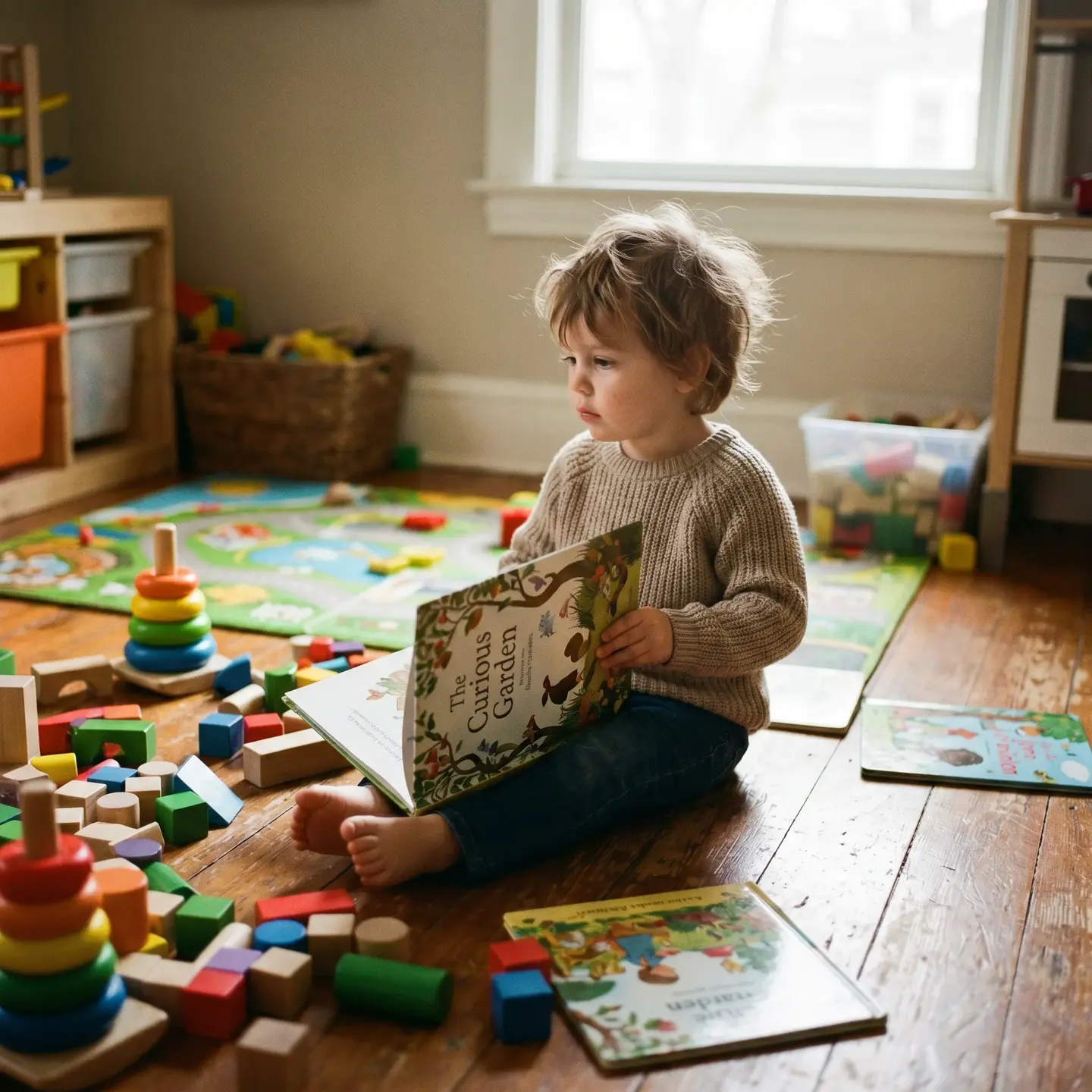
Child learning emotions

Who This Guide Is For—And Who It Isn’t

This guide is written for parents who want to move beyond reactive parenting and into intentional resilience-building. If you’re looking for quick fixes or strategies to simply stop difficult behavior, this may not be the right fit. But if you’re willing to look at the deeper work of building your child’s emotional foundation—understanding why they struggle and how to strengthen their capacity from the inside out—you’re in the right place.

This is for parents who:

  • Want to understand what’s really happening beneath their child’s meltdowns, avoidance, or giving up
  • Are willing to examine their own emotional patterns as part of the process
  • Seek evidence-based approaches rather than trending tips
  • Recognize that building resilience is a long-term investment, not an overnight transformation

If your child is currently in crisis or experiencing significant functional impairment, please reach out to a mental health professional directly. This guide provides foundational strategies, not crisis intervention.

Understanding Emotional Resilience: Beyond Simply Bouncing Back

We often hear resilience described as the ability to “bounce back” from adversity. But this definition, while partially true, misses something important. True emotional resilience isn’t about returning to the same state you were in before—it’s about growing through challenges in a way that expands your capacity for future difficulties.

Think of it less like a rubber band snapping back to its original shape and more like a tree that bends in a storm, then grows stronger roots and a more flexible trunk because of what it weathered.

According to the Center on the Developing Child’s resilience framework, resilience develops through the interaction of three key elements:

  1. Individual factors: Your child’s temperament, emotional awareness, and developing coping skills
  2. Relational factors: The quality of attachment and responsiveness in their primary relationships
  3. Environmental factors: The broader supports available through school, community, and culture

As parents, we have significant influence over all three—but our greatest leverage comes through the relational foundation we build with our children. This is why, at FFEW, we emphasize that connection always comes before correction. A child who feels securely attached to their caregiver has a safe base from which to venture into challenging experiences and a secure haven to return to when things get hard.

The Building Blocks: What Resilience Actually Looks Like

When we break resilience down into its core components, it becomes much clearer what we’re actually building. Understanding these elements helps us recognize opportunities in everyday moments rather than waiting for big challenges to teach the lessons.

Emotional Awareness and Regulation

Children cannot manage emotions they can’t recognize. The ability to identify, name, and tolerate difficult feelings forms the foundation of all resilience work. A child who can say “I’m feeling really frustrated right now” is already halfway to working through it. Our child therapy services often begin here—helping children develop the vocabulary and body awareness to understand their internal experience.

Growth Mindset

This is the belief that abilities can be developed through effort, good strategies, and input from others. Children with a growth mindset see challenges as opportunities to learn rather than evidence of their limitations. They’re more likely to persist when things get difficult and to view failure as information rather than identity.

Grit and Perseverance

While resilience helps children recover from setbacks, grit helps them sustain effort toward long-term goals even when progress is slow or boring. These qualities work together—grit keeps children moving forward, while resilience helps them recover when they stumble.

Problem-Solving Capacity

Resilient children trust their ability to figure things out. This doesn’t mean they know all the answers; it means they believe they can generate options, evaluate consequences, and take action even in uncertain situations.

Relational Security

Perhaps most importantly, resilient children have at least one stable, caring relationship with an adult who believes in them. This relationship serves as both the foundation and the fuel for all other resilience capabilities. You can learn more about Dr. Zia’s approach to child emotional development, which centers this relational foundation.

The Parent’s Role: You Can’t Pour from an Empty Cup

Here’s something we don’t talk about enough in parenting conversations: children learn emotional regulation primarily through co-regulation with their caregivers. Before they can calm themselves, they need to be calmed by another person hundreds—perhaps thousands—of times. Your nervous system is their first teacher.

This means that building resilience in our children starts with building it in ourselves. We cannot model what we don’t embody. When we respond to our own frustration, disappointment, and stress with awareness and intentional coping, our children absorb those patterns through observation and through the quality of our presence with them.

What this looks like in practice:

  • Narrating your own emotional experience: “I’m feeling really overwhelmed right now. I’m going to take some deep breaths before I respond.”
  • Modeling repair: “I snapped at you earlier, and that wasn’t okay. I was frustrated about work, and I took it out on you. I’m sorry.”
  • Demonstrating growth mindset: “This is really challenging for me, but I’m going to keep trying different approaches.”

When parents in our practice begin to shift their own emotional patterns, we consistently see ripple effects in their children’s behavior—sometimes before any direct work with the child at all.

Age-Appropriate Strategies: Meeting Children Where They Are

Resilience-building looks different at different developmental stages. A strategy that works beautifully with a seven-year-old may completely miss the mark with a teenager. Here’s how to adapt your approach:

Early Childhood (Ages 4-6)

At this stage, children are just beginning to develop emotional vocabulary and impulse control. They need:

  • Consistent routines that create predictability and safety
  • Simple emotion words introduced through books, play, and reflection (“You look disappointed that we have to leave the park”)
  • Co-regulation during big feelings rather than expectations of self-regulation
  • Small, manageable challenges with scaffolded support

Middle Childhood (Ages 7-11)

Children at this age have increasing cognitive capacity and are developing their sense of competence. They need:

  • Opportunities to solve problems independently with your support available when needed
  • Language that separates behavior from identity (“That was a mistake” vs. “You’re so careless”)
  • Exposure to appropriate challenges that stretch their capabilities
  • Explicit teaching of coping strategies they can use independently

Adolescence (Ages 12-17)

Teenagers need resilience support more than ever, but they need it delivered differently. They need:

  • Autonomy and voice in problem-solving conversations
  • Validation before advice (if advice is even wanted)
  • Opportunities to take healthy risks and experience natural consequences
  • Your presence without your control—being available without being intrusive

Our building confidence and independence resources address these developmental differences in greater detail.

Teaching Emotional Literacy: The Foundation of Everything

Children who can put words to their feelings are significantly better equipped to manage those feelings. Emotional literacy isn’t just about knowing the word “angry”—it’s about understanding the nuances between frustrated, disappointed, embarrassed, and jealous, and recognizing how each emotion shows up in the body.

Strategies for building emotional literacy:

  1. Expand the vocabulary: Move beyond “happy, sad, mad” to more specific emotions. Use feeling wheels, books about emotions, and everyday opportunities to introduce nuanced language.
  2. Connect emotions to body sensations: “Where do you feel that frustration in your body? Is it a tight feeling in your chest? Clenched fists?”
  3. Validate before redirecting: Always acknowledge the emotion before trying to change it. “You’re really upset that we can’t stay longer. That makes sense—you were having so much fun.”
  4. Share your own emotional experience: Let children see that adults have complex feelings too. This normalizes the full range of human emotion.

What to say when your child is overwhelmed:

  • “That sounds really hard.”
  • “I can see how upset you are.”
  • “Tell me more about what happened.”
  • “I’m right here with you.”

Notice that none of these responses try to fix, minimize, or redirect the emotion. Validation communicates that feelings are acceptable and manageable—which, paradoxically, helps children move through them faster than rushing to solutions.
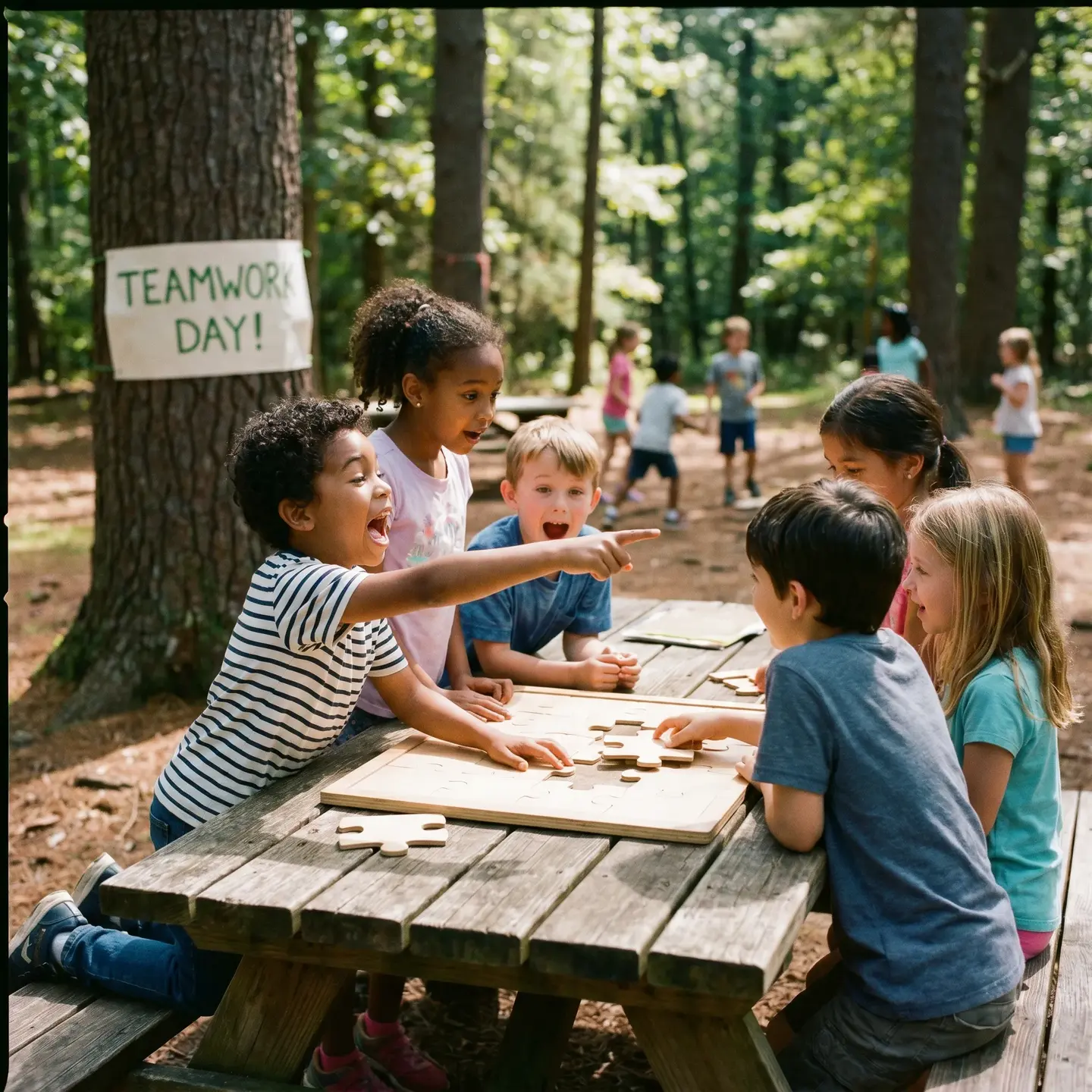
Children working together on a puzzle

Cultivating Growth Mindset: Shifting the Story About Ability

The research on growth mindset has transformed how we understand children’s motivation and persistence. When children believe their abilities are fixed—that they’re either “smart” or “not smart,” “athletic” or “not athletic”—they’re more likely to give up when facing challenges because struggle feels like evidence of their limitations.

When children believe abilities can be developed, they’re more likely to persist, seek help, and view failure as useful feedback rather than a final verdict on their worth.

Language that builds growth mindset:

  • Instead of “You’re so smart,” try “You worked really hard on that.”
  • Instead of “You’re a natural,” try “I can see how much practice has paid off.”
  • Instead of “That’s okay, math just isn’t your thing,” try “This is challenging. What strategies haven’t you tried yet?”

One powerful shift is adding the word “yet” to limiting beliefs. When your child says “I can’t do this,” you can gently respond, “You can’t do this yet. And that’s exactly why we practice.”

The Goldilocks Challenge: Finding the Balance Between Support and Struggle

One of the most common questions we hear from parents is: “How much should I help?” The answer lies in what we call the “Goldilocks Zone”—challenges that are not too hard (overwhelming) and not too easy (boring), but just right for building competence.

Too much support creates learned helplessness. When we consistently solve problems for our children, they receive an unintended message: “You can’t handle this.” Over time, they begin to believe it.

Too little support creates overwhelm and shame. When challenges consistently exceed children’s current capabilities without adequate scaffolding, they learn that trying is pointless because failure is inevitable.

Finding the Goldilocks Zone:

  • Assess your child’s current skill level honestly
  • Provide scaffolding that supports without taking over
  • Gradually fade support as competence increases
  • Allow natural consequences when the stakes are low enough to be instructive rather than traumatic

Our parenting strategies address this balance in depth, helping parents develop the judgment to know when to step in and when to step back.

Problem-Solving: Teaching the Process, Not Just the Answers

Resilient children trust their own capacity to figure things out. This trust develops through repeated experiences of facing problems, generating options, trying solutions, and learning from outcomes—with your presence and guidance, not your takeover.

A simple problem-solving framework to use with children:

  1. Define the problem: “What’s the situation? What’s making this hard?”
  2. Understand the feelings: “How are you feeling about this?”
  3. Brainstorm options: “What are all the ways you could handle this?” (Generate without judging)
  4. Evaluate options: “What might happen if you tried each one?”
  5. Choose and act: “Which feels right to try first?”
  6. Reflect: “What happened? What did you learn? What might you try differently next time?”

The goal isn’t to ensure your child always makes the “right” choice—it’s to build their confidence in the process of thinking through challenges.

Navigating Modern Challenges: Technology, Social Comparison, and Pressure

Children in 2026 face challenges that previous generations didn’t encounter. The constant connectivity of smartphones, the curated perfection of social media, and the escalating academic pressure all create unique threats to resilience development.

Key strategies for the digital age:

  • Delay smartphone access: Through initiatives like Raising Emotionally Resilient Children workshops and advocacy work with Unplugged Canada, we encourage families to delay smartphone access until at least age 14, giving children time to develop emotional regulation skills before facing the challenges of constant connectivity.
  • Model healthy technology use: Children notice when we reach for our phones during difficult moments. Show them that boredom, discomfort, and uncertainty can be tolerated without digital escape.
  • Create tech-free connection time: Regular moments of undivided attention build the relational security that serves as resilience’s foundation.
  • Teach critical thinking about social media: Help children understand the curated nature of online content and develop realistic expectations about life’s challenges.

When Resilience Isn’t Enough: Recognizing When to Seek Help

Building resilience is essential, but it’s not a substitute for professional support when children are struggling beyond what typical development or parenting strategies can address. Signs that your child may benefit from professional support include:

  • Persistent anxiety or worry that interferes with daily functioning
  • Withdrawal from activities, friendships, or family relationships
  • Significant changes in sleep, appetite, or energy
  • Expressing hopelessness or thoughts of self-harm
  • Intense emotional reactions that seem disproportionate to situations
  • Difficulty functioning at school or at home despite your best efforts

Seeking help isn’t a failure of resilience—it’s an expression of it. Recognizing when we need support and taking action to get it is one of the most resilient things any of us can do. If you’re wondering whether your family might benefit from professional guidance, you can schedule a consultation to discuss your concerns.

Teenager reflecting in autumn

Moving Forward: Progress, Not Perfection

Building emotional resilience in our children is not a destination we arrive at—it’s an ongoing process that unfolds across thousands of small interactions over many years. There will be days when you respond with patience and attunement, and days when you lose your temper or miss the cues. Both kinds of days offer opportunities for growth.

What matters most isn’t perfection. It’s the repair. It’s the return to connection. It’s the consistent message, delivered through your presence and your words: I see you. I believe in you. We can figure this out together.

Resilience doesn’t develop despite relationships—it develops because of them. The fact that you’re here, reading this, seeking to understand your child more deeply and parent more intentionally, is already evidence that you’re building the foundation your child needs.

Trust the process. Trust your child’s capacity to grow. And trust that every moment of genuine connection is planting seeds that will bear fruit for years to come.

Frequently Asked Questions

It refers to challenges that are just right, not too easy (boring) or too hard (overwhelming), to build skills without helplessness or shame. Assess their current abilities, offer scaffolding like questions such as what could you try next, then fade support as they gain confidence, starting with low-stakes situations.

If they show persistent anxiety, withdrawal, sleep or appetite changes, hopelessness, or cannot function at school or home despite your efforts, reach out to a professional. Seeking help is a resilient move, not a failure. General resilience guides are for foundational building, not crises.

Start by naming their feelings specifically (for example, frustrated rather than just mad) and linking them to body sensations (where do you feel that in your body?). Validate first by saying that sounds really hard, then share your own emotions to normalize them, turning everyday moments into literacy lessons.

Kids learn regulation through your co-regulation first. You cannot teach calm if you are not modeling it. Narrate your feelings such as saying you are overwhelmed so you will breathe, apologize for missteps, and show a growth mindset in action. Changes in your patterns often shift their behavior quickly.

Emotional resilience means growing stronger through challenges, like a tree developing deeper roots after a storm, rather than just snapping back to normal. It builds through relationships, emotional awareness, and skills like problem-solving, helping kids handle future setbacks with confidence.

Ola Obaro
Ola Obaro
Ola Obaro is a registered psychotherapist at FFEW with over a decade of clinical experience working with children, parents, and families. She specializes in Circle of Security and the Gordon Neufeld approach, bringing a multicultural perspective shaped by her work supporting immigrant families. Ola leads FFEW's Building Blocks and Courageous & Connected group programs for parents.

Take the first step toward calm, connected parenting

You don’t have to keep guessing. With the right tools and support, parenting can feel easier—and your child can thrive.

Book a Free Consultation


How we Treat

What we Treat

Raising Emotionally Resilient Children: The Complete Parent Guide for 2026

Emotional Development

By: Ola

A couple sits on a blanket in a park, smiling at each other, while three children play and run in the background. The setting features trees, grass, and warm golden sunlight, creating a serene outdoor scene.

Every parent knows the feeling: watching your child face disappointment, struggle with a difficult friendship, or crumble under the weight of a setback they weren’t expecting. In those moments, something deep within us wants to fix it, to smooth the path, to take away the pain. And yet, we also carry this quiet knowing that our children need to develop their own capacity to navigate life’s inevitable challenges. The question that keeps so many parents awake at night isn’t whether their child will face adversity—that’s a certainty—but whether they’ll have the inner resources to move through it with confidence and come out stronger on the other side.

At our practice, we’ve walked alongside hundreds of families wrestling with this very question. What we’ve learned, both through clinical experience and through research on resilience development, is that emotional resilience isn’t something children either have or don’t have. It’s not a fixed trait stamped into their personality at birth. Rather, it’s a set of learnable capabilities that develop within the context of relationships—most importantly, the relationship they have with you.

Child learning emotions

Who This Guide Is For—And Who It Isn’t

This guide is written for parents who want to move beyond reactive parenting and into intentional resilience-building. If you’re looking for quick fixes or strategies to simply stop difficult behavior, this may not be the right fit. But if you’re willing to look at the deeper work of building your child’s emotional foundation—understanding why they struggle and how to strengthen their capacity from the inside out—you’re in the right place.

This is for parents who:

  • Want to understand what’s really happening beneath their child’s meltdowns, avoidance, or giving up
  • Are willing to examine their own emotional patterns as part of the process
  • Seek evidence-based approaches rather than trending tips
  • Recognize that building resilience is a long-term investment, not an overnight transformation

If your child is currently in crisis or experiencing significant functional impairment, please reach out to a mental health professional directly. This guide provides foundational strategies, not crisis intervention.

Understanding Emotional Resilience: Beyond Simply Bouncing Back

We often hear resilience described as the ability to “bounce back” from adversity. But this definition, while partially true, misses something important. True emotional resilience isn’t about returning to the same state you were in before—it’s about growing through challenges in a way that expands your capacity for future difficulties.

Think of it less like a rubber band snapping back to its original shape and more like a tree that bends in a storm, then grows stronger roots and a more flexible trunk because of what it weathered.

According to the Center on the Developing Child’s resilience framework, resilience develops through the interaction of three key elements:

  1. Individual factors: Your child’s temperament, emotional awareness, and developing coping skills
  2. Relational factors: The quality of attachment and responsiveness in their primary relationships
  3. Environmental factors: The broader supports available through school, community, and culture

As parents, we have significant influence over all three—but our greatest leverage comes through the relational foundation we build with our children. This is why, at FFEW, we emphasize that connection always comes before correction. A child who feels securely attached to their caregiver has a safe base from which to venture into challenging experiences and a secure haven to return to when things get hard.

The Building Blocks: What Resilience Actually Looks Like

When we break resilience down into its core components, it becomes much clearer what we’re actually building. Understanding these elements helps us recognize opportunities in everyday moments rather than waiting for big challenges to teach the lessons.

Emotional Awareness and Regulation

Children cannot manage emotions they can’t recognize. The ability to identify, name, and tolerate difficult feelings forms the foundation of all resilience work. A child who can say “I’m feeling really frustrated right now” is already halfway to working through it. Our child therapy services often begin here—helping children develop the vocabulary and body awareness to understand their internal experience.

Growth Mindset

This is the belief that abilities can be developed through effort, good strategies, and input from others. Children with a growth mindset see challenges as opportunities to learn rather than evidence of their limitations. They’re more likely to persist when things get difficult and to view failure as information rather than identity.

Grit and Perseverance

While resilience helps children recover from setbacks, grit helps them sustain effort toward long-term goals even when progress is slow or boring. These qualities work together—grit keeps children moving forward, while resilience helps them recover when they stumble.

Problem-Solving Capacity

Resilient children trust their ability to figure things out. This doesn’t mean they know all the answers; it means they believe they can generate options, evaluate consequences, and take action even in uncertain situations.

Relational Security

Perhaps most importantly, resilient children have at least one stable, caring relationship with an adult who believes in them. This relationship serves as both the foundation and the fuel for all other resilience capabilities. You can learn more about Dr. Zia’s approach to child emotional development, which centers this relational foundation.

The Parent’s Role: You Can’t Pour from an Empty Cup

Here’s something we don’t talk about enough in parenting conversations: children learn emotional regulation primarily through co-regulation with their caregivers. Before they can calm themselves, they need to be calmed by another person hundreds—perhaps thousands—of times. Your nervous system is their first teacher.

This means that building resilience in our children starts with building it in ourselves. We cannot model what we don’t embody. When we respond to our own frustration, disappointment, and stress with awareness and intentional coping, our children absorb those patterns through observation and through the quality of our presence with them.

What this looks like in practice:

  • Narrating your own emotional experience: “I’m feeling really overwhelmed right now. I’m going to take some deep breaths before I respond.”
  • Modeling repair: “I snapped at you earlier, and that wasn’t okay. I was frustrated about work, and I took it out on you. I’m sorry.”
  • Demonstrating growth mindset: “This is really challenging for me, but I’m going to keep trying different approaches.”

When parents in our practice begin to shift their own emotional patterns, we consistently see ripple effects in their children’s behavior—sometimes before any direct work with the child at all.

Age-Appropriate Strategies: Meeting Children Where They Are

Resilience-building looks different at different developmental stages. A strategy that works beautifully with a seven-year-old may completely miss the mark with a teenager. Here’s how to adapt your approach:

Early Childhood (Ages 4-6)

At this stage, children are just beginning to develop emotional vocabulary and impulse control. They need:

  • Consistent routines that create predictability and safety
  • Simple emotion words introduced through books, play, and reflection (“You look disappointed that we have to leave the park”)
  • Co-regulation during big feelings rather than expectations of self-regulation
  • Small, manageable challenges with scaffolded support

Middle Childhood (Ages 7-11)

Children at this age have increasing cognitive capacity and are developing their sense of competence. They need:

  • Opportunities to solve problems independently with your support available when needed
  • Language that separates behavior from identity (“That was a mistake” vs. “You’re so careless”)
  • Exposure to appropriate challenges that stretch their capabilities
  • Explicit teaching of coping strategies they can use independently

Adolescence (Ages 12-17)

Teenagers need resilience support more than ever, but they need it delivered differently. They need:

  • Autonomy and voice in problem-solving conversations
  • Validation before advice (if advice is even wanted)
  • Opportunities to take healthy risks and experience natural consequences
  • Your presence without your control—being available without being intrusive

Our building confidence and independence resources address these developmental differences in greater detail.

Teaching Emotional Literacy: The Foundation of Everything

Children who can put words to their feelings are significantly better equipped to manage those feelings. Emotional literacy isn’t just about knowing the word “angry”—it’s about understanding the nuances between frustrated, disappointed, embarrassed, and jealous, and recognizing how each emotion shows up in the body.

Strategies for building emotional literacy:

  1. Expand the vocabulary: Move beyond “happy, sad, mad” to more specific emotions. Use feeling wheels, books about emotions, and everyday opportunities to introduce nuanced language.
  2. Connect emotions to body sensations: “Where do you feel that frustration in your body? Is it a tight feeling in your chest? Clenched fists?”
  3. Validate before redirecting: Always acknowledge the emotion before trying to change it. “You’re really upset that we can’t stay longer. That makes sense—you were having so much fun.”
  4. Share your own emotional experience: Let children see that adults have complex feelings too. This normalizes the full range of human emotion.

What to say when your child is overwhelmed:

  • “That sounds really hard.”
  • “I can see how upset you are.”
  • “Tell me more about what happened.”
  • “I’m right here with you.”

Notice that none of these responses try to fix, minimize, or redirect the emotion. Validation communicates that feelings are acceptable and manageable—which, paradoxically, helps children move through them faster than rushing to solutions.

Children working together on a puzzle

Cultivating Growth Mindset: Shifting the Story About Ability

The research on growth mindset has transformed how we understand children’s motivation and persistence. When children believe their abilities are fixed—that they’re either “smart” or “not smart,” “athletic” or “not athletic”—they’re more likely to give up when facing challenges because struggle feels like evidence of their limitations.

When children believe abilities can be developed, they’re more likely to persist, seek help, and view failure as useful feedback rather than a final verdict on their worth.

Language that builds growth mindset:

  • Instead of “You’re so smart,” try “You worked really hard on that.”
  • Instead of “You’re a natural,” try “I can see how much practice has paid off.”
  • Instead of “That’s okay, math just isn’t your thing,” try “This is challenging. What strategies haven’t you tried yet?”

One powerful shift is adding the word “yet” to limiting beliefs. When your child says “I can’t do this,” you can gently respond, “You can’t do this yet. And that’s exactly why we practice.”

The Goldilocks Challenge: Finding the Balance Between Support and Struggle

One of the most common questions we hear from parents is: “How much should I help?” The answer lies in what we call the “Goldilocks Zone”—challenges that are not too hard (overwhelming) and not too easy (boring), but just right for building competence.

Too much support creates learned helplessness. When we consistently solve problems for our children, they receive an unintended message: “You can’t handle this.” Over time, they begin to believe it.

Too little support creates overwhelm and shame. When challenges consistently exceed children’s current capabilities without adequate scaffolding, they learn that trying is pointless because failure is inevitable.

Finding the Goldilocks Zone:

  • Assess your child’s current skill level honestly
  • Provide scaffolding that supports without taking over
  • Gradually fade support as competence increases
  • Allow natural consequences when the stakes are low enough to be instructive rather than traumatic

Our parenting strategies address this balance in depth, helping parents develop the judgment to know when to step in and when to step back.

Problem-Solving: Teaching the Process, Not Just the Answers

Resilient children trust their own capacity to figure things out. This trust develops through repeated experiences of facing problems, generating options, trying solutions, and learning from outcomes—with your presence and guidance, not your takeover.

A simple problem-solving framework to use with children:

  1. Define the problem: “What’s the situation? What’s making this hard?”
  2. Understand the feelings: “How are you feeling about this?”
  3. Brainstorm options: “What are all the ways you could handle this?” (Generate without judging)
  4. Evaluate options: “What might happen if you tried each one?”
  5. Choose and act: “Which feels right to try first?”
  6. Reflect: “What happened? What did you learn? What might you try differently next time?”

The goal isn’t to ensure your child always makes the “right” choice—it’s to build their confidence in the process of thinking through challenges.

Navigating Modern Challenges: Technology, Social Comparison, and Pressure

Children in 2026 face challenges that previous generations didn’t encounter. The constant connectivity of smartphones, the curated perfection of social media, and the escalating academic pressure all create unique threats to resilience development.

Key strategies for the digital age:

  • Delay smartphone access: Through initiatives like Raising Emotionally Resilient Children workshops and advocacy work with Unplugged Canada, we encourage families to delay smartphone access until at least age 14, giving children time to develop emotional regulation skills before facing the challenges of constant connectivity.
  • Model healthy technology use: Children notice when we reach for our phones during difficult moments. Show them that boredom, discomfort, and uncertainty can be tolerated without digital escape.
  • Create tech-free connection time: Regular moments of undivided attention build the relational security that serves as resilience’s foundation.
  • Teach critical thinking about social media: Help children understand the curated nature of online content and develop realistic expectations about life’s challenges.

When Resilience Isn’t Enough: Recognizing When to Seek Help

Building resilience is essential, but it’s not a substitute for professional support when children are struggling beyond what typical development or parenting strategies can address. Signs that your child may benefit from professional support include:

  • Persistent anxiety or worry that interferes with daily functioning
  • Withdrawal from activities, friendships, or family relationships
  • Significant changes in sleep, appetite, or energy
  • Expressing hopelessness or thoughts of self-harm
  • Intense emotional reactions that seem disproportionate to situations
  • Difficulty functioning at school or at home despite your best efforts

Seeking help isn’t a failure of resilience—it’s an expression of it. Recognizing when we need support and taking action to get it is one of the most resilient things any of us can do. If you’re wondering whether your family might benefit from professional guidance, you can schedule a consultation to discuss your concerns.

Teenager reflecting in autumn

Moving Forward: Progress, Not Perfection

Building emotional resilience in our children is not a destination we arrive at—it’s an ongoing process that unfolds across thousands of small interactions over many years. There will be days when you respond with patience and attunement, and days when you lose your temper or miss the cues. Both kinds of days offer opportunities for growth.

What matters most isn’t perfection. It’s the repair. It’s the return to connection. It’s the consistent message, delivered through your presence and your words: I see you. I believe in you. We can figure this out together.

Resilience doesn’t develop despite relationships—it develops because of them. The fact that you’re here, reading this, seeking to understand your child more deeply and parent more intentionally, is already evidence that you’re building the foundation your child needs.

Trust the process. Trust your child’s capacity to grow. And trust that every moment of genuine connection is planting seeds that will bear fruit for years to come.

Understanding how Emotions Function: Learn to Ride your Child’s Wave

Understanding how emotions function in humans has been instrumental in guiding how I parent my three children, and it’…

Read more

Nurturing Emotional Expression in Children

In my years of working with families, I’ve noticed there are some children whose emotions are clear and observable…

Read more

How to Decode Your Child’s Emotional Messages

When my youngest son was 8, he came home from school, slammed his backpack on the floor, and proceeded to move into a di…

Read more