
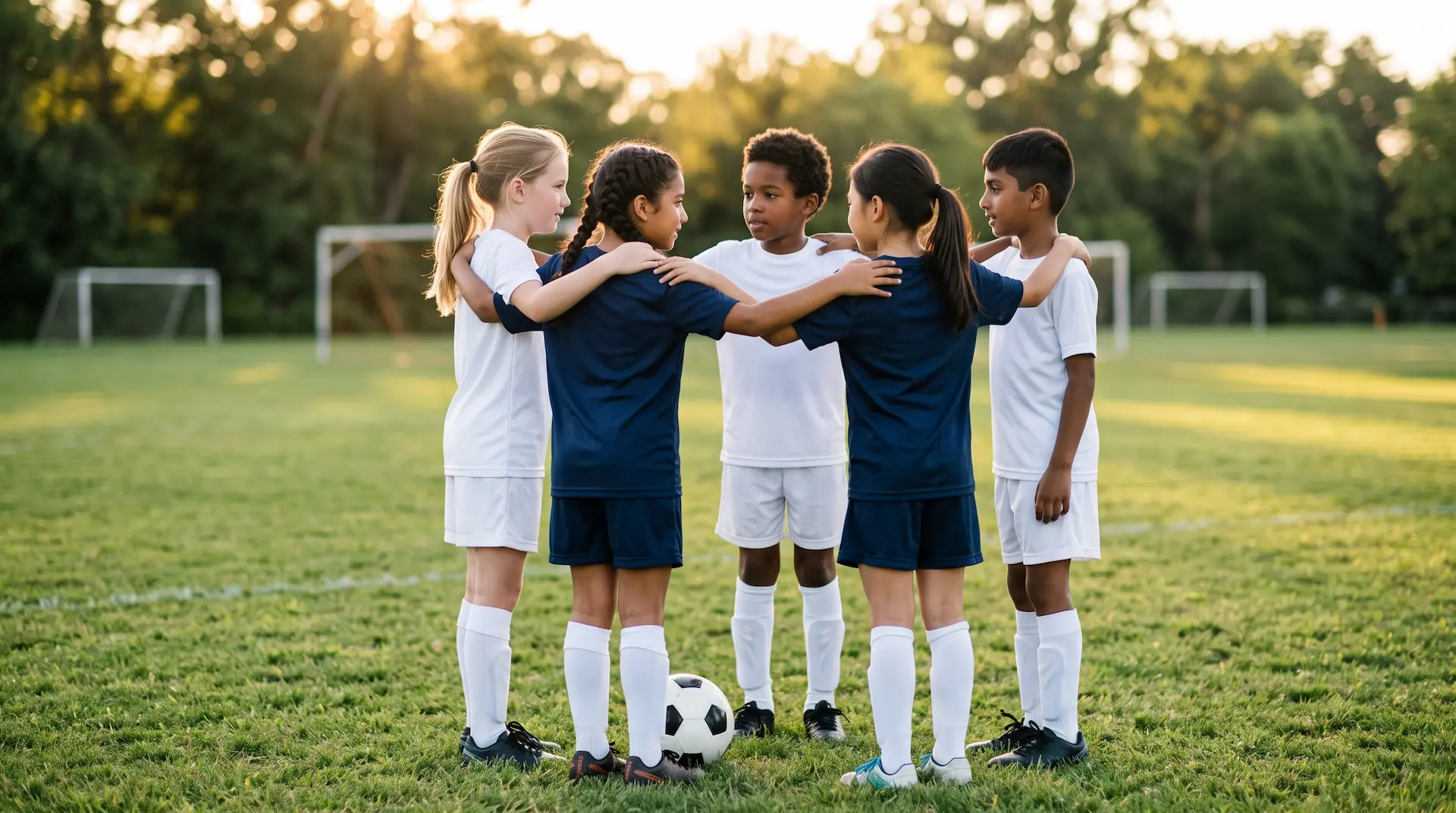
Sports Psychology for Kids: A Group Program for Young Athletes
An in-person group program at our Riverdale Toronto location for young athletes ages 9 to 12. Facilitated by Jaydon Frid, MSW, RSW. Practical emotion regulation, focus, and confidence tools your child can bring onto the ice, court, or field.
Book a Free Consultation
Why Young Athletes Struggle in Ways That Don’t Always Get Named
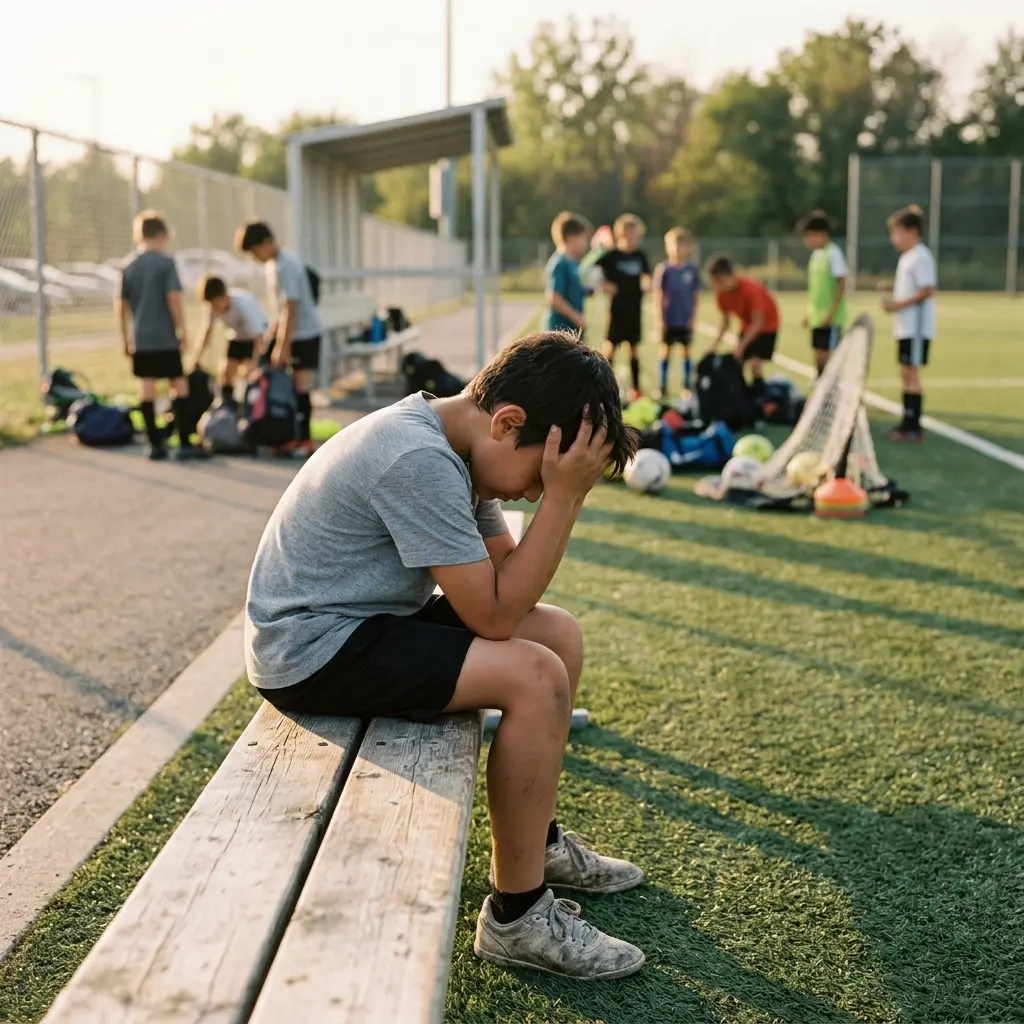
You see it in the tears after a lost game, the tantrum on the sideline, the sudden refusal to try out for the team next year. Most parents assume this is just part of growing up. Often it isn’t. Underneath the outburst is a nervous system that hasn’t yet been taught how to handle the intensity of competition, and a young brain that’s still learning to regulate under pressure.
Youth sports have changed. What used to be about play, teamwork, and building character has become increasingly high-stakes: earlier specialization, tougher tryouts, more competitive travel teams, and higher expectations from coaches and parents. For a child with a still-developing brain, the psychological load is real. Without support, the joy of the game can quietly slip away.
For a child still learning to manage intense emotion, competition can turn a sport they love into something they dread. The mental side of the game is often the deciding factor between kids who thrive and kids who quit.
What This Group Actually Teaches: Emotion Regulation Applied to Sport
Sports psychology for kids isn’t about pep talks or “just try harder.” It’s about giving young athletes a working understanding of what happens inside their body and mind when the pressure rises, and a specific set of tools they can use before, during, and after competition. The result: kids play with more focus, recover faster from mistakes, and hold onto the joy that got them into sport in the first place.
This group is built on emotion regulation, one of FFEW’s core clinical frames. When kids learn to notice, name, and adjust their internal state, everything else on the field improves: focus lasts longer, confidence recovers faster, and setbacks stop hijacking the next play. The techniques we teach are drawn from evidence-based sport psychology, then adapted to work for a nine to twelve-year-old brain.
The Five Challenges We Address
Every young athlete faces some version of these. What most kids don’t have is a way to work on them. This group turns each one into a skill they can practice.
1. Performance Anxiety and Pre-Game Nerves
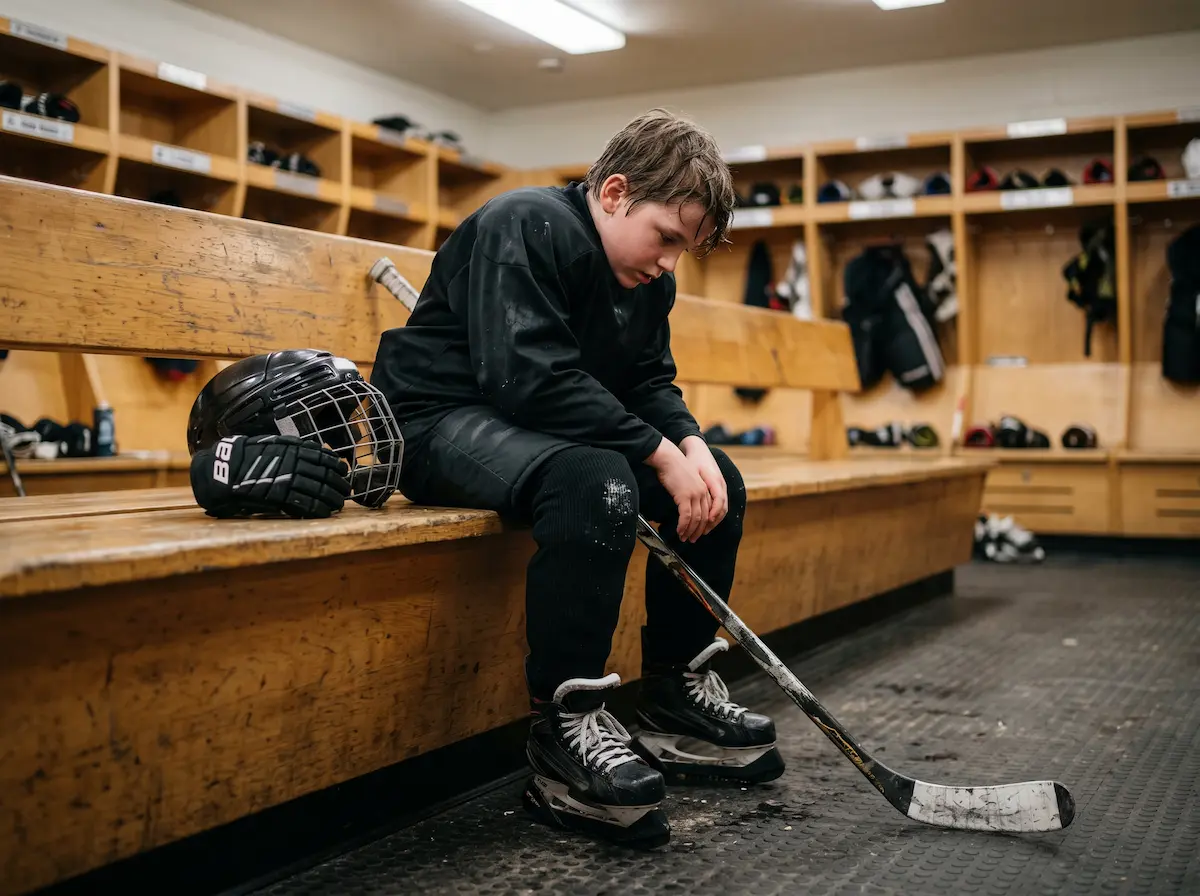
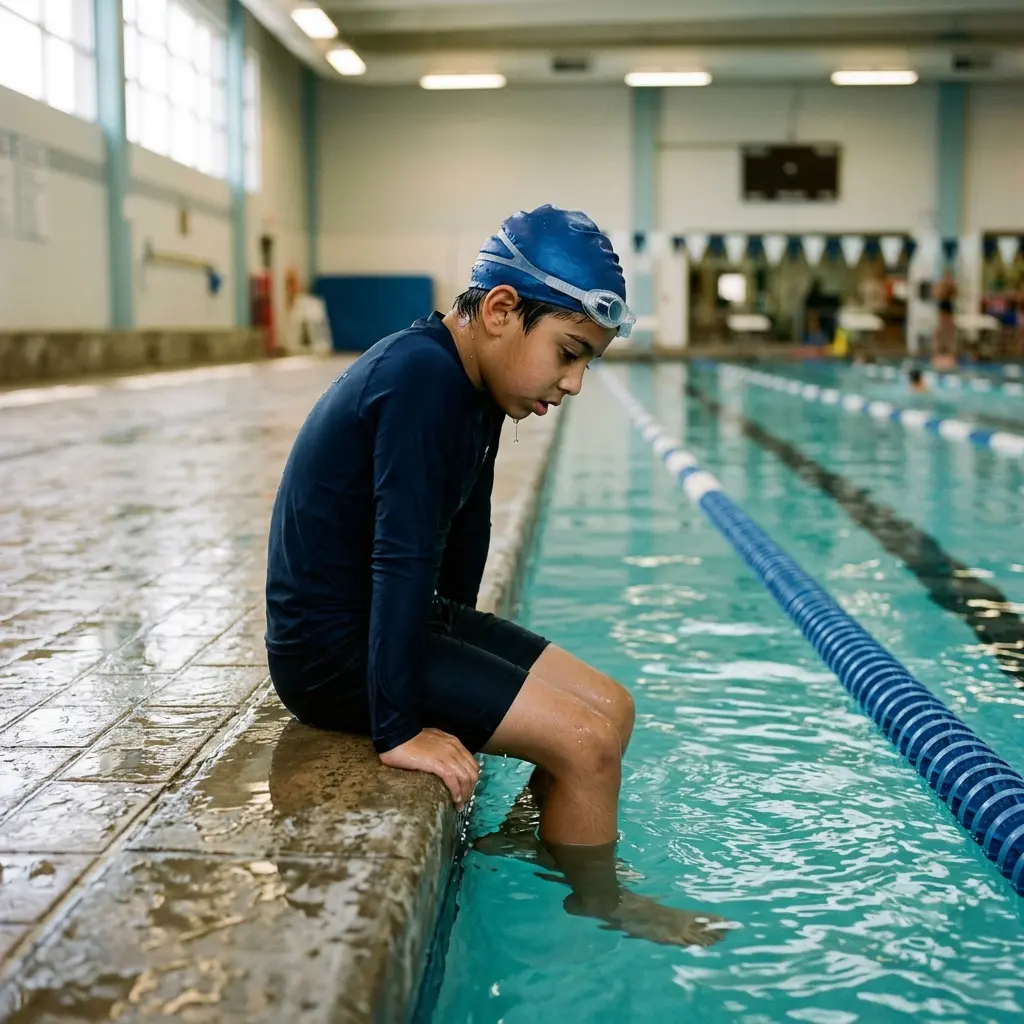
The stomach ache before the game. The kid who was excited yesterday and doesn’t want to leave the car today. Performance anxiety is one of the most common reasons young athletes underperform or quit. Your child will learn how to recognize what’s happening in their body, and a specific set of techniques (breathing, self-talk, mental rehearsal) they can use to settle themselves in the moments before competition.
2. Emotion Regulation Under Pressure
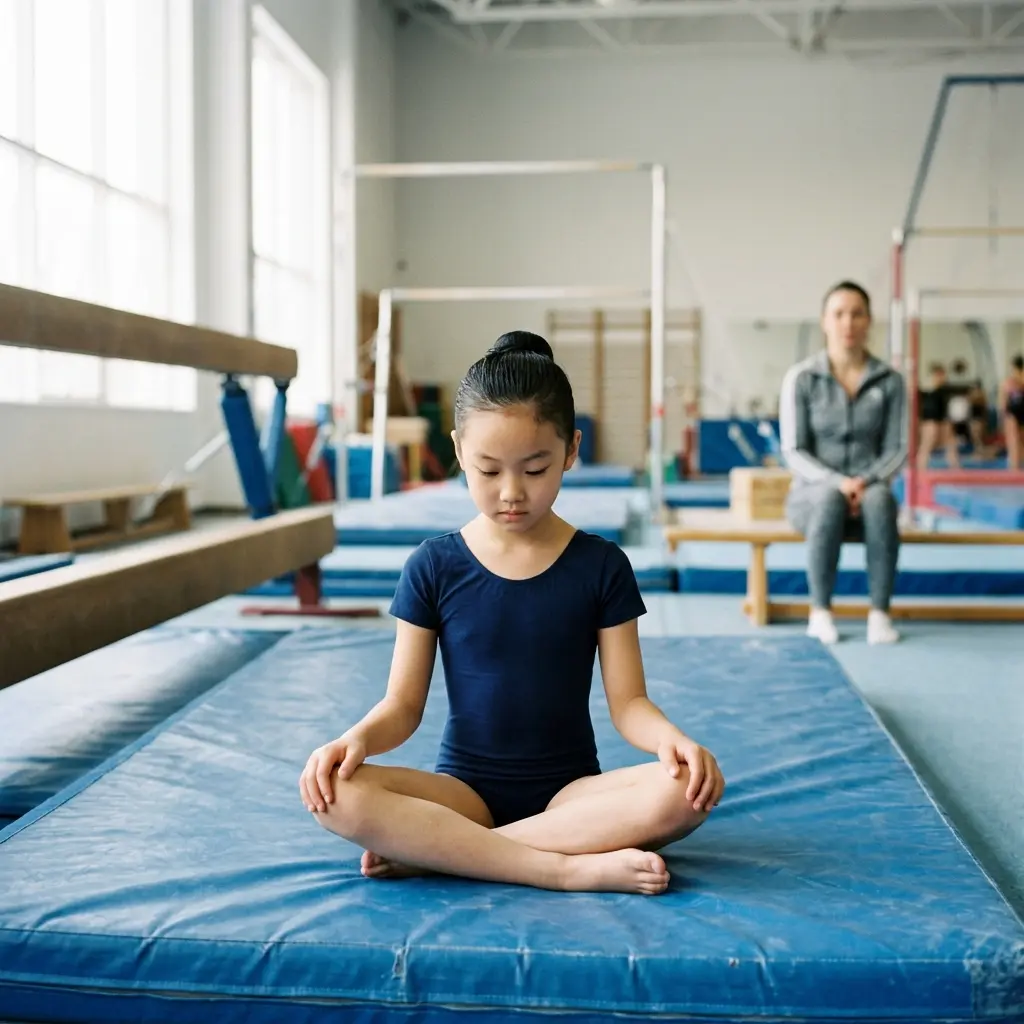
The meltdown after a bad call. The stormed-off sideline. The rage after a loss. These moments aren’t a character flaw, they’re a nervous system that hasn’t yet learned how to stay regulated when the stakes rise. Your child will build the skill of noticing their state, using simple grounding techniques in the moment, and recovering their composure without needing an adult to co-regulate for them.
3. Coping With Mistakes, Losses, and Setbacks
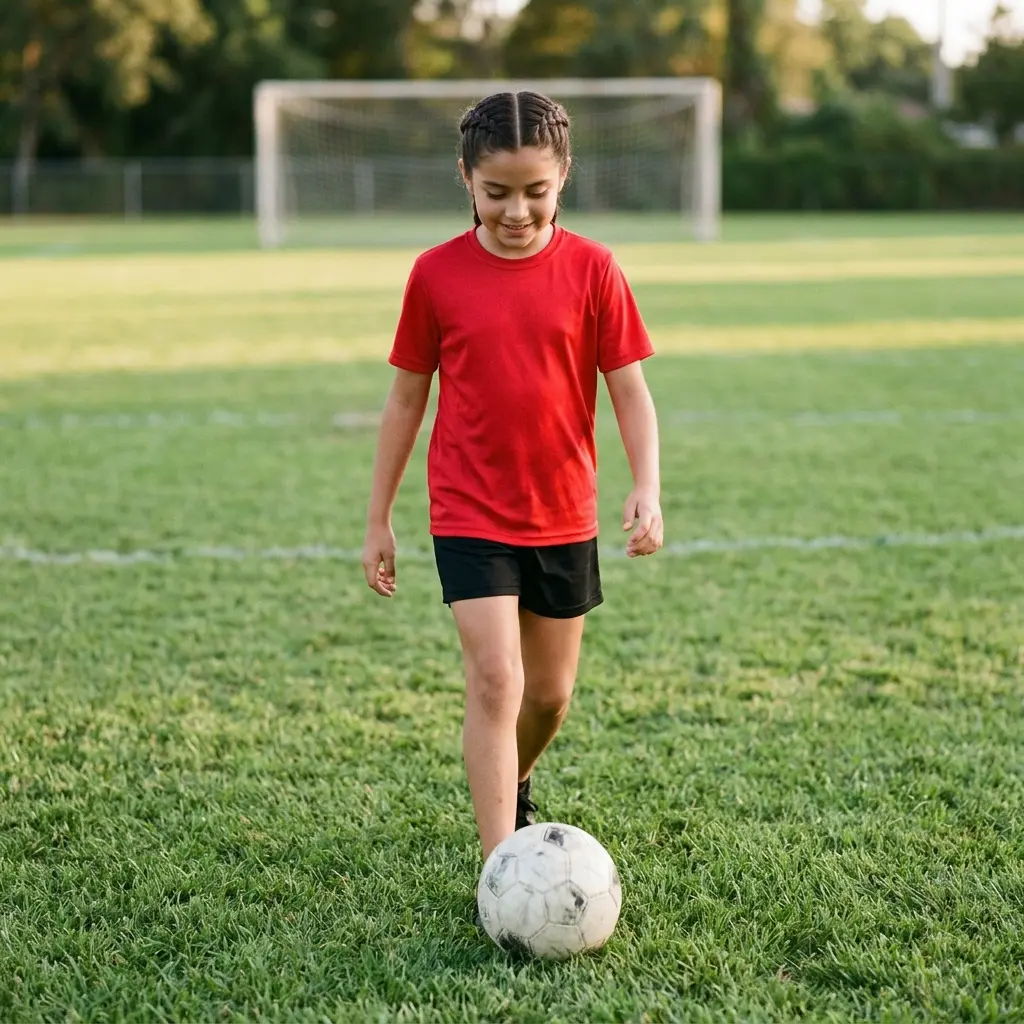
One missed shot can spiral into a whole bad game. One tough loss can shape how a kid feels about their sport for a whole season. Learning to metabolize mistakes and losses without carrying them forward is one of the most important mental skills in sport. Kids leave with a simple, repeatable “reset” they can use between plays, and a framework for what to do after a hard game.
4. Self-Confidence That Doesn’t Rely on Winning
When a young athlete’s confidence lives and dies with the scoreboard, they’re in trouble. The kids who last in sport are the ones whose confidence is built on effort, growth, and self-trust. Your child will build an internal picture of themselves as an athlete that doesn’t collapse after a bad practice, using self-talk and identity-building techniques adapted from sport psychology research.
5. Focus and Attention During the Game
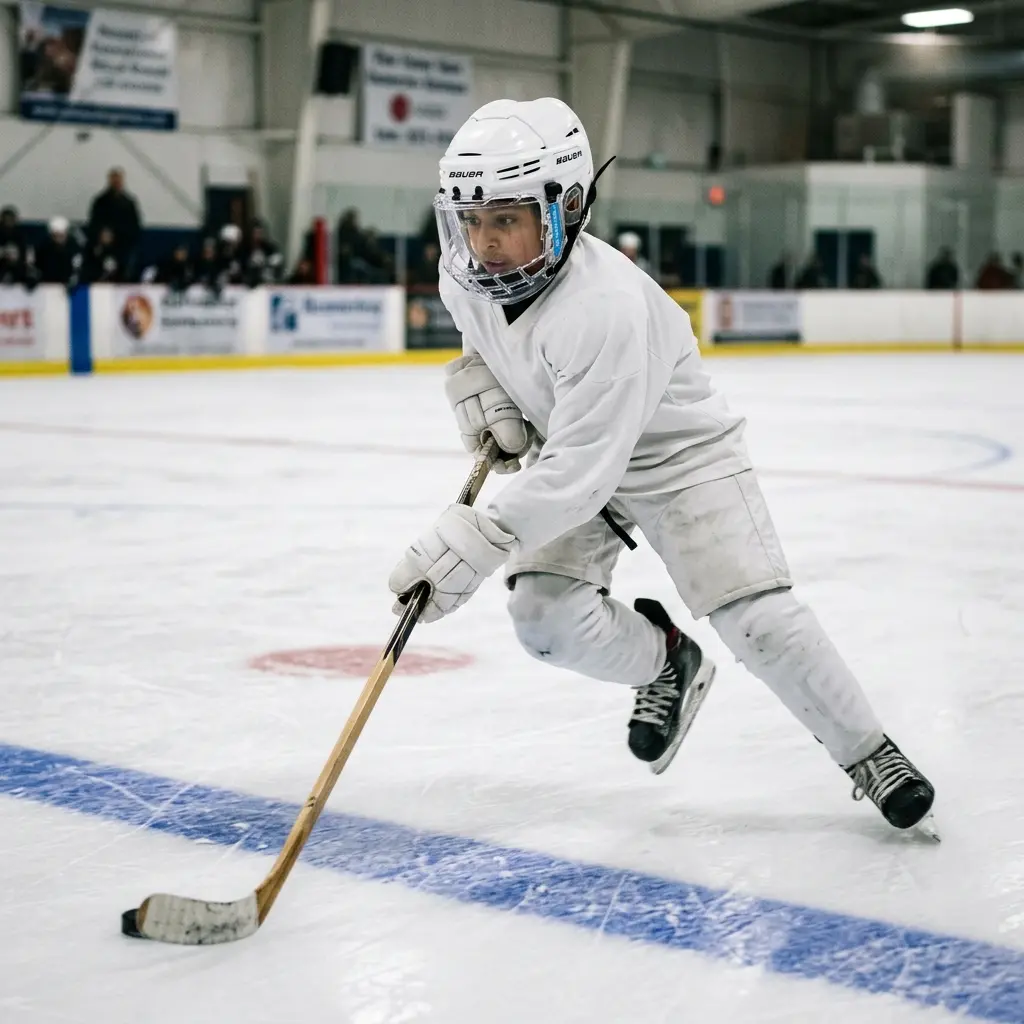
Kids who can’t lock in during the game rarely play to their potential. Focus is a trainable skill, not a fixed trait. Your child will practice specific attention techniques used by elite athletes and adapted for younger brains, including visualization, present-moment cues, and how to reset focus after a distraction.
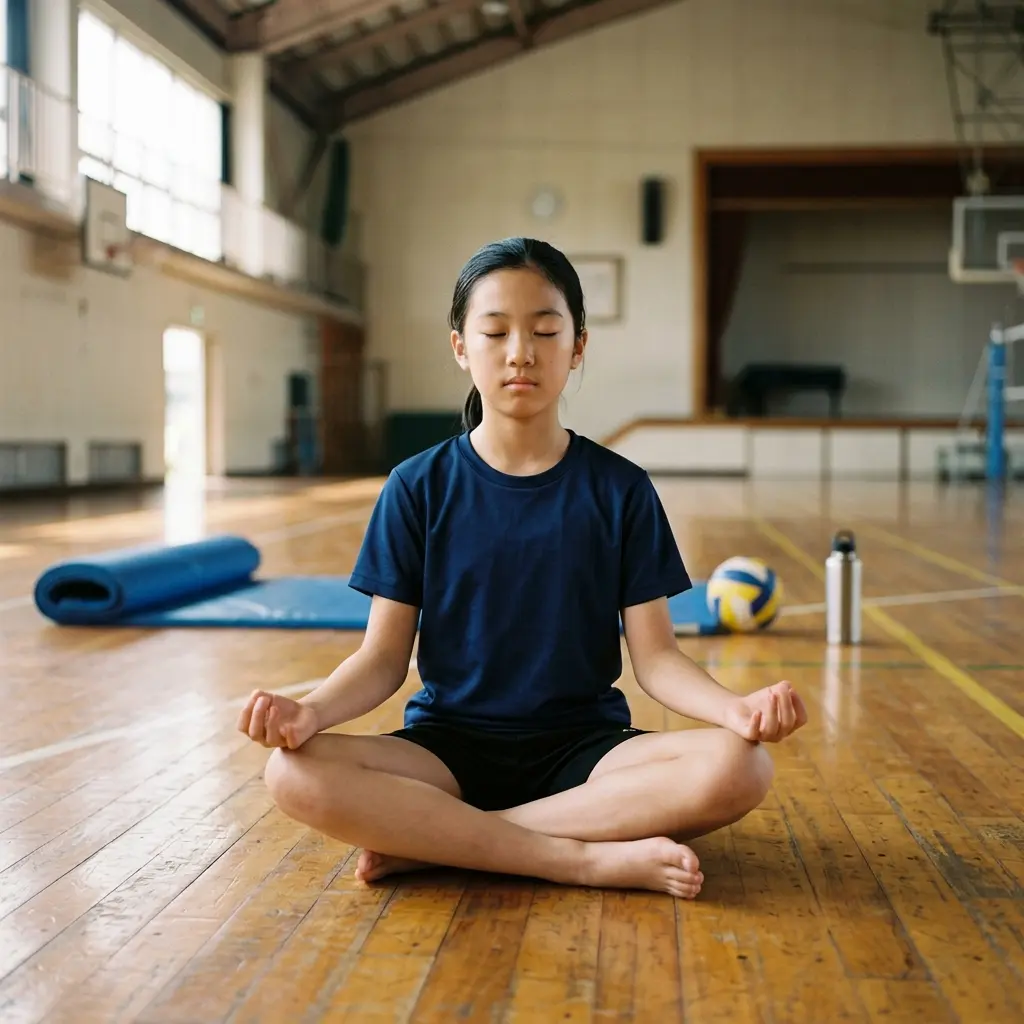
The Specific Tools Your Athlete Will Learn
This isn’t a group where kids just talk about their feelings. It’s a skills group where they leave with concrete, evidence-based techniques they can actually use before, during, and after competition. Jaydon walks each athlete through the specific tools that Dr. Heather Wheeler uses with her professional and elite-level athlete clients, adapted for a younger brain.
- Visualization and mental imagery: practicing successful performance in the mind’s eye to build neural pathways for confident play
- Focused breathing techniques: physiological tools for calming pre-game nerves and resetting after a mistake
- Self-talk and cue words: replacing negative internal chatter with the kind of self-talk that top athletes rely on under pressure
- Pre-performance routines: a repeatable set of steps your athlete uses before every game to enter the right mental state
- The “reset” skill: a specific, practiced technique for letting go of a mistake and returning to the present moment
- Goal-setting frameworks: learning to set process goals (things they can control) rather than outcome goals (things they can’t)
Group Details
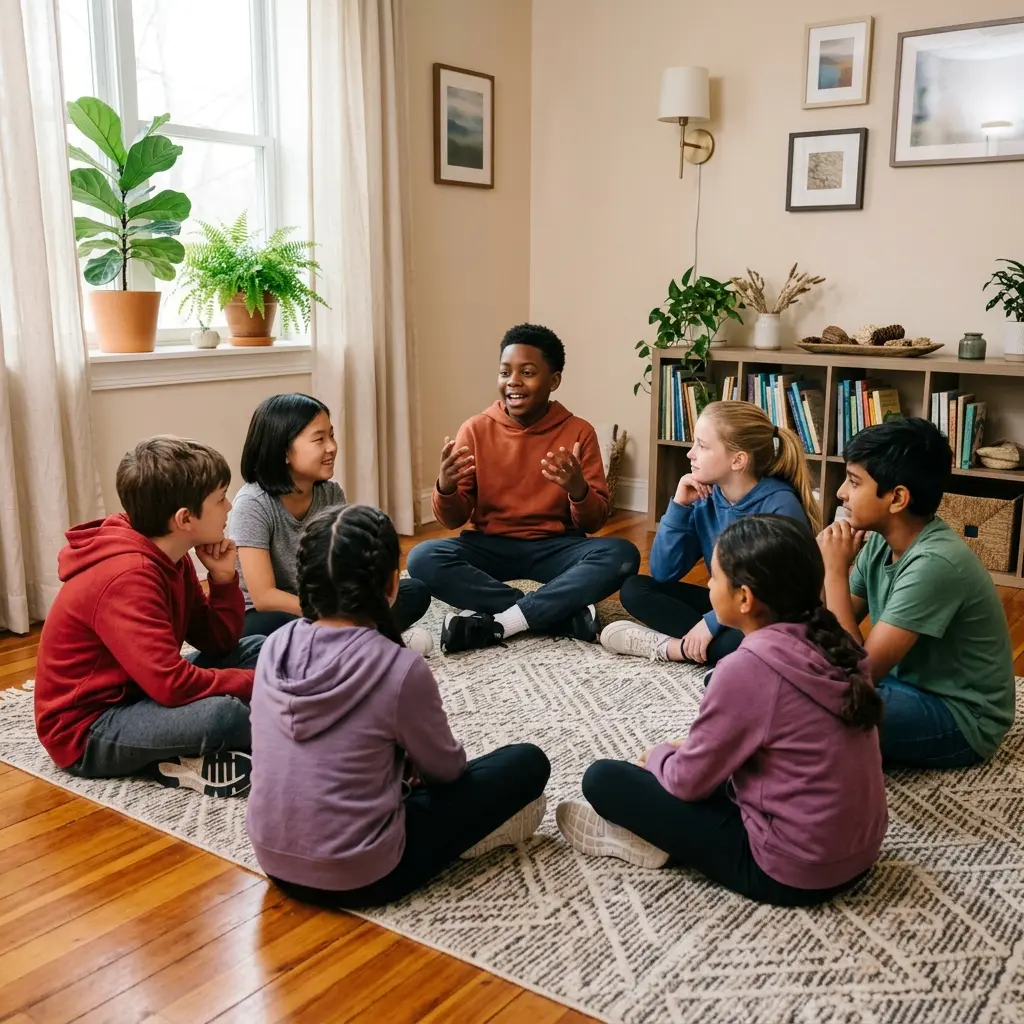
- For athletes ages: 9 to 12
- Format: In-person at our Riverdale Toronto location (177 Danforth Ave, Suite 302)
- Group size: 5 to 7 athletes per cohort
- Length: 8 sessions, 1 hour each
- Schedule: Monday, 5:00pm to 6:00pm
- Fee: $95 per session, $760 total for the full 8-week series
- Start: November 2, 2026
Sessions are billed as psychological services and are covered by most extended health insurance plans. This group is built around clinical emotion regulation rather than performance-only coaching.
Book a Free Consultation
A Note for Parents of Young Athletes
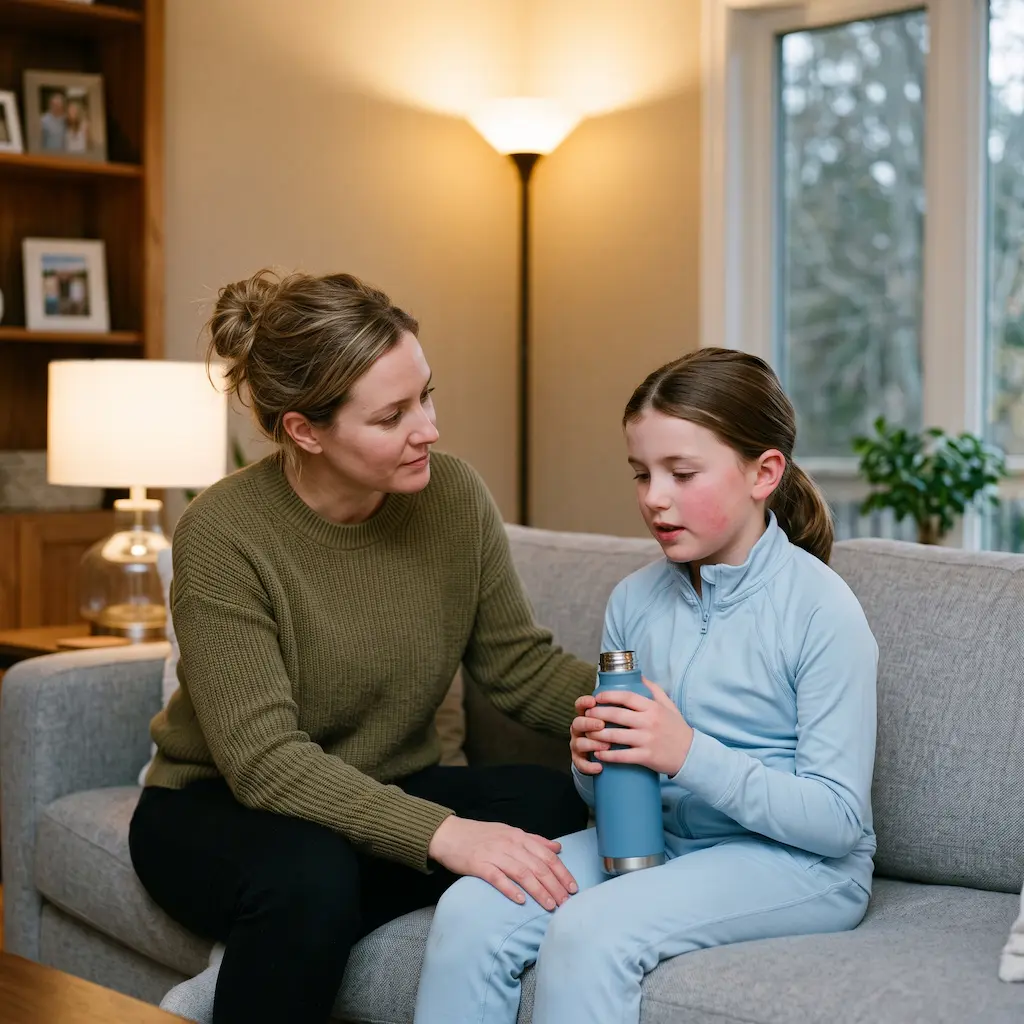
This first cohort is designed as a group for the athlete, not a group for parents. That’s deliberate. Kids do their best work in a peer setting, learning alongside other athletes going through the same thing. Parents will receive a summary of what the group is working on and how you can reinforce it at home, without needing to become the coach yourself.
A dedicated parent group focused on supporting young athletes is on our roadmap for a future cohort. If that’s something you’d want to be part of, let us know and we’ll add you to the interest list.

Meet Your Facilitator
Jaydon Frid, MSW, RSW is a registered social worker on the FFEW clinical team, working with children and adolescents on emotion regulation, anxiety, and family-systems dynamics. For this program, Jaydon completed specialized training with Dr. Heather Wheeler, C.Psych., a Toronto psychologist with expertise in working with athletes, including at elite and professional levels.
Dr. Wheeler has provided ongoing consultation on the development of this group, and Jaydon will draw directly on the techniques she uses with her top-tier clients, adapted for a young athlete’s brain. The framework combines evidence-based sport psychology with FFEW’s clinical grounding in emotion regulation.
Read Jaydon’s Full Bio

Frequently Asked Questions
Here are answers to common questions parents ask about this service—so you can feel more confident about what to expect.
What is sports psychology for kids?
Sports psychology for kids is the practice of teaching young athletes the mental skills that help them handle pressure, recover from mistakes, focus during competition, and build confidence that isn’t tied to winning. It draws on the same evidence base used with adult and elite athletes, adapted for a nine to twelve-year-old brain and delivered by a clinician trained in child mental health.
Does my child have to be a high-level athlete to benefit?
No. This group is for any child who plays sport regularly and struggles with performance anxiety, meltdowns, quitting patterns, confidence dips, or focus problems. Recreational athletes benefit just as much as competitive ones, sometimes more, because they haven’t yet been taught the mental skills that competitive programs sometimes force them to figure out on their own.
Does the group focus on a specific sport?
The tools taught in this group are sport-agnostic and apply across all sports, whether your child plays hockey, soccer, basketball, swimming, gymnastics, or something else. Because our first cohort has drawn strong interest from hockey and rink-sport families, the initial examples and role plays will lean into that context. If your athlete plays something different, the skills still fully transfer, and Jaydon adapts examples to match the sports the athletes in the group actually play.
How is this different from working with a sports coach?
A coach teaches the physical and tactical side of the game. This group teaches the mental side: emotion regulation, focus, anxiety management, and how to build durable confidence. Coaches focus on what to do in the game. This group focuses on what happens inside your child while they’re doing it. The two are complementary, not competing.
Who is Dr. Heather Wheeler and what’s her role?
Dr. Heather Wheeler, C.Psych. is a Toronto psychologist with expertise in working with athletes, including at elite and professional levels. Jaydon completed specialized training with her, and she has provided ongoing consultation on the development of this group. Her direct involvement means we can bring the same evidence-based techniques she uses with her top-tier clients into a child-focused therapeutic group format, rather than diluted versions of adult performance coaching.
What if my child doesn’t want to talk about their sport in detail?
That’s fine. This isn’t a group where kids present their game film or explain their performance. It’s a skills group. Your child learns and practices tools alongside other athletes, and how much they share about their own experience is up to them. The peer format tends to reduce the pressure of individual therapy, which many kids find easier.
Is the group covered by insurance?
Sessions are delivered by our clinical team, including registered social workers and psychotherapists, and billed as psychological services on your receipt. Most extended health insurance plans that cover psychological services will reimburse these sessions, though coverage varies by plan and provider type. Check with your insurer about what your plan covers.
Will there be a version of this for teens or a parent group?
A teen version (ages 13 and up) and a dedicated parent group focused on supporting young athletes are both on our roadmap. If either would be a fit for your family, let us know at registration and we’ll add you to the interest list for the next cohort.