Serving all Ontario residents | In-person and virtual appointments available

Call us today

(647) 360-3294

Skip to content
Back to Blog

Resilience & Coping Skills

The Importance of Unstructured Play for Child Development: Building Emotional Resilience Through Free Play

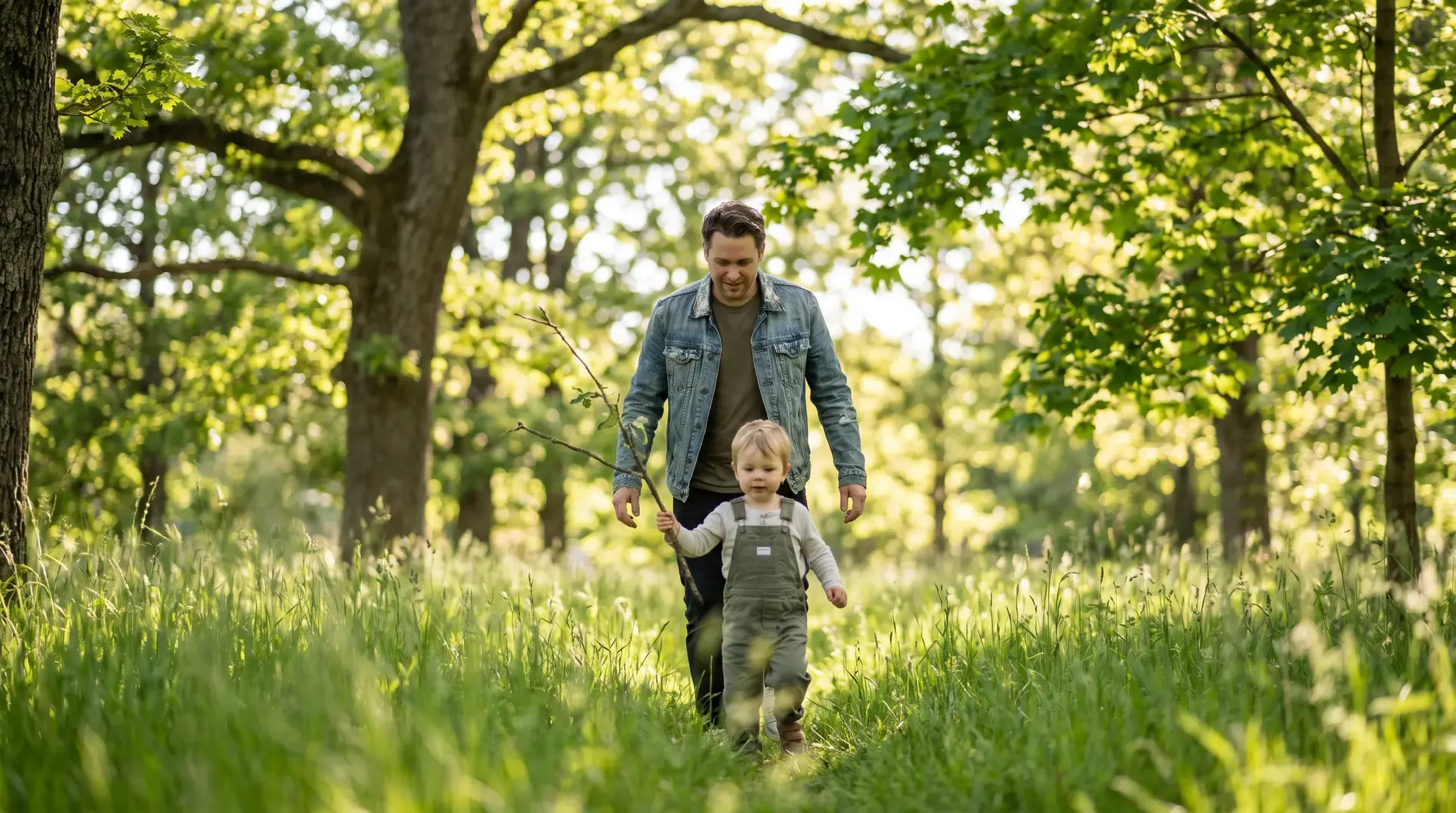
An adult and a child walking through a grassy, wooded area on a sunny day. The child is holding a stick, and the scene is surrounded by trees with green leaves.

There’s a moment that happens in many homes—perhaps it’s happened in yours. Your child finishes their homework, their soccer practice is done for the day, and suddenly they’re standing in front of you saying those two words that can make any parent’s stomach tighten: “I’m bored.” In that moment, you might feel a familiar pull to fix the problem, to suggest an activity, download an app, or sign them up for one more enrichment program. I want to offer you a different perspective—one that might feel counterintuitive at first but is deeply supported by what we know about how children develop emotional resilience. That boredom your child just expressed? It might be exactly what their developing brain needs.

Who This Article Is For

This piece is written for parents and caregivers who genuinely want to understand what supports their child’s emotional development—parents who are willing to question the cultural pressure to fill every moment with structured enrichment. If you’ve noticed that despite all the activities and programs, your child still struggles with frustration, anxiety, or emotional outbursts, this exploration of unstructured play may offer insights you haven’t encountered before.
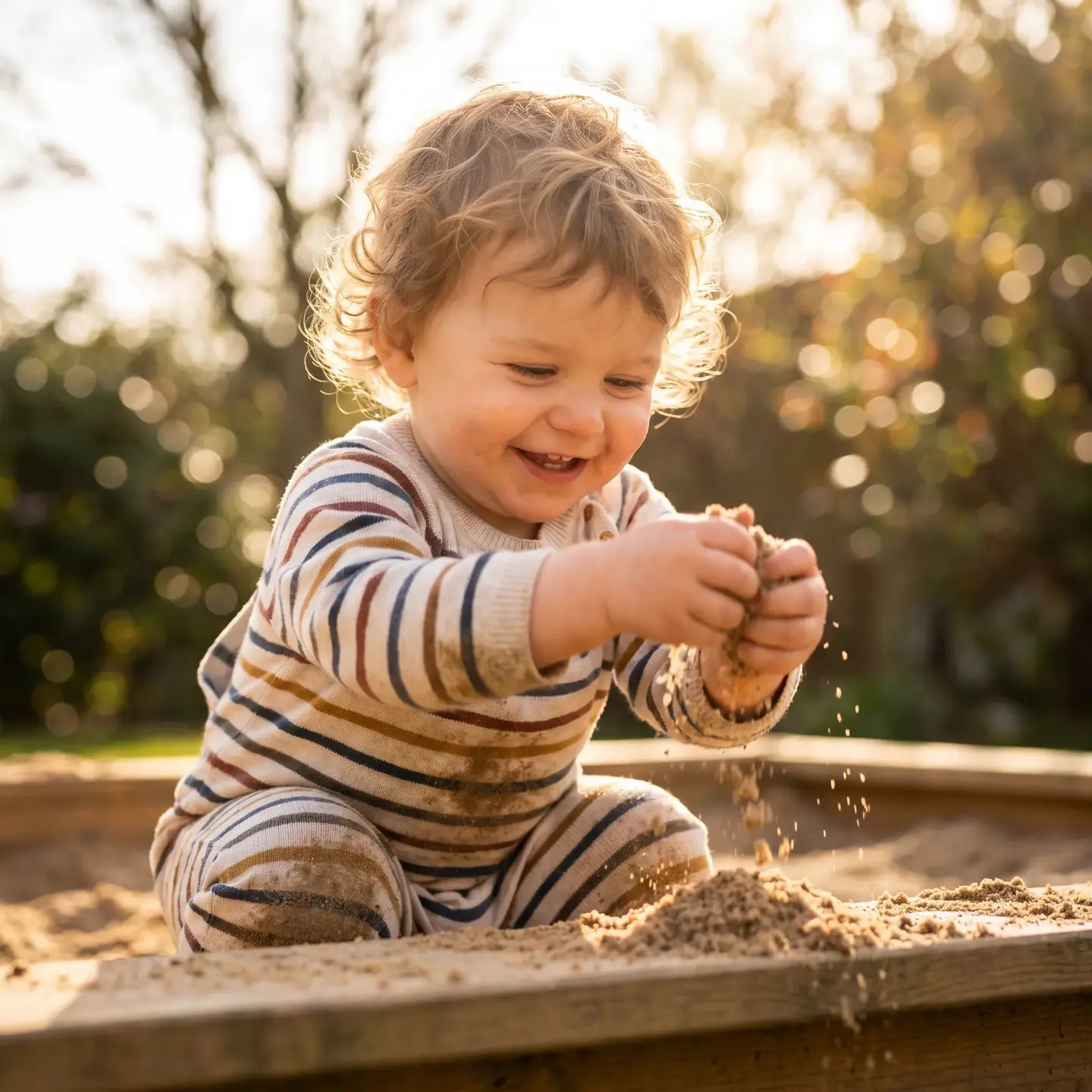
Toddler exploring sandbox

This article isn’t for parents looking for a quick fix or another program to add to the calendar. It’s for those ready to consider that sometimes doing less creates space for more—more resilience, more creativity, more emotional competence.

What Unstructured Play Actually Means

Before we explore why unstructured play matters so profoundly for your child’s emotional wellness, let’s get clear on what we’re actually talking about. Unstructured play—also called free play or child-directed play—is activity that your child initiates and controls, without predetermined rules, adult-defined goals, or specific outcomes to achieve. It’s the opposite of the organized activities that fill many children’s schedules: soccer practice with a coach directing every drill, piano lessons with set pieces to master, or educational apps with correct answers to find.

I want to address a common misconception immediately: unstructured play does not mean unsupervised or unsafe play. You can absolutely be present—available if needed, keeping a watchful eye—while still allowing your child to direct their own activity. The distinction isn’t about your physical presence; it’s about who’s in charge of what happens next.

Unstructured play might look like:

  • Building an elaborate fort from couch cushions with no blueprint to follow
  • Digging in the backyard with no particular goal beyond exploration
  • Making up imaginative games with siblings or neighbourhood children
  • Creating art without a template or expected final product
  • Climbing trees and testing physical limits in age-appropriate ways

What it doesn’t look like is time spent on screens, which—while it may feel unstructured—actually involves following someone else’s programming, algorithms, and predetermined pathways. The active healthy living for children initiatives recognize that genuine free play involves physical engagement with the real world in ways that digital experiences cannot replicate.

The Emotional Development Benefits: Building Resilience Through Play

Here’s what I’ve observed consistently in my clinical work: children who have abundant opportunities for unstructured play develop stronger emotional regulation, better frustration tolerance, and more robust coping mechanisms than children whose time is entirely structured by adults. This isn’t coincidental—it’s developmental necessity at work.

When a child engages in free play, they encounter small challenges constantly. The block tower falls. The friend wants to play a different game. The stick they needed for their project breaks. These micro-frustrations, navigated without adult intervention, become the training ground for emotional resilience. Each time your child experiences disappointment during play and finds their way through it, they’re building neural pathways that say: I can handle difficult feelings. I can adapt. I can try again.

The research from Harvard confirms what developmental psychologists have long understood: free play shapes the brain in ways that support lifelong emotional wellbeing. During unstructured play, children practice:

  • Emotional regulation—managing the frustration when things don’t go as planned
  • Distress tolerance—sitting with uncomfortable feelings without immediately seeking rescue
  • Flexible thinking—adapting when circumstances change unexpectedly
  • Self-soothing—calming themselves when upset without adult co-regulation

For families I work with who are struggling with a child’s anxiety, emotional outbursts, or defiance, I often discover that the child has very little opportunity to practice these skills in low-stakes environments. When every activity is structured and adult-directed, children never get to experience manageable difficulty and discover their own capacity to cope.

The Executive Function Connection

The prefrontal cortex—the part of the brain responsible for planning, decision-making, impulse control, and what psychologists call executive function—develops significantly during childhood. And here’s what’s remarkable: research consistently shows that unstructured play is one of the primary contexts in which executive function develops.

When your child decides to build something, they must plan. When their plan doesn’t work, they must adapt. When they’re playing with others, they must inhibit their impulses and consider others’ perspectives. These are the same skills they need to:

  • Complete homework without constant supervision
  • Handle transitions between activities without meltdowns
  • Manage disappointment when things don’t go their way
  • Delay gratification for longer-term goals

What’s particularly striking is that executive function measured in early childhood is a stronger predictor of academic success than IQ. The capacity for self-regulation that develops through free play may ultimately matter more for your child’s future than any enrichment program you could enrol them in.

Social and Communication Development Through Peer Play

Some of the most powerful development happens when children engage in unstructured play with peers—without adults mediating every interaction. I know this can feel uncomfortable. When conflicts arise, our instinct is to step in, to smooth things over, to ensure fairness. But when we consistently rescue children from social challenges, we rob them of essential learning opportunities.
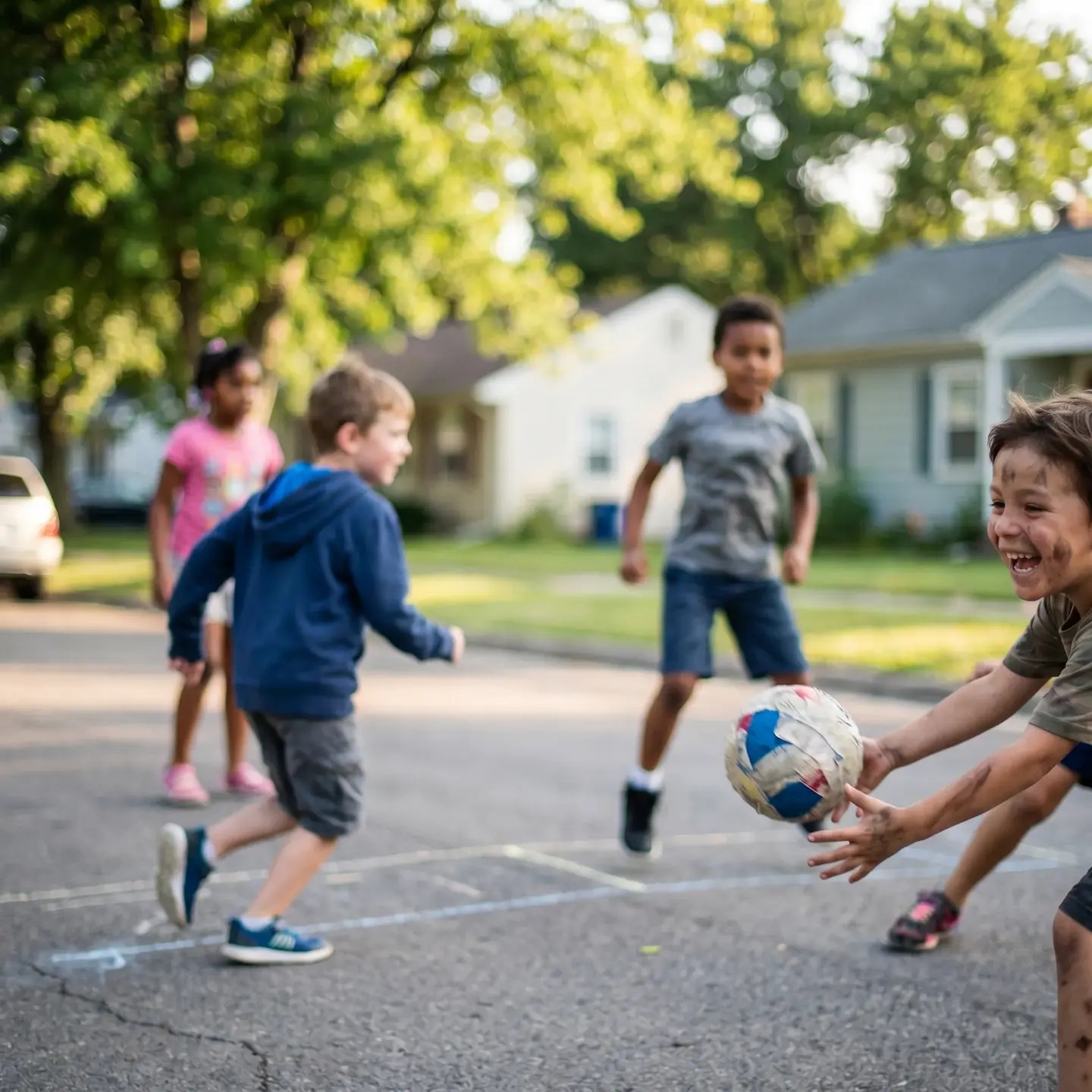
Neighborhood children creative play

During unstructured peer play, children naturally practice:

  • Negotiation—”I want to play this, you want to play that, how do we figure this out?”
  • Perspective-taking—understanding that others have different desires and viewpoints
  • Conflict resolution—working through disagreements without adult arbitration
  • Empathy—recognizing and responding to others’ emotions
  • Reciprocity—learning the give-and-take that healthy relationships require

The feedback children receive from peers is immediate and authentic in ways that adult feedback can never be. If a child is bossy or dismissive, peers simply stop playing with them. If they’re collaborative and fun, play continues and deepens. This natural consequence system is far more effective for developing genuine social competence than adult-imposed rules about sharing and taking turns.

What Unstructured Play Looks Like at Different Ages

One gap I notice in conversations about free play is the lack of concrete guidance about what this actually looks like across development. Parents often understand the concept but struggle to envision implementation. Here’s what unstructured play typically involves at different stages:

Infants and Toddlers (Birth to Age 3)

At this stage, unstructured play is primarily sensory and exploratory. It looks like:

  • Exploring objects with hands, mouths, and bodies without being directed to play “correctly”
  • Free movement on the floor rather than always being contained in devices
  • Dumping and filling containers, stacking and knocking down blocks
  • Outdoor time touching grass, leaves, water, sand

Preschoolers (Ages 3-5)

Imaginative play explodes during this period. Unstructured play includes:

  • Pretend play with whatever materials are available—boxes become spaceships, sticks become wands
  • Dress-up and role-playing without adult-scripted scenarios
  • Art-making with no template or expected outcome
  • Physical play including running, jumping, climbing at the child’s chosen pace

School-Age Children (Ages 6-10)

This is the golden age of unstructured play with peers. It looks like:

  • Neighbourhood play where children create their own games and rules
  • Building projects—forts, structures, inventions—without instructions
  • Outdoor exploration and nature play
  • Physical challenges that test limits safely—climbing, balancing, rough-and-tumble play

Tweens and Teens (Ages 11-17)

Unstructured time remains essential even as it evolves:

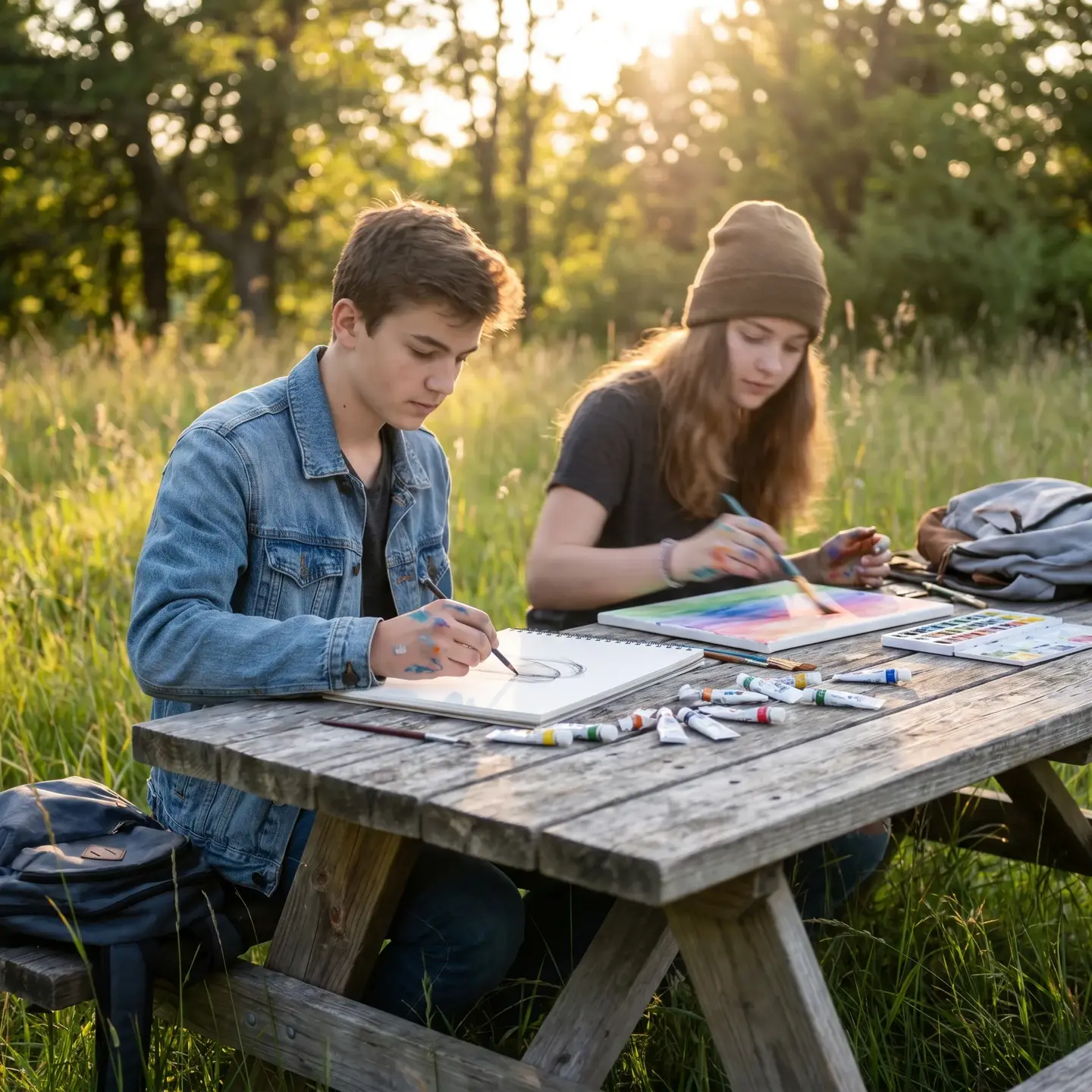
  • Self-directed creative projects—writing, music, art without grades or evaluation
  • Unstructured time with friends without constant adult supervision
  • Exploration of interests without performance pressure
  • Physical activity chosen by the teen, not mandated by parents

Our child emotional development support services are designed to help parents understand what healthy development looks like at each stage and how to create environments that foster emotional growth.

Common Barriers and How to Overcome Them

Understanding the value of unstructured play is one thing; actually creating space for it in modern family life is another. Let me address the real obstacles parents face:

Over-Scheduled Calendars

Many families I work with have children in activities every day of the week. The solution isn’t necessarily eliminating all activities, but honestly evaluating which ones bring genuine joy and benefit, and which have become obligations. Consider:

  • Limiting activities to two or three per week maximum
  • Protecting at least one full weekend day with no scheduled commitments
  • Building in transition time before and after activities rather than rushing from one to the next

Safety Concerns

The fear that something bad might happen prevents many parents from allowing the kind of outdoor, independent play that builds resilience. The research actually suggests that age-appropriate risk-taking during play develops better risk perception and may reduce anxiety over time. Start small:

  • Gradually extend the boundaries of where your child can play independently
  • Connect with neighbours to create informal supervision networks
  • Practice self-calming strategies when your own anxiety rises about your child’s safety

Screen Time Competition

When given the choice between the endless stimulation of screens and the initial discomfort of unstructured time, children will often choose screens. This is where parental boundaries become essential—not punitive, but protective. At Foundations for Emotional Wellness, we support the Unplugged Canada initiative, which advocates for delaying smartphones until age 14. Creating screen-free windows in your day opens space for the unstructured play that builds genuine skills.

Parental Discomfort with Boredom

Your child’s boredom can feel like your failure. It isn’t. The discomfort of boredom is actually the doorway to creativity. When we immediately solve our children’s boredom, we communicate that they can’t handle uncomfortable feelings—the opposite of what builds resilience. Practice tolerating your own discomfort when your child complains, and trust that they will find their way to meaningful play.

Creating Space for Unstructured Play

Based on both research and clinical experience, here are practical strategies for building more free play into your family’s life:

  1. Audit your weekly schedule—write out everything, then identify where unstructured time could be protected
  2. Create a “yes” environment—have accessible materials for creative play (art supplies, building materials, dress-up clothes) and outdoor spaces where mess and exploration are allowed
  3. Resist the urge to direct—when your child starts playing, let them lead even if it’s not how you would do it
  4. Facilitate without taking over—you might set up an environment (put out paint and paper) without dictating what to create
  5. Protect outdoor time daily—even 30 minutes of outdoor free play offers significant benefits
  6. Connect with other families—unstructured play with peers multiplies the developmental benefits

The children’s mental health and development resources available emphasize that play is not optional for healthy development—it’s essential.

When to Be Concerned

While most children naturally engage in play when given the opportunity, certain patterns may warrant professional consultation. Consider reaching out if you notice:

  • Persistent difficulty engaging in any form of pretend or imaginative play beyond typical developmental age
  • Extreme rigidity in play patterns—only playing one way, intense distress when play is disrupted
  • Complete avoidance of peer play or inability to sustain any positive peer interaction
  • Aggressive play that consistently escalates despite clear boundaries
  • Play themes that are persistently violent, sexual, or concerning in nature

These patterns don’t necessarily indicate a problem, but they may suggest that a child could benefit from professional support. At our practice, we approach these concerns with curiosity about what the child might be communicating through their play. You can learn more about Dr. Zia’s approach to child psychology and how we work with families facing these challenges.

Starting Small

If your family has been caught in the over-scheduling trap, shifting toward more unstructured time doesn’t require a complete lifestyle overhaul. Start with small, sustainable changes:
  • Protect one hour this weekend for unstructured outdoor time
  • Drop one activity next season and don’t replace it
  • Create one screen-free evening per week where the whole family finds other ways to spend time
  • When your child says “I’m bored,” respond with “I’m sure you’ll figure something out” and trust that they will

Teens painting outdoor art

The parent-child relationship is strengthened not by what we do for our children, but by who we are with them. When we stop rushing from activity to activity and create space for genuine connection during unstructured time, we communicate something profound: I enjoy being with you. I trust you. You are capable.

Our parent education workshops explore these themes in depth, helping parents understand the “why” behind what they’re observing in their children and providing practical strategies for building emotional resilience through everyday interactions.

If you’ve recognized your child in these pages—struggling with emotional regulation, frustration tolerance, or anxiety despite all the activities and enrichment you’ve provided—you’re not alone. Many families find themselves in this position, and understanding the connection between play and emotional development is the first step toward meaningful change. If you’d like support in creating a family environment that nurtures your child’s emotional growth, I invite you to schedule a consultation with our team. Together, we can explore what your child needs to thrive.

Dr. Zia Lakdawalla
Dr. Zia Lakdawalla
I am a registered clinical psychologist who specializes in working with children, adolescents, and parents. My goal is to help clients cope with uncomfortable feelings, improve relationships, and increase competency and efficacy in managing the demands of each new stage of development.I am also a strong believer that the environment in which kids are immersed is a critical factor in how they learn to regulate their emotions and build resilience.

Take the first step toward calm, connected parenting

You don’t have to keep guessing. With the right tools and support, parenting can feel easier—and your child can thrive.

Book a Free Consultation


How we Treat

What we Treat

The Importance of Unstructured Play for Child Development: Building Emotional Resilience Through Free Play

Resilience & Coping Skills

By: Dr. Zia

An adult and a child walking through a grassy, wooded area on a sunny day. The child is holding a stick, and the scene is surrounded by trees with green leaves.

There’s a moment that happens in many homes—perhaps it’s happened in yours. Your child finishes their homework, their soccer practice is done for the day, and suddenly they’re standing in front of you saying those two words that can make any parent’s stomach tighten: “I’m bored.” In that moment, you might feel a familiar pull to fix the problem, to suggest an activity, download an app, or sign them up for one more enrichment program. I want to offer you a different perspective—one that might feel counterintuitive at first but is deeply supported by what we know about how children develop emotional resilience. That boredom your child just expressed? It might be exactly what their developing brain needs.

Who This Article Is For

This piece is written for parents and caregivers who genuinely want to understand what supports their child’s emotional development—parents who are willing to question the cultural pressure to fill every moment with structured enrichment. If you’ve noticed that despite all the activities and programs, your child still struggles with frustration, anxiety, or emotional outbursts, this exploration of unstructured play may offer insights you haven’t encountered before.

Toddler exploring sandbox

This article isn’t for parents looking for a quick fix or another program to add to the calendar. It’s for those ready to consider that sometimes doing less creates space for more—more resilience, more creativity, more emotional competence.

What Unstructured Play Actually Means

Before we explore why unstructured play matters so profoundly for your child’s emotional wellness, let’s get clear on what we’re actually talking about. Unstructured play—also called free play or child-directed play—is activity that your child initiates and controls, without predetermined rules, adult-defined goals, or specific outcomes to achieve. It’s the opposite of the organized activities that fill many children’s schedules: soccer practice with a coach directing every drill, piano lessons with set pieces to master, or educational apps with correct answers to find.

I want to address a common misconception immediately: unstructured play does not mean unsupervised or unsafe play. You can absolutely be present—available if needed, keeping a watchful eye—while still allowing your child to direct their own activity. The distinction isn’t about your physical presence; it’s about who’s in charge of what happens next.

Unstructured play might look like:

  • Building an elaborate fort from couch cushions with no blueprint to follow
  • Digging in the backyard with no particular goal beyond exploration
  • Making up imaginative games with siblings or neighbourhood children
  • Creating art without a template or expected final product
  • Climbing trees and testing physical limits in age-appropriate ways

What it doesn’t look like is time spent on screens, which—while it may feel unstructured—actually involves following someone else’s programming, algorithms, and predetermined pathways. The active healthy living for children initiatives recognize that genuine free play involves physical engagement with the real world in ways that digital experiences cannot replicate.

The Emotional Development Benefits: Building Resilience Through Play

Here’s what I’ve observed consistently in my clinical work: children who have abundant opportunities for unstructured play develop stronger emotional regulation, better frustration tolerance, and more robust coping mechanisms than children whose time is entirely structured by adults. This isn’t coincidental—it’s developmental necessity at work.

When a child engages in free play, they encounter small challenges constantly. The block tower falls. The friend wants to play a different game. The stick they needed for their project breaks. These micro-frustrations, navigated without adult intervention, become the training ground for emotional resilience. Each time your child experiences disappointment during play and finds their way through it, they’re building neural pathways that say: I can handle difficult feelings. I can adapt. I can try again.

The research from Harvard confirms what developmental psychologists have long understood: free play shapes the brain in ways that support lifelong emotional wellbeing. During unstructured play, children practice:

  • Emotional regulation—managing the frustration when things don’t go as planned
  • Distress tolerance—sitting with uncomfortable feelings without immediately seeking rescue
  • Flexible thinking—adapting when circumstances change unexpectedly
  • Self-soothing—calming themselves when upset without adult co-regulation

For families I work with who are struggling with a child’s anxiety, emotional outbursts, or defiance, I often discover that the child has very little opportunity to practice these skills in low-stakes environments. When every activity is structured and adult-directed, children never get to experience manageable difficulty and discover their own capacity to cope.

The Executive Function Connection

The prefrontal cortex—the part of the brain responsible for planning, decision-making, impulse control, and what psychologists call executive function—develops significantly during childhood. And here’s what’s remarkable: research consistently shows that unstructured play is one of the primary contexts in which executive function develops.

When your child decides to build something, they must plan. When their plan doesn’t work, they must adapt. When they’re playing with others, they must inhibit their impulses and consider others’ perspectives. These are the same skills they need to:

  • Complete homework without constant supervision
  • Handle transitions between activities without meltdowns
  • Manage disappointment when things don’t go their way
  • Delay gratification for longer-term goals

What’s particularly striking is that executive function measured in early childhood is a stronger predictor of academic success than IQ. The capacity for self-regulation that develops through free play may ultimately matter more for your child’s future than any enrichment program you could enrol them in.

Social and Communication Development Through Peer Play

Some of the most powerful development happens when children engage in unstructured play with peers—without adults mediating every interaction. I know this can feel uncomfortable. When conflicts arise, our instinct is to step in, to smooth things over, to ensure fairness. But when we consistently rescue children from social challenges, we rob them of essential learning opportunities.

Neighborhood children creative play

During unstructured peer play, children naturally practice:

  • Negotiation—”I want to play this, you want to play that, how do we figure this out?”
  • Perspective-taking—understanding that others have different desires and viewpoints
  • Conflict resolution—working through disagreements without adult arbitration
  • Empathy—recognizing and responding to others’ emotions
  • Reciprocity—learning the give-and-take that healthy relationships require

The feedback children receive from peers is immediate and authentic in ways that adult feedback can never be. If a child is bossy or dismissive, peers simply stop playing with them. If they’re collaborative and fun, play continues and deepens. This natural consequence system is far more effective for developing genuine social competence than adult-imposed rules about sharing and taking turns.

What Unstructured Play Looks Like at Different Ages

One gap I notice in conversations about free play is the lack of concrete guidance about what this actually looks like across development. Parents often understand the concept but struggle to envision implementation. Here’s what unstructured play typically involves at different stages:

Infants and Toddlers (Birth to Age 3)

At this stage, unstructured play is primarily sensory and exploratory. It looks like:

  • Exploring objects with hands, mouths, and bodies without being directed to play “correctly”
  • Free movement on the floor rather than always being contained in devices
  • Dumping and filling containers, stacking and knocking down blocks
  • Outdoor time touching grass, leaves, water, sand

Preschoolers (Ages 3-5)

Imaginative play explodes during this period. Unstructured play includes:

  • Pretend play with whatever materials are available—boxes become spaceships, sticks become wands
  • Dress-up and role-playing without adult-scripted scenarios
  • Art-making with no template or expected outcome
  • Physical play including running, jumping, climbing at the child’s chosen pace

School-Age Children (Ages 6-10)

This is the golden age of unstructured play with peers. It looks like:

  • Neighbourhood play where children create their own games and rules
  • Building projects—forts, structures, inventions—without instructions
  • Outdoor exploration and nature play
  • Physical challenges that test limits safely—climbing, balancing, rough-and-tumble play

Tweens and Teens (Ages 11-17)

Unstructured time remains essential even as it evolves:

  • Self-directed creative projects—writing, music, art without grades or evaluation
  • Unstructured time with friends without constant adult supervision
  • Exploration of interests without performance pressure
  • Physical activity chosen by the teen, not mandated by parents

Our child emotional development support services are designed to help parents understand what healthy development looks like at each stage and how to create environments that foster emotional growth.

Common Barriers and How to Overcome Them

Understanding the value of unstructured play is one thing; actually creating space for it in modern family life is another. Let me address the real obstacles parents face:

Over-Scheduled Calendars

Many families I work with have children in activities every day of the week. The solution isn’t necessarily eliminating all activities, but honestly evaluating which ones bring genuine joy and benefit, and which have become obligations. Consider:

  • Limiting activities to two or three per week maximum
  • Protecting at least one full weekend day with no scheduled commitments
  • Building in transition time before and after activities rather than rushing from one to the next

Safety Concerns

The fear that something bad might happen prevents many parents from allowing the kind of outdoor, independent play that builds resilience. The research actually suggests that age-appropriate risk-taking during play develops better risk perception and may reduce anxiety over time. Start small:

  • Gradually extend the boundaries of where your child can play independently
  • Connect with neighbours to create informal supervision networks
  • Practice self-calming strategies when your own anxiety rises about your child’s safety

Screen Time Competition

When given the choice between the endless stimulation of screens and the initial discomfort of unstructured time, children will often choose screens. This is where parental boundaries become essential—not punitive, but protective. At Foundations for Emotional Wellness, we support the Unplugged Canada initiative, which advocates for delaying smartphones until age 14. Creating screen-free windows in your day opens space for the unstructured play that builds genuine skills.

Parental Discomfort with Boredom

Your child’s boredom can feel like your failure. It isn’t. The discomfort of boredom is actually the doorway to creativity. When we immediately solve our children’s boredom, we communicate that they can’t handle uncomfortable feelings—the opposite of what builds resilience. Practice tolerating your own discomfort when your child complains, and trust that they will find their way to meaningful play.

Creating Space for Unstructured Play

Based on both research and clinical experience, here are practical strategies for building more free play into your family’s life:

  1. Audit your weekly schedule—write out everything, then identify where unstructured time could be protected
  2. Create a “yes” environment—have accessible materials for creative play (art supplies, building materials, dress-up clothes) and outdoor spaces where mess and exploration are allowed
  3. Resist the urge to direct—when your child starts playing, let them lead even if it’s not how you would do it
  4. Facilitate without taking over—you might set up an environment (put out paint and paper) without dictating what to create
  5. Protect outdoor time daily—even 30 minutes of outdoor free play offers significant benefits
  6. Connect with other families—unstructured play with peers multiplies the developmental benefits

The children’s mental health and development resources available emphasize that play is not optional for healthy development—it’s essential.

When to Be Concerned

While most children naturally engage in play when given the opportunity, certain patterns may warrant professional consultation. Consider reaching out if you notice:

  • Persistent difficulty engaging in any form of pretend or imaginative play beyond typical developmental age
  • Extreme rigidity in play patterns—only playing one way, intense distress when play is disrupted
  • Complete avoidance of peer play or inability to sustain any positive peer interaction
  • Aggressive play that consistently escalates despite clear boundaries
  • Play themes that are persistently violent, sexual, or concerning in nature

These patterns don’t necessarily indicate a problem, but they may suggest that a child could benefit from professional support. At our practice, we approach these concerns with curiosity about what the child might be communicating through their play. You can learn more about Dr. Zia’s approach to child psychology and how we work with families facing these challenges.

Starting Small

If your family has been caught in the over-scheduling trap, shifting toward more unstructured time doesn’t require a complete lifestyle overhaul. Start with small, sustainable changes:

  • Protect one hour this weekend for unstructured outdoor time
  • Drop one activity next season and don’t replace it
  • Create one screen-free evening per week where the whole family finds other ways to spend time
  • When your child says “I’m bored,” respond with “I’m sure you’ll figure something out” and trust that they will

Teens painting outdoor art

The parent-child relationship is strengthened not by what we do for our children, but by who we are with them. When we stop rushing from activity to activity and create space for genuine connection during unstructured time, we communicate something profound: I enjoy being with you. I trust you. You are capable.

Our parent education workshops explore these themes in depth, helping parents understand the “why” behind what they’re observing in their children and providing practical strategies for building emotional resilience through everyday interactions.

If you’ve recognized your child in these pages—struggling with emotional regulation, frustration tolerance, or anxiety despite all the activities and enrichment you’ve provided—you’re not alone. Many families find themselves in this position, and understanding the connection between play and emotional development is the first step toward meaningful change. If you’d like support in creating a family environment that nurtures your child’s emotional growth, I invite you to schedule a consultation with our team. Together, we can explore what your child needs to thrive.

Embracing Antifragility: A Revolutionary Approach to Parenting and Children’s Mental Health

Antifragility, a concept introduced by Nassim Nicholas Taleb, extends beyond mere resilience, illustrating how we can ac…

Read more

Navigating the Tides: The Critical Role of Parent Regulation

Effective parenting is a journey filled with challenges and rewards. As we embark on this voyage, it's crucial to unders…

Read more

Empowering Parental Responses: Validating Your Child’s Feelings Effectively

Here we explore the vital role of validation and balanced guidance in children's emotional development. By mirroring our…

Read more