Serving all Ontario residents | In-person and virtual appointments available

Call us today

(647) 360-3294

Skip to content
Back to Blog

Therapeutic Approaches

Understanding and Managing Childhood Anxiety: A Parent’s Complete Guide to Effective Support Without Burnout

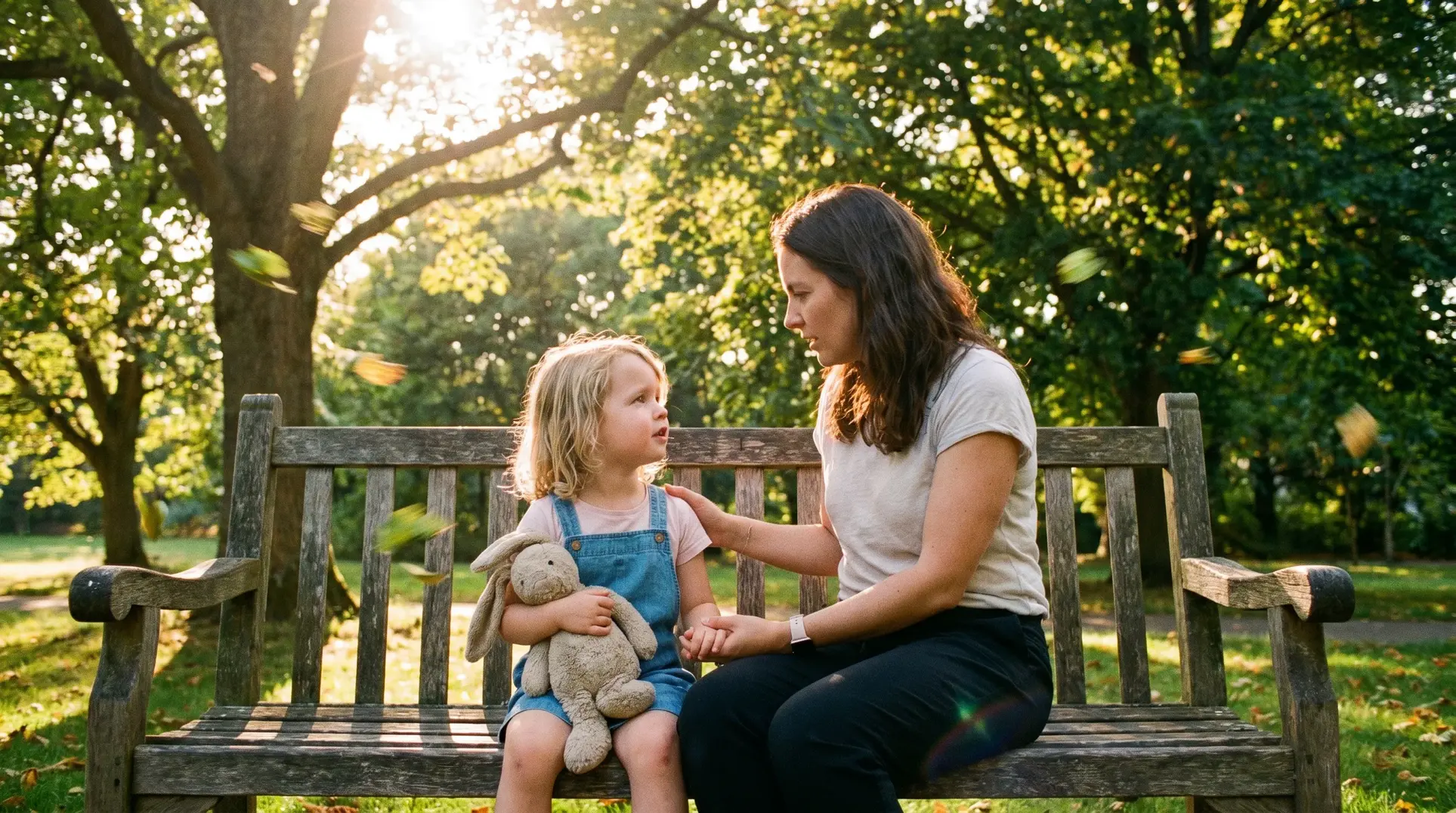
A woman and a child sit on a wooden bench in a park. The child is holding a stuffed bunny, and the woman appears to be talking to or comforting the child. They are surrounded by trees, with sunlight filtering through the leaves, creating a peaceful and serene atmosphere.

Watching your child struggle with anxiety can feel like standing on the shore while they’re caught in a current—you want nothing more than to pull them to safety, yet every instinct you follow seems to make the undertow stronger. If you’ve found yourself lying awake wondering whether you’re doing too much or not enough, whether your responses are helping or accidentally making things worse, you’re not alone. We see parents in our practice every day who arrive exhausted, confused, and carrying quiet guilt about their child’s anxiety. The truth is that parenting an anxious child requires something extraordinarily difficult: responding in ways that feel counterintuitive when your child is distressed, all while managing your own emotional responses and preventing the burnout that makes consistency impossible. This guide addresses both sides of that equation—because we’ve learned that sustainable, effective support for anxious children depends entirely on parents who feel supported themselves.

Who This Guide Is For

This guide is written for parents and caregivers of children and adolescents who experience anxiety that interferes with daily life—whether that looks like stomach aches before school, tearful goodbyes at drop-off, excessive worry about friendships, or avoidance of activities they once enjoyed. It’s for parents who’ve tried the advice from books and blogs, only to find that nothing works consistently. It’s especially for parents who recognize that their own stress, worry, or exhaustion is affecting how they respond to their child’s anxiety.
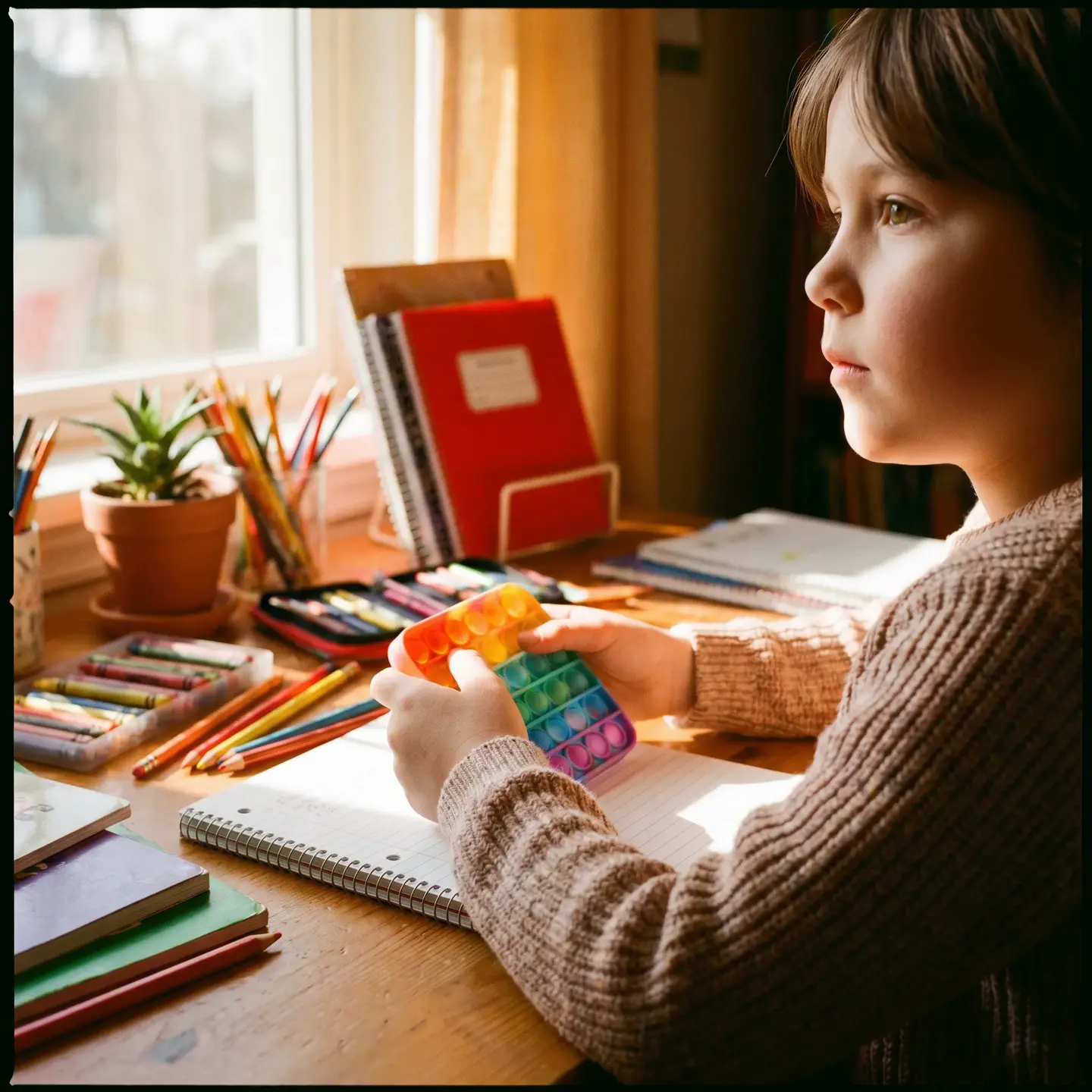
Child with fidget toy

This guide is not intended for parents managing acute mental health crises, trauma-related anxiety, or anxiety in the context of autism spectrum disorder or ADHD—these situations require specialized approaches beyond general childhood anxiety support. If your child is experiencing severe symptoms that feel beyond what you can manage safely at home, please reach out to a mental health professional directly.

Why Your Response to Childhood Anxiety Matters More Than You Think

Research consistently demonstrates that parental responses play a powerful role in either maintaining or reducing childhood anxiety over time. According to the CDC, approximately 11% of children ages 3-17 have a current, diagnosed anxiety disorder, with rates climbing to 16% among adolescents. These numbers represent millions of families navigating the daily challenge of supporting anxious children—and the way parents respond to that anxiety shapes its trajectory.

Here’s what makes this so complicated: when your child is distressed, your brain is wired to remove the source of that distress. Comfort them. Protect them. Make the scary thing go away. This instinct is beautiful and necessary in genuinely dangerous situations. But when the “danger” is a math test, a birthday party, or sleeping in their own bed, following this protective instinct accidentally teaches your child something harmful: that the feared situation truly is dangerous, and that they cannot handle it without your intervention.

This pattern is called family accommodation—the ways parents modify their own behavior to reduce their child’s anxiety in the moment. Examples include:

  • Answering the same reassurance question for the tenth time that day
  • Allowing your child to skip activities that trigger anxiety
  • Speaking for your child in social situations
  • Sleeping in your child’s room or allowing them in yours
  • Modifying family plans around what won’t trigger anxiety
  • Doing tasks your child is capable of because anxiety makes them refuse

Each accommodation provides immediate relief—your child calms down, the moment passes, everyone can breathe again. But research published in the Journal of Child Psychology and Psychiatry shows that higher levels of family accommodation are consistently associated with greater anxiety severity and poorer treatment outcomes. Short-term relief creates long-term problems.

The Goal: Managing Anxiety, Not Eliminating It

Before we discuss what to do differently, we need to address what you’re aiming for—because unrealistic goals set parents up for frustration and inconsistency.

The goal is not to eliminate your child’s anxiety. Anxiety is a normal, necessary human emotion that keeps us safe from genuine threats. The goal is to help your child develop the capacity to function despite anxious feelings—to feel scared and do the thing anyway.

This reframe matters enormously. If your goal is eliminating anxiety, every anxious moment feels like failure. If your goal is building tolerance and resilience, anxious moments become opportunities for practice. Your child doesn’t need to feel calm to succeed; they need to learn they can handle feeling anxious.

Specialists at the International OCD Foundation describe this as learning to live “with” fear rather than “in” fear. We help children distinguish between situations that are “scary safe” (uncomfortable but not dangerous) and “scary dangerous” (genuinely threatening). Most childhood anxiety involves scary-safe situations—parties, tests, new activities, sleeping alone—that feel dangerous but aren’t.

Common Parental Responses That Accidentally Reinforce Anxiety

Recognizing accommodation patterns in your own behavior is the first step toward changing them. Here are specific responses that, despite best intentions, tend to strengthen anxiety over time:

Excessive Reassurance

When your child asks, “What if I fail the test?” and you respond, “You won’t fail, you studied so hard,” you’re providing temporary relief but not teaching them to tolerate uncertainty. Anxious children often ask the same reassurance questions repeatedly because the relief doesn’t last—and each time you answer, you reinforce that they need external reassurance to manage internal distress.

Removing Triggers

Letting your child skip the pool party because they’re anxious about swimming, calling them in sick to school because morning anxiety is too intense, or avoiding restaurants because they might encounter an unfamiliar food—these responses prevent your child from learning they can cope with uncomfortable situations.

Taking Over

Speaking for your shy child at doctor’s appointments, ordering their food at restaurants, or completing tasks they’re capable of but refuse due to anxiety sends the message that you don’t believe they can handle it either.

Modifying Family Life

When the whole family stops going places or doing things because one child’s anxiety makes it difficult, everyone suffers and the anxious child learns that their anxiety controls the family system.

Evidence-Based Responses That Build Resilience

So what should you do instead? Here are strategies grounded in evidence-based approaches to childhood anxiety management:

Validate Feelings Without Empowering Fears

Validation and accommodation are not the same thing. You can acknowledge your child’s emotional experience without agreeing that the situation is dangerous or that they can’t handle it.

Instead of: “Don’t worry, nothing bad will happen at the party.”

Try: “I can see you’re feeling really nervous about the party. That’s a hard feeling. And I know you can handle hard feelings.”

The first response dismisses the feeling and makes a promise you can’t keep. The second validates the feeling and expresses confidence in their coping capacity.

Express Realistic Confidence

Your child pays close attention to your nonverbal communication. If your face shows worry when you drop them off at school, they receive the message that there’s something to worry about. Expressing confidence doesn’t mean being dismissive—it means genuinely communicating, “I know this feels hard, and I believe you can do it.”

Child practicing breathing exercise

Support Gradual Exposure

Exposure—facing feared situations in a planned, gradual way—is the most effective treatment component for childhood anxiety. You can support this at home by:

  1. Identifying small, manageable steps toward the feared situation
  2. Celebrating effort, not just outcomes
  3. Resisting the urge to rescue at the first sign of discomfort
  4. Debriefing afterward: “You did it! What did you notice?”

Maintain Expectations With Support

The goal is “warm demand”—holding expectations while providing emotional support. Your child still goes to school, attends the birthday party, sleeps in their own bed. You acknowledge that it’s hard. You express confidence they can do it. You don’t lower the bar because anxiety shows up.

Age-Appropriate Approaches: Early Childhood Through Adolescence

How anxiety presents and how you respond should shift with your child’s developmental stage.

Early Childhood (Ages 4-7)

Separation anxiety and fears of specific things (dogs, the dark, loud noises) are common and often developmentally appropriate. Young children benefit from simple explanations, concrete coping tools like deep breathing or counting, and consistent routines that provide predictability. Keep exposures playful and brief. For example, a child afraid of dogs might start by looking at pictures, then watching a calm dog from a distance, gradually building tolerance.

Middle Childhood (Ages 8-11)

Anxiety often expands to include worry about school performance, social acceptance, and safety of family members. Children this age can understand the concept of “brave” versus “comfortable” and can participate more actively in planning exposures. They benefit from learning about how anxiety works in the brain and body—knowing that anxious feelings, while uncomfortable, aren’t dangerous.

Adolescence (Ages 12-17)

Social anxiety, performance anxiety, and worry about the future become prominent. Teens need autonomy in their coping strategies but still benefit from parental support that doesn’t feel controlling. Your role shifts from directing to coaching. Ask questions rather than giving answers: “What do you think might help?” “What’s the worst that could realistically happen, and how would you handle it?”

Our child and adolescent therapy services are tailored to these developmental differences, recognizing that what works for a seven-year-old looks very different from what works for a fifteen-year-old.

The Hidden Cost: Parental Burnout and Compassion Fatigue

Here’s what most articles about childhood anxiety don’t address: this work is exhausting. Supporting an anxious child requires constant emotional regulation, the patience to stay calm when your child is melting down for the third time today, the discipline to not accommodate when every parental instinct screams to make it better, and the stamina to maintain consistency across weeks, months, and sometimes years.

According to the American Psychological Association, parental burnout is a distinct syndrome characterized by emotional exhaustion, feeling detached from your parenting role, and a sense of ineffectiveness. Parents of children with mental health challenges are at significantly higher risk.

Signs you may be approaching burnout include:

  • Feeling emotionally numb or disconnected from your child
  • Increased irritability and shorter fuse than usual
  • Physical symptoms like headaches, fatigue, or difficulty sleeping
  • Dreading interactions you used to enjoy
  • Guilt about your own feelings
  • Inconsistency in your responses—accommodating sometimes, losing patience others

Your emotional state directly impacts your ability to implement effective strategies. When you’re depleted, you’re more likely to accommodate (because it’s easier), snap (because you’re exhausted), or withdraw (because you have nothing left). This isn’t a character flaw—it’s human physiology.

Supporting Your Child Without Sacrificing Your Own Wellness

Sustainable support requires caring for yourself as intentionally as you care for your child. This isn’t selfish—it’s necessary.

Recognize When You’re Operating From Your Own Anxiety

Parents often have their own anxiety histories, and your child’s distress can trigger your protective responses in ways that aren’t helpful. Ask yourself: Am I accommodating because this is what my child needs, or because their anxiety is making me anxious?

Set Boundaries Around Reassurance

You can limit reassurance-seeking with warmth. “I’ve answered that question, and I’m not going to answer it again because answering doesn’t actually help you feel less worried for long. I know you can handle not knowing.” This is hard. Your child may escalate. Stay warm and firm.

Build in Recovery Time

Parenting an anxious child requires significant emotional labor. Build in time to recover—even ten minutes of quiet, a brief walk, or a call with a friend. These aren’t luxuries; they’re the maintenance that keeps you functioning.

Share the Load

If you have a co-parent, ensure you’re aligned on approach and sharing the emotional work equitably. If you’re parenting alone, identify other supports—family members, friends, parent groups—who can provide relief and perspective.

Address Your Own Mental Health

Research shows that parental anxiety influences child anxiety through both genetic and environmental pathways. Getting support for your own anxiety isn’t just good for you—it’s good for your child. Through Dr. Zia’s approach to child emotional development, we recognize that the parent-child relationship works in both directions.

When to Seek Professional Support

How do you know when home strategies aren’t enough? Consider professional support when:

  • Anxiety significantly interferes with daily functioning (school attendance, friendships, family activities)
  • Your child’s distress is intense and prolonged rather than passing
  • Avoidance is increasing despite your efforts
  • You’re seeing physical symptoms (stomach aches, headaches) that medical evaluation can’t explain
  • Your own wellbeing is suffering as you try to manage your child’s anxiety
  • You’ve been trying strategies consistently for several weeks without improvement

The Canadian Paediatric Society recommends that anxiety disorders in children and adolescents receive evidence-based treatment, with cognitive-behavioral therapy (CBT) demonstrating the strongest research support. Approximately 55-60% of children recover from their anxiety diagnosis following a course of CBT, with results maintained over the long term.

At our practice, we also offer parent-focused treatment approaches, including training in the SPACE model (Supportive Parenting for Anxious Childhood Emotions). Research shows that this parent-based approach—which systematically addresses family accommodation—is as effective as traditional child-focused CBT. For some families, especially those with younger children or children who resist direct therapy, this approach offers a powerful alternative.

For additional resources on childhood anxiety, our website offers information tailored to the challenges Ontario families face.

Building a Sustainable Long-Term Approach

Managing childhood anxiety is not a sprint. It requires consistent, patient effort over months and sometimes years. Here’s how to maintain momentum:

Measure Progress Realistically

Progress isn’t linear and doesn’t always mean fewer anxious moments. Look for:

  • Faster recovery from anxious episodes
  • Willingness to attempt previously avoided activities (even with anxiety)
  • Less reliance on reassurance and accommodation
  • Your child using coping strategies independently

Plan for Setbacks

Anxiety often increases during transitions (new school year, family changes, developmental shifts). Setbacks don’t mean failure; they’re normal parts of the process. When they happen, return to basics: validate, express confidence, maintain expectations, resist accommodation.

Get Everyone on the Same Page

Inconsistency undermines progress. If one parent accommodates while another holds firm, or if school and home take different approaches, children receive confusing messages. Communicate clearly with co-parents, grandparents, teachers, and other caregivers about the approach.

Celebrate Brave Behavior

Notice and name when your child faces fear rather than avoiding it. “You were nervous about the presentation, and you did it anyway. That’s brave.” Reinforcing approach behavior, even when imperfect, builds the internal narrative that they can handle hard things.

Teen and parent at supportive distance

You Don’t Have to Do This Alone

If you’ve read this far, you’re clearly committed to supporting your child—and that commitment is the most important ingredient in their recovery. But commitment doesn’t mean you have to figure this out in isolation.

Whether you need help implementing these strategies consistently, want professional assessment of your child’s anxiety, or recognize that your own wellbeing needs attention, support is available. Our team specializes in exactly these challenges—helping children build resilience while helping parents find sustainable, evidence-based approaches that fit their family.

To explore whether our services might be the right fit for your family, you can schedule a consultation with our team. We serve families in-person in Toronto and virtually throughout Ontario.

Remember: seeking help isn’t a sign of failure. It’s a sign of strength, wisdom, and love for your child. And it’s one of the most protective things you can do—for them and for yourself.

Frequently Asked Questions

Family accommodation is when you adjust your behavior—like giving repeated reassurance, skipping activities, or doing tasks for them—to ease their immediate anxiety, but research shows it increases anxiety severity over time and worsens treatment outcomes. Try validating their feelings instead, like “I see you’re nervous, and I know you can handle it,” to build resilience without reinforcing fears.

For ages 4-7, use playful exposures and simple tools like breathing; 8-11, teach “brave vs. comfortable” and brain basics; teens 12-17, coach with questions like “What’s the worst that could happen?” Tailor to their stage—hold expectations with “warm demand” while celebrating effort.

Get support if anxiety disrupts school, friendships, or daily life; avoidance grows despite efforts; physical symptoms persist; or your wellbeing suffers after weeks of trying strategies. Evidence-based options like CBT or SPACE (parent-training) help 55-60% recover—consult a specialist sooner for sustainable progress.

Watch for emotional numbness, irritability, physical fatigue, or inconsistent responses—these signal parental burnout, common when managing anxiety long-term. Build recovery time like short walks, set reassurance boundaries warmly (“I’ve answered that; you can handle not knowing”), and address your own anxiety to stay consistent.

Acknowledge the feeling without agreeing the situation is dangerous—say “That sounds really hard, and I believe you can do it” instead of “Don’t worry, it’ll be fine.” This expresses realistic confidence, supports gradual exposure to fears, and helps them learn to function despite anxiety, which is the real goal.

Dr. Zia Lakdawalla
Dr. Zia Lakdawalla
I am a registered clinical psychologist who specializes in working with children, adolescents, and parents. My goal is to help clients cope with uncomfortable feelings, improve relationships, and increase competency and efficacy in managing the demands of each new stage of development.I am also a strong believer that the environment in which kids are immersed is a critical factor in how they learn to regulate their emotions and build resilience.

Take the first step toward calm, connected parenting

You don’t have to keep guessing. With the right tools and support, parenting can feel easier—and your child can thrive.

Book a Free Consultation

How we Treat

What we Treat

Understanding and Managing Childhood Anxiety: A Parent’s Complete Guide to Effective Support Without Burnout

Therapeutic Approaches

By: Dr. Zia

A woman and a child sit on a wooden bench in a park. The child is holding a stuffed bunny, and the woman appears to be talking to or comforting the child. They are surrounded by trees, with sunlight filtering through the leaves, creating a peaceful and serene atmosphere.

Watching your child struggle with anxiety can feel like standing on the shore while they’re caught in a current—you want nothing more than to pull them to safety, yet every instinct you follow seems to make the undertow stronger. If you’ve found yourself lying awake wondering whether you’re doing too much or not enough, whether your responses are helping or accidentally making things worse, you’re not alone. We see parents in our practice every day who arrive exhausted, confused, and carrying quiet guilt about their child’s anxiety. The truth is that parenting an anxious child requires something extraordinarily difficult: responding in ways that feel counterintuitive when your child is distressed, all while managing your own emotional responses and preventing the burnout that makes consistency impossible. This guide addresses both sides of that equation—because we’ve learned that sustainable, effective support for anxious children depends entirely on parents who feel supported themselves.

Who This Guide Is For

This guide is written for parents and caregivers of children and adolescents who experience anxiety that interferes with daily life—whether that looks like stomach aches before school, tearful goodbyes at drop-off, excessive worry about friendships, or avoidance of activities they once enjoyed. It’s for parents who’ve tried the advice from books and blogs, only to find that nothing works consistently. It’s especially for parents who recognize that their own stress, worry, or exhaustion is affecting how they respond to their child’s anxiety.

Child with fidget toy

This guide is not intended for parents managing acute mental health crises, trauma-related anxiety, or anxiety in the context of autism spectrum disorder or ADHD—these situations require specialized approaches beyond general childhood anxiety support. If your child is experiencing severe symptoms that feel beyond what you can manage safely at home, please reach out to a mental health professional directly.

Why Your Response to Childhood Anxiety Matters More Than You Think

Research consistently demonstrates that parental responses play a powerful role in either maintaining or reducing childhood anxiety over time. According to the CDC, approximately 11% of children ages 3-17 have a current, diagnosed anxiety disorder, with rates climbing to 16% among adolescents. These numbers represent millions of families navigating the daily challenge of supporting anxious children—and the way parents respond to that anxiety shapes its trajectory.

Here’s what makes this so complicated: when your child is distressed, your brain is wired to remove the source of that distress. Comfort them. Protect them. Make the scary thing go away. This instinct is beautiful and necessary in genuinely dangerous situations. But when the “danger” is a math test, a birthday party, or sleeping in their own bed, following this protective instinct accidentally teaches your child something harmful: that the feared situation truly is dangerous, and that they cannot handle it without your intervention.

This pattern is called family accommodation—the ways parents modify their own behavior to reduce their child’s anxiety in the moment. Examples include:

  • Answering the same reassurance question for the tenth time that day
  • Allowing your child to skip activities that trigger anxiety
  • Speaking for your child in social situations
  • Sleeping in your child’s room or allowing them in yours
  • Modifying family plans around what won’t trigger anxiety
  • Doing tasks your child is capable of because anxiety makes them refuse

Each accommodation provides immediate relief—your child calms down, the moment passes, everyone can breathe again. But research published in the Journal of Child Psychology and Psychiatry shows that higher levels of family accommodation are consistently associated with greater anxiety severity and poorer treatment outcomes. Short-term relief creates long-term problems.

The Goal: Managing Anxiety, Not Eliminating It

Before we discuss what to do differently, we need to address what you’re aiming for—because unrealistic goals set parents up for frustration and inconsistency.

The goal is not to eliminate your child’s anxiety. Anxiety is a normal, necessary human emotion that keeps us safe from genuine threats. The goal is to help your child develop the capacity to function despite anxious feelings—to feel scared and do the thing anyway.

This reframe matters enormously. If your goal is eliminating anxiety, every anxious moment feels like failure. If your goal is building tolerance and resilience, anxious moments become opportunities for practice. Your child doesn’t need to feel calm to succeed; they need to learn they can handle feeling anxious.

Specialists at the International OCD Foundation describe this as learning to live “with” fear rather than “in” fear. We help children distinguish between situations that are “scary safe” (uncomfortable but not dangerous) and “scary dangerous” (genuinely threatening). Most childhood anxiety involves scary-safe situations—parties, tests, new activities, sleeping alone—that feel dangerous but aren’t.

Common Parental Responses That Accidentally Reinforce Anxiety

Recognizing accommodation patterns in your own behavior is the first step toward changing them. Here are specific responses that, despite best intentions, tend to strengthen anxiety over time:

Excessive Reassurance

When your child asks, “What if I fail the test?” and you respond, “You won’t fail, you studied so hard,” you’re providing temporary relief but not teaching them to tolerate uncertainty. Anxious children often ask the same reassurance questions repeatedly because the relief doesn’t last—and each time you answer, you reinforce that they need external reassurance to manage internal distress.

Removing Triggers

Letting your child skip the pool party because they’re anxious about swimming, calling them in sick to school because morning anxiety is too intense, or avoiding restaurants because they might encounter an unfamiliar food—these responses prevent your child from learning they can cope with uncomfortable situations.

Taking Over

Speaking for your shy child at doctor’s appointments, ordering their food at restaurants, or completing tasks they’re capable of but refuse due to anxiety sends the message that you don’t believe they can handle it either.

Modifying Family Life

When the whole family stops going places or doing things because one child’s anxiety makes it difficult, everyone suffers and the anxious child learns that their anxiety controls the family system.

Evidence-Based Responses That Build Resilience

So what should you do instead? Here are strategies grounded in evidence-based approaches to childhood anxiety management:

Validate Feelings Without Empowering Fears

Validation and accommodation are not the same thing. You can acknowledge your child’s emotional experience without agreeing that the situation is dangerous or that they can’t handle it.

Instead of: “Don’t worry, nothing bad will happen at the party.”

Try: “I can see you’re feeling really nervous about the party. That’s a hard feeling. And I know you can handle hard feelings.”

The first response dismisses the feeling and makes a promise you can’t keep. The second validates the feeling and expresses confidence in their coping capacity.

Express Realistic Confidence

Your child pays close attention to your nonverbal communication. If your face shows worry when you drop them off at school, they receive the message that there’s something to worry about. Expressing confidence doesn’t mean being dismissive—it means genuinely communicating, “I know this feels hard, and I believe you can do it.”

Child practicing breathing exercise

Support Gradual Exposure

Exposure—facing feared situations in a planned, gradual way—is the most effective treatment component for childhood anxiety. You can support this at home by:

  1. Identifying small, manageable steps toward the feared situation
  2. Celebrating effort, not just outcomes
  3. Resisting the urge to rescue at the first sign of discomfort
  4. Debriefing afterward: “You did it! What did you notice?”

Maintain Expectations With Support

The goal is “warm demand”—holding expectations while providing emotional support. Your child still goes to school, attends the birthday party, sleeps in their own bed. You acknowledge that it’s hard. You express confidence they can do it. You don’t lower the bar because anxiety shows up.

Age-Appropriate Approaches: Early Childhood Through Adolescence

How anxiety presents and how you respond should shift with your child’s developmental stage.

Early Childhood (Ages 4-7)

Separation anxiety and fears of specific things (dogs, the dark, loud noises) are common and often developmentally appropriate. Young children benefit from simple explanations, concrete coping tools like deep breathing or counting, and consistent routines that provide predictability. Keep exposures playful and brief. For example, a child afraid of dogs might start by looking at pictures, then watching a calm dog from a distance, gradually building tolerance.

Middle Childhood (Ages 8-11)

Anxiety often expands to include worry about school performance, social acceptance, and safety of family members. Children this age can understand the concept of “brave” versus “comfortable” and can participate more actively in planning exposures. They benefit from learning about how anxiety works in the brain and body—knowing that anxious feelings, while uncomfortable, aren’t dangerous.

Adolescence (Ages 12-17)

Social anxiety, performance anxiety, and worry about the future become prominent. Teens need autonomy in their coping strategies but still benefit from parental support that doesn’t feel controlling. Your role shifts from directing to coaching. Ask questions rather than giving answers: “What do you think might help?” “What’s the worst that could realistically happen, and how would you handle it?”

Our child and adolescent therapy services are tailored to these developmental differences, recognizing that what works for a seven-year-old looks very different from what works for a fifteen-year-old.

The Hidden Cost: Parental Burnout and Compassion Fatigue

Here’s what most articles about childhood anxiety don’t address: this work is exhausting. Supporting an anxious child requires constant emotional regulation, the patience to stay calm when your child is melting down for the third time today, the discipline to not accommodate when every parental instinct screams to make it better, and the stamina to maintain consistency across weeks, months, and sometimes years.

According to the American Psychological Association, parental burnout is a distinct syndrome characterized by emotional exhaustion, feeling detached from your parenting role, and a sense of ineffectiveness. Parents of children with mental health challenges are at significantly higher risk.

Signs you may be approaching burnout include:

  • Feeling emotionally numb or disconnected from your child
  • Increased irritability and shorter fuse than usual
  • Physical symptoms like headaches, fatigue, or difficulty sleeping
  • Dreading interactions you used to enjoy
  • Guilt about your own feelings
  • Inconsistency in your responses—accommodating sometimes, losing patience others

Your emotional state directly impacts your ability to implement effective strategies. When you’re depleted, you’re more likely to accommodate (because it’s easier), snap (because you’re exhausted), or withdraw (because you have nothing left). This isn’t a character flaw—it’s human physiology.

Supporting Your Child Without Sacrificing Your Own Wellness

Sustainable support requires caring for yourself as intentionally as you care for your child. This isn’t selfish—it’s necessary.

Recognize When You’re Operating From Your Own Anxiety

Parents often have their own anxiety histories, and your child’s distress can trigger your protective responses in ways that aren’t helpful. Ask yourself: Am I accommodating because this is what my child needs, or because their anxiety is making me anxious?

Set Boundaries Around Reassurance

You can limit reassurance-seeking with warmth. “I’ve answered that question, and I’m not going to answer it again because answering doesn’t actually help you feel less worried for long. I know you can handle not knowing.” This is hard. Your child may escalate. Stay warm and firm.

Build in Recovery Time

Parenting an anxious child requires significant emotional labor. Build in time to recover—even ten minutes of quiet, a brief walk, or a call with a friend. These aren’t luxuries; they’re the maintenance that keeps you functioning.

Share the Load

If you have a co-parent, ensure you’re aligned on approach and sharing the emotional work equitably. If you’re parenting alone, identify other supports—family members, friends, parent groups—who can provide relief and perspective.

Address Your Own Mental Health

Research shows that parental anxiety influences child anxiety through both genetic and environmental pathways. Getting support for your own anxiety isn’t just good for you—it’s good for your child. Through Dr. Zia’s approach to child emotional development, we recognize that the parent-child relationship works in both directions.

When to Seek Professional Support

How do you know when home strategies aren’t enough? Consider professional support when:

  • Anxiety significantly interferes with daily functioning (school attendance, friendships, family activities)
  • Your child’s distress is intense and prolonged rather than passing
  • Avoidance is increasing despite your efforts
  • You’re seeing physical symptoms (stomach aches, headaches) that medical evaluation can’t explain
  • Your own wellbeing is suffering as you try to manage your child’s anxiety
  • You’ve been trying strategies consistently for several weeks without improvement

The Canadian Paediatric Society recommends that anxiety disorders in children and adolescents receive evidence-based treatment, with cognitive-behavioral therapy (CBT) demonstrating the strongest research support. Approximately 55-60% of children recover from their anxiety diagnosis following a course of CBT, with results maintained over the long term.

At our practice, we also offer parent-focused treatment approaches, including training in the SPACE model (Supportive Parenting for Anxious Childhood Emotions). Research shows that this parent-based approach—which systematically addresses family accommodation—is as effective as traditional child-focused CBT. For some families, especially those with younger children or children who resist direct therapy, this approach offers a powerful alternative.

For additional resources on childhood anxiety, our website offers information tailored to the challenges Ontario families face.

Building a Sustainable Long-Term Approach

Managing childhood anxiety is not a sprint. It requires consistent, patient effort over months and sometimes years. Here’s how to maintain momentum:

Measure Progress Realistically

Progress isn’t linear and doesn’t always mean fewer anxious moments. Look for:

  • Faster recovery from anxious episodes
  • Willingness to attempt previously avoided activities (even with anxiety)
  • Less reliance on reassurance and accommodation
  • Your child using coping strategies independently

Plan for Setbacks

Anxiety often increases during transitions (new school year, family changes, developmental shifts). Setbacks don’t mean failure; they’re normal parts of the process. When they happen, return to basics: validate, express confidence, maintain expectations, resist accommodation.

Get Everyone on the Same Page

Inconsistency undermines progress. If one parent accommodates while another holds firm, or if school and home take different approaches, children receive confusing messages. Communicate clearly with co-parents, grandparents, teachers, and other caregivers about the approach.

Celebrate Brave Behavior

Notice and name when your child faces fear rather than avoiding it. “You were nervous about the presentation, and you did it anyway. That’s brave.” Reinforcing approach behavior, even when imperfect, builds the internal narrative that they can handle hard things.

Teen and parent at supportive distance

You Don’t Have to Do This Alone

If you’ve read this far, you’re clearly committed to supporting your child—and that commitment is the most important ingredient in their recovery. But commitment doesn’t mean you have to figure this out in isolation.

Whether you need help implementing these strategies consistently, want professional assessment of your child’s anxiety, or recognize that your own wellbeing needs attention, support is available. Our team specializes in exactly these challenges—helping children build resilience while helping parents find sustainable, evidence-based approaches that fit their family.

To explore whether our services might be the right fit for your family, you can schedule a consultation with our team. We serve families in-person in Toronto and virtually throughout Ontario.

Remember: seeking help isn’t a sign of failure. It’s a sign of strength, wisdom, and love for your child. And it’s one of the most protective things you can do—for them and for yourself.

Group Therapy… Why I think it may be right for you

As we recover from the COVID 19 pandemic, many families are struggling. Children are facing challenges at school and at …

Read more

Empowering Parents: Effective Strategies for Parenting Anxious Children [Podcast]

In this enlightening YouTube video, child psychologist Dr. Zia Lakdawala shares her wealth of knowledge and experience i…

Read more

A Parent’s Guide to Starting Child/Teen Therapy at FFEW

Taking the first step towards your child’s mental health journey can feel overwhelming, but it’s also one of…

Read more