
Why Do Kids Lie?
Explore the reasons behind children's lying and discover compassionate strategies for addressing this behaviour. Underst…
Read more
Behavior & Discipline

If you have ever stood in the kitchen watching your child scream over a broken cracker and wondered whether this should have stopped by now, you are not alone. We hear this question constantly from parents: when do tantrums actually stop? The honest answer is that it depends on the child, but there is a general timeline that can help you figure out whether what you are seeing is typical or something that deserves a closer look.
This article is for parents of children roughly ages 4 through 8 who are wondering whether their child’s outbursts are still within the range of normal development. If your child is younger than 4, tantrums are almost certainly still developmentally expected. If your child is a teenager, the dynamics shift and you may find more relevant guidance in resources about adolescent emotional regulation.

This is not a diagnostic tool. If your child’s outbursts are causing serious safety concerns right now, please reach out to your family doctor or a mental health professional directly.
Most children have far fewer tantrums by school age. According to MyHealth Alberta, tantrums are most common between ages 1 and 4, and most children stop having frequent tantrums by age 4 or 5 as they learn healthier ways to handle strong emotions. The American Academy of Child and Adolescent Psychiatry (AACAP) notes that while tantrums remain quite common in preschoolers aged 3 to 5, daily tantrums are less typical after age 3, and in school-age children aged 6 to 13, tantrums are much less common overall.
That said, there is no birthday on which tantrums simply switch off. Development, context, and what is happening in a child’s life all matter more than age alone.
At 4 and 5, children are still building the brain wiring that helps them pause, use words, tolerate frustration, and calm themselves down. Tantrums at this age often show up around predictable triggers:
Brief episodes that happen occasionally and resolve within a few minutes are still within the range of typical. So if your 4 year old has an occasional meltdown at the grocery store, that is not a red flag on its own.
What we pay attention to is the pattern. Is the frequency going down over time? Can your child recover and reconnect with you afterward? Are the episodes lasting longer than about 15 minutes regularly? Are they becoming more intense rather than less?
By ages 6 to 8, most children have more language, more self-control, and more capacity to reason through frustration. But that does not mean outbursts disappear entirely. Starting school brings a whole new set of demands: sustained attention, following multi-step instructions, navigating friendships, managing academic frustration, and holding it together in a busy classroom for hours at a time.
One pattern we see frequently is what parents sometimes call after-school meltdowns. A child who held everything together at school walks through the door and falls apart over something small. This is not manipulation. It is exhaustion. The child spent all day regulating in a demanding environment, and home feels safe enough to let go.
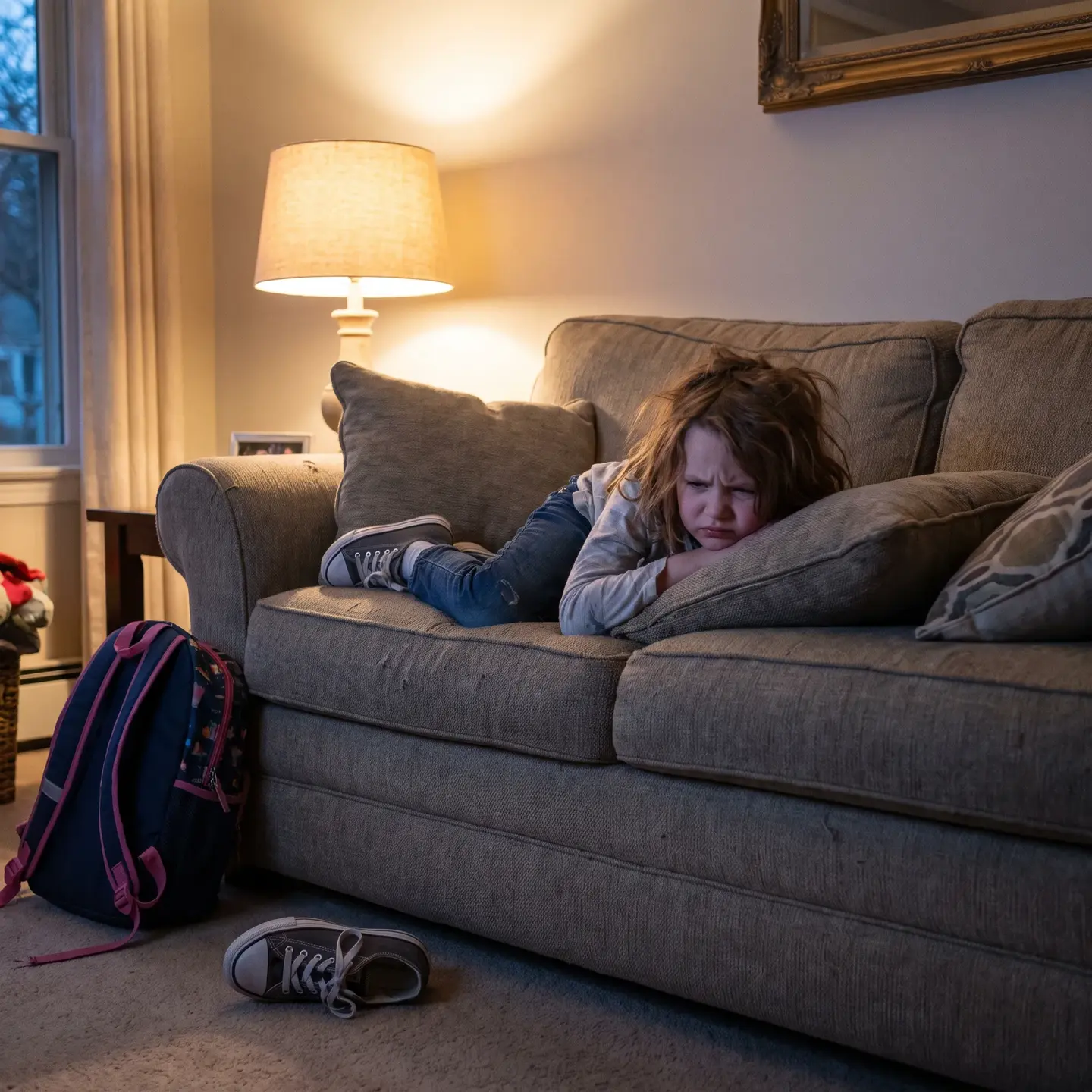
If this is your child, consider building in a decompression buffer after school: a snack, quiet time, movement, or simply no questions for the first 15 minutes. The meltdown may not be about the homework or the sibling. It may be about running out of emotional fuel.
Occasional overwhelmed moments at 6, 7, or 8 can still be normal, especially when a child is tired, sick, stressed, or facing a big transition. But frequent, prolonged, or intense outbursts at this age are no longer typical and deserve a closer look. MyHealth Alberta notes that tantrums that continue or start during the school years may signal learning problems or other issues.
If your 6, 7, or 8 year old is having meltdowns several times a week, is aggressive or destructive during outbursts, or cannot recover for extended periods, that is a signal to investigate rather than wait it out.
Not every outburst is the same. Before labelling it a tantrum, it helps to consider what might be underneath.
Understanding the why behind the outburst helps you respond more effectively. For more on this, see our article on tantrums vs misbehaviour.
Many tantrums are preventable when you know your child’s patterns. Here is what helps:
For more practical strategies, see our article on managing tantrums.
When your child is mid-meltdown, this is not the time for teaching. Their brain is flooded, and long explanations will not land. Here is what helps:
If the outburst involves danger, self-injury, or behaviour you cannot safely manage, remove yourself and other family members to a safe space and call for support.
Once everyone is calm, this is when the learning can happen. Keep it brief and warm.
Avoid shame, humiliation, or lengthy post-mortems. The goal is connection and skill-building, not punishment.
Tantrums that continue frequently past age 5, or that are getting worse rather than better, deserve professional attention. Here are some signs it is time to talk to someone:

If any of these apply, start with your family doctor or paediatrician. They can help rule out medical causes and refer you to appropriate support. If you feel you might hurt your child, step away to a safe place and call for support right away.
At our practice, we work with parents of children who have big, intense emotions through parent coaching. This parent-focused approach can help you understand what is driving your child’s outbursts and find ways to respond that fit your family. If your child’s emotions go beyond typical tantrums, you may also find our article on raising an emotionally intense child helpful.
Most children’s tantrums decline sharply between ages 4 and 5. By school age, an occasional overwhelmed outburst can still happen, but frequent, prolonged, or destructive episodes are not something to simply wait out. Understanding what is typical, knowing your child’s triggers, and having a plan for before, during, and after can make a real difference. And if things are not getting better, reaching out for support is not a sign of failure. It is exactly what good parents do.
An occasional meltdown can be typical, but frequent, prolonged, or increasingly intense outbursts at this age deserve closer attention.
Most children have far fewer tantrums by ages 4 or 5. Occasional outbursts can still happen during the early school years, especially when a child is tired, hungry, sick, or overwhelmed.
Move siblings and dangerous objects away, block unsafe behaviour without retaliating, use very few words, and stay nearby. If you cannot keep anyone safe, move to a safe place and call for immediate support.
Talk with your child’s doctor if outbursts happen several times a week, regularly last more than 15 to 25 minutes, disrupt school or family life, or are becoming worse.
Yes. Some children hold themselves together at school and release their emotions once they feel safe at home. Offer a snack, quiet time, or movement before asking questions or starting demands.

You don’t have to keep guessing. With the right tools and support, parenting can feel easier—and your child can thrive.
Book a Free Consultation