
Understanding how Emotions Function: Learn to Ride your Child’s Wave
Understanding how emotions function in humans has been instrumental in guiding how I parent my three children, and it’…
Read more
Emotional Development
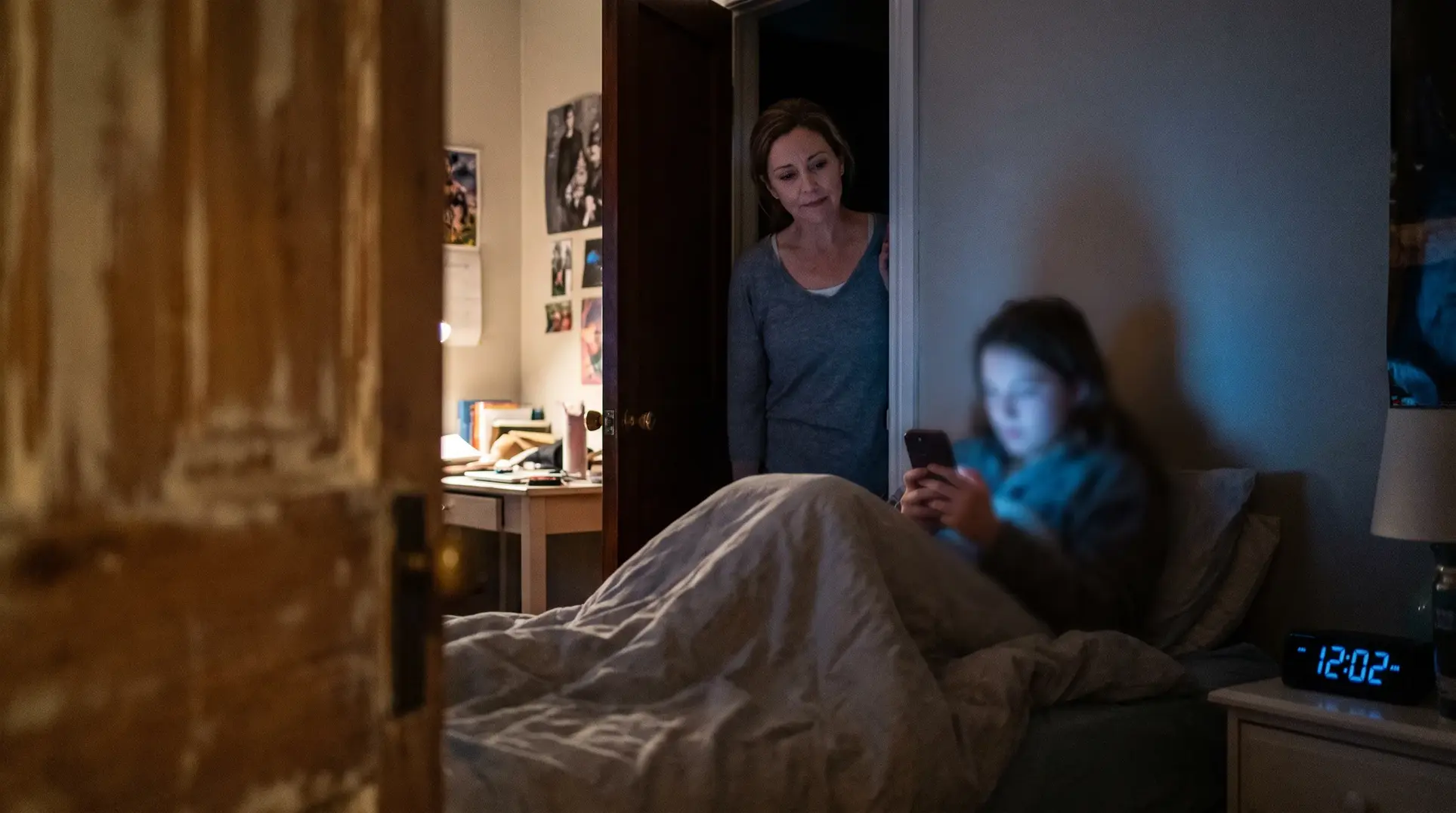
If you have ever stood at your teenager’s bedroom door at midnight, watching the glow of a phone screen light up their face, you are not alone. Across Ontario and far beyond, parents are asking the same questions: Why won’t my teen just go to sleep? Is this normal? What can I actually do about it without starting another argument? We see these worries every day in our practice, and we want you to know that there is real biology behind your teen’s late nights, and there are also practical steps you can take that work with your teenager rather than against them.
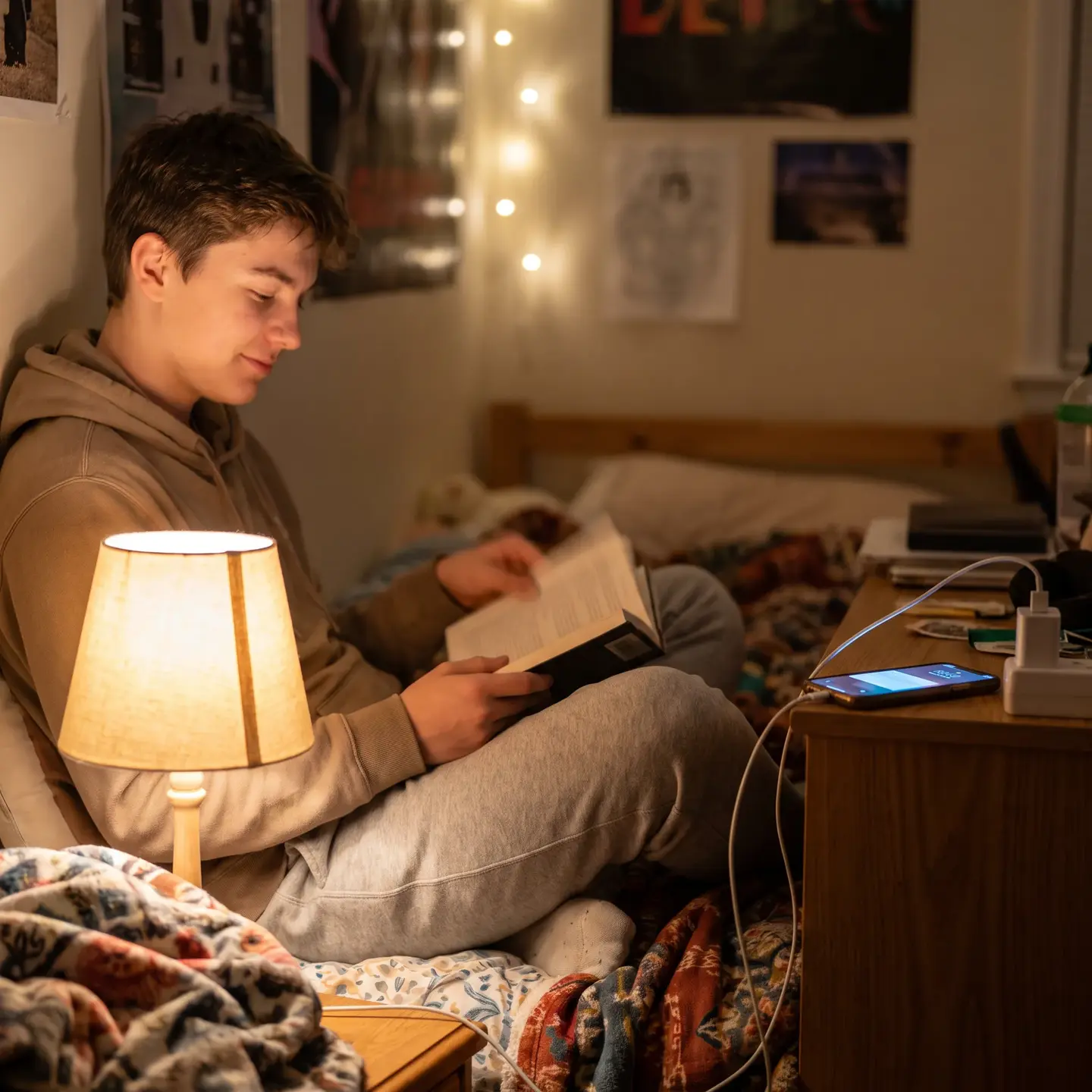
Let’s start with the number that matters most. According to the Canadian Paediatric Society, teenagers need between 8 and 10 hours of sleep every day. That is not a wish or a nice-to-have. That is what their developing brains and bodies genuinely require to function well.
When we think about how early many Ontario high schools start and how long homework can stretch into the evening, it becomes clear why so many teens are falling short. If your teenager needs to be up at 6:30 a.m., they would need to be asleep by 10:30 p.m. at the latest to hit even the lower end of that range. For many families, that feels impossible.
Here is something that can bring a lot of relief to parents: your teenager is not staying up late just to defy you. During puberty, something shifts in the brain’s internal clock. Melatonin, the hormone that signals sleepiness, starts releasing later in the evening than it did when your child was younger. This means your teen genuinely does not feel tired at 9 or 10 p.m. the way they once did.
As AboutKidsHealth from SickKids explains, a teen’s body clock will likely make them fall asleep later and wake later. You cannot change this biology. What you can do is work with it, creating structures that help your teen get enough rest even when their internal clock is pushing them toward midnight.
Think of it like this: your teenager’s body is running on a different time zone than yours. They are not being lazy or difficult. They are genuinely wired differently right now.
When teens do not get enough sleep, the signs can show up in ways that parents sometimes mistake for attitude problems or lack of motivation. The Canadian Paediatric Society lists these warning signs:
Overtired teens are also more likely to struggle in school, have trouble with memory and motivation, and be involved in car crashes and other accidents. That last point is especially important for families with teens who are learning to drive. A sleep-deprived teen behind the wheel is a serious safety concern.
If your teen seems irritable, withdrawn, or like they just cannot get going in the morning, consider whether sleep might be playing a bigger role than you realised. Sometimes what looks like a teen mood swing is actually a teenager running on empty.
One of the things we often talk about with families is how sleep and mental health are deeply connected. It is not a one-way street. Yes, anxiety and low mood can make it harder to fall asleep. But the reverse is also true: not getting enough sleep can make anxiety and depression worse.
AboutKidsHealth notes that a large sleep debt can make a teen feel mentally exhausted and can worsen symptoms of anxiety and depression. This creates a cycle that can be hard to break. Your teen lies awake worrying, then feels worse the next day because they are tired, which makes them more anxious, which makes it harder to sleep.
If you notice that your teen’s sleep troubles come alongside sadness that does not lift or worry that makes it hard to focus, that is important information. We will talk more about when to seek help later in this article, but for now, know that sleep is a window into your teen’s emotional world.

We cannot talk about teen sleep without talking about screens. Phones, tablets, and laptops emit light that can interfere with melatonin and push bedtimes even later. Beyond the light, there is the pull of social connection, endless scrolling, and the fear of missing out that keeps teens awake.
The key is to approach this as a collaboration rather than a confiscation. When parents simply take phones away, it often leads to power struggles and resentment. Instead, consider working with your teen to create a plan that makes sense for your family.
Some questions to explore together:
For a deeper look at this topic, our guide on managing screen time offers more strategies that can work for the whole family.
Here is a shift in thinking that many parents find helpful: instead of focusing on bedtime, focus on wake time. You cannot force a teenager to fall asleep, but you can create consistency around when they need to get up. When wake time stays steady, the body’s clock starts to regulate itself, and sleepiness naturally begins to arrive earlier.
The Canadian Paediatric Society suggests keeping weekend wake times within 2 to 4 hours of the usual weekday wake time. This means if your teen wakes at 6:30 a.m. on school days, sleeping until noon on Saturday can throw off their rhythm for the entire week. A 9 or 10 a.m. wake on weekends is a reasonable compromise.
Encourage a routine in the hour before bed that signals to the body it is time to slow down. This does not have to be elaborate. Dimming lights, putting screens away, and doing something low-key can all help.
Coffee, tea, pop, and energy drinks can all interfere with sleep, especially when consumed after mid-afternoon. Many teens do not realise how long caffeine stays in their system. A 4 p.m. energy drink can still be affecting them at midnight.
If your teen naps, the Canadian Paediatric Society recommends keeping naps under 30 minutes. Longer naps can make it harder to fall asleep at night.
For younger teens, around 12 to 14, parents usually still need to provide more structure: setting expectations about when screens go away, checking in about homework completion, and creating clear routines. Older teens, around 15 to 18, often do better when they are part of the problem-solving. Ask them what they think might help. Let them try their own plan and adjust together if it is not working.
One of the hardest parts for parents is knowing how to bring up sleep without it turning into a battle. Teens often hear “you need more sleep” as criticism or control. Here are some phrases that can open the conversation in a different way:
The goal is to move from enforcement to partnership. Your teen is more likely to engage when they feel like you are on their side rather than against them.
For families in Ontario, the clocks fall back on November 1, 2026. This can actually be a helpful moment to reset sleep routines. When the clocks shift, everyone naturally gains an extra hour. It is a good time to have a conversation about sleep and to try some new habits while the schedule is already disrupted.
You might say: “The clocks are changing this weekend. Want to use this as a chance to try going to bed a bit earlier and see how you feel?”
Framing it as an experiment rather than a rule can make it easier for your teen to engage.
Sometimes sleep troubles are a sign that something more is going on. The Canadian Paediatric Society advises seeing a doctor if sleep trouble continues despite trying these steps, or if there is sadness that does not go away or worry that makes it hard to focus.
Consider reaching out for support if your teen:
Your family doctor or paediatrician is a good first step. You might also consider therapy for teens, which can help address the anxiety or low mood that often goes hand in hand with sleep problems.
The Canadian Paediatric Society also advises against using alcohol, herbal products, or over-the-counter sleep aids for teens. If you are considering any kind of sleep support, talk to a healthcare provider first.
If your teen ever talks about not wanting to be alive, that is a crisis. Call or text 9-8-8, which is Canada’s suicide prevention line, or go to your nearest emergency department right away.

Parenting a teenager through the late-night years is hard. It can feel like you are watching your child make choices that you know will affect how they feel tomorrow, and you cannot force them to change. But here is what we have seen again and again: when parents approach sleep with curiosity instead of criticism, when they focus on structure rather than control, and when they stay connected even through the hard mornings, things do get better.
Your teenager’s late nights are not a sign that you have failed. They are a sign that your child is moving through a developmental stage that is genuinely challenging. And the fact that you are reading this article, looking for ways to help, shows exactly the kind of parent your teen needs.
If you have younger children at home as well, our article on helping kids sleep better offers guidance tailored to different ages. And if you are noticing that sleep troubles come alongside mood changes, our guide to teen mood swings can help you understand what is typical and what might need more attention.
We believe that every parent has the potential to build a strong bond with their child, even when the challenges feel overwhelming. Sleep is one piece of that puzzle. By meeting your teen where they are, respecting their growing independence, and staying connected through the hard parts, you are laying the foundation for the relationship that will carry you both through adolescence and beyond.
Keep wake-up times consistent, including on weekends. Aim to keep weekend wake times within 2 to 4 hours of school-day wake-up times.
Puberty shifts the body clock, causing melatonin to release later. Your teen may genuinely feel sleepy closer to midnight rather than at 9 or 10 p.m.
Most teenagers need 8 to 10 hours of sleep every day to support their developing brains, mood, and daytime functioning.
Create the plan together: choose an overnight charging location, agree on a wind-down time, and decide on screen-free alternatives such as reading or listening to music.
Contact a doctor if sleep problems continue for several weeks or occur alongside persistent sadness, withdrawal, anxiety, difficulty focusing, or trouble attending school.

You don’t have to keep guessing. With the right tools and support, parenting can feel easier—and your child can thrive.
Book a Free Consultation