Serving all Ontario residents | In-person and virtual appointments available

Call us today

(647) 360-3294

Skip to content
Back to Blog

Therapeutic Approaches

DBT Skills Groups: What to Expect from Dialectical Behavior Therapy Groups

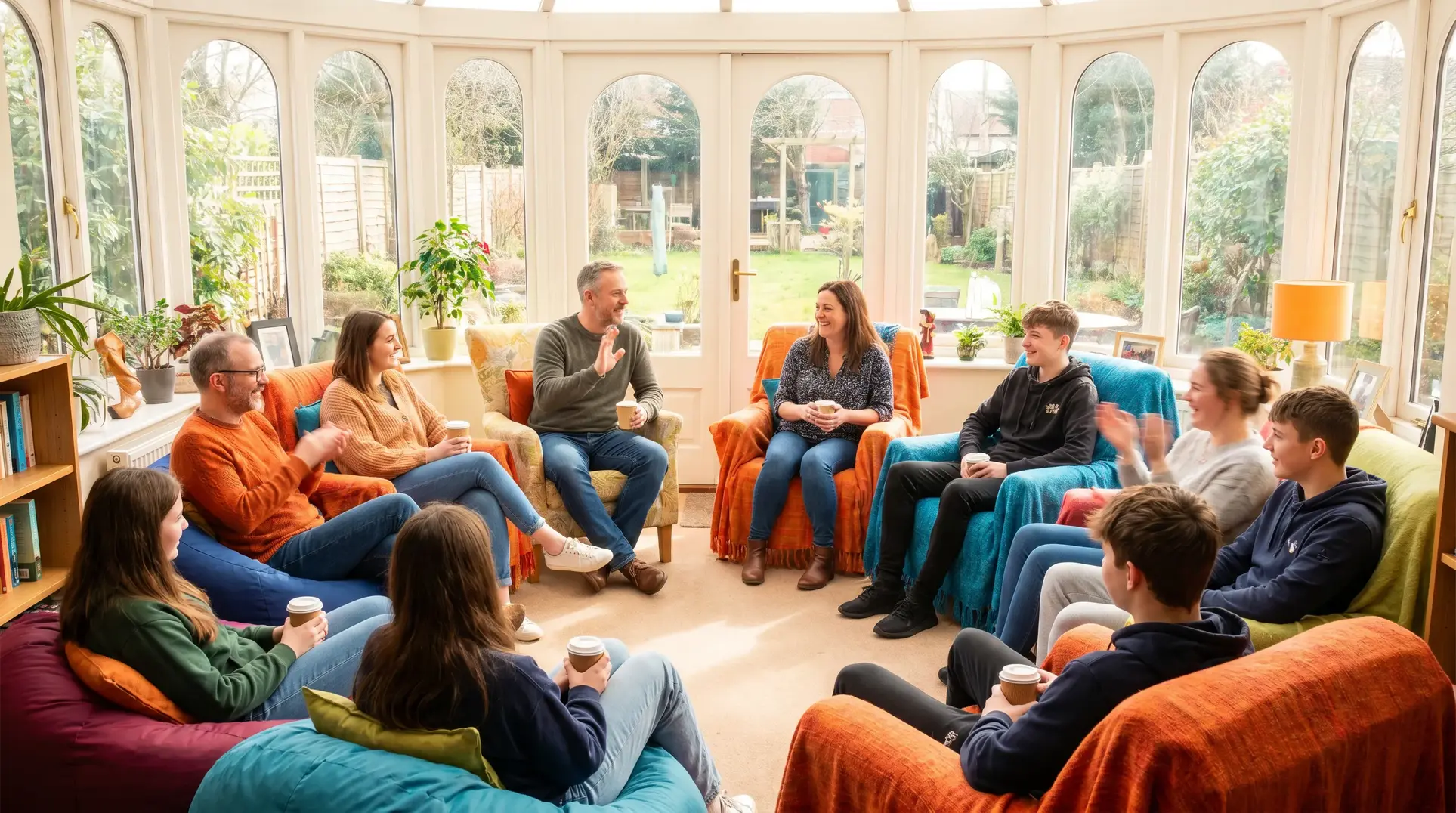
A group of people seated in a circle on colorful chairs and couches in a brightly lit room with large windows. They are holding cups and appear engaged in conversation. The room has a cozy atmosphere with plants, books, and decor visible. A garden is seen outside through the windows.

When families first learn that Dialectical Behavior Therapy includes a group component, we often see a mix of curiosity and apprehension. The idea of sitting in a room with others—sharing experiences, practicing skills, doing homework—can feel overwhelming, especially for teens already struggling with intense emotions or parents who are exhausted from daily battles at home. We understand these concerns deeply, and we want to offer clarity about what DBT skills groups actually involve, why they matter, and what your family can realistically expect from this evidence-based approach to building emotional resilience.

Who This Article Is For—and Who It Isn’t

This guide is written for parents and caregivers exploring DBT as a treatment option for their child or teen, as well as for teens themselves who want to understand what they’re signing up for. It’s also relevant for adults considering DBT skills training and wondering how the group format works alongside individual therapy.
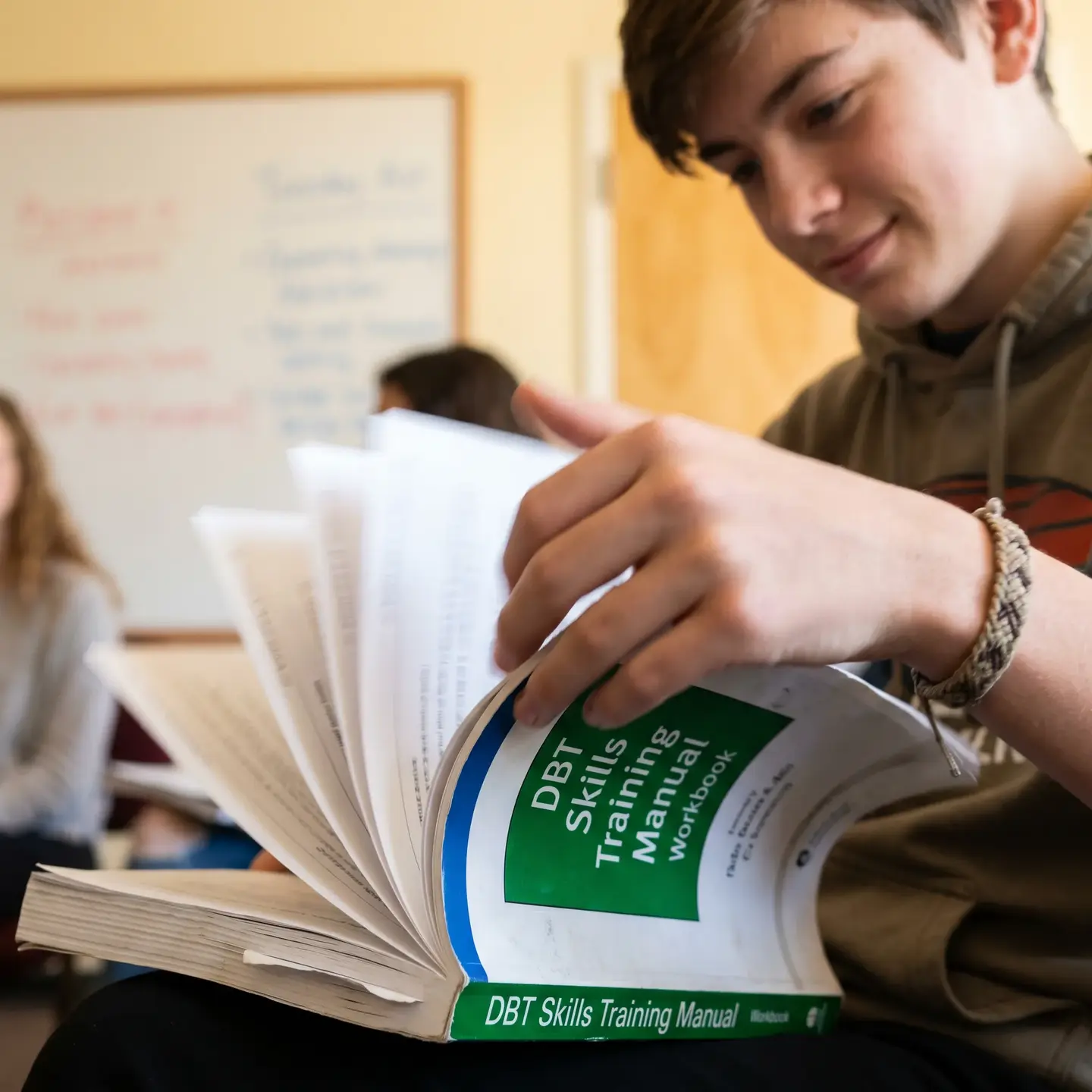
Teen reviewing DBT manual

This article is not intended to replace a professional assessment. If your family is in crisis or your child is experiencing suicidal thoughts or self-harm, please connect with a qualified mental health provider immediately. DBT may well be the right fit, but that determination requires individualized evaluation—not a blog post.

Why DBT Includes a Skills Group Component

One of the most common questions we hear is: “Why can’t my teen just do individual therapy?” It’s a fair question, and the answer lies in understanding how DBT was designed from the ground up.

DBT was developed by psychologist Marsha Linehan, who recognized that people struggling with intense emotions needed more than insight or talk therapy alone. They needed concrete, teachable skills—and those skills are best learned in a structured, classroom-style environment where teaching, practice, and feedback happen systematically. According to Behavioral Tech’s DBT resources, the skills group is where participants learn what the skills are and how to use them, while individual therapy focuses on applying those skills to specific life situations and addressing barriers to change.

The group format serves several important purposes:

  • Structured learning: Skills build on each other in a logical sequence, much like a course curriculum
  • Normalization: Hearing that others struggle with similar challenges reduces shame and isolation
  • Peer modeling: Participants learn from watching how others approach skill practice and from hearing about their successes and setbacks
  • Accountability: Weekly homework review creates gentle structure for practicing skills between sessions

Individual therapy alone, while valuable, doesn’t provide this systematic teaching environment. The combination of both components—group skills training plus individual therapy—creates a comprehensive treatment where learning is reinforced in multiple contexts.

The Four DBT Skill Modules Taught in Groups

DBT skills groups cycle through four core modules, typically spending approximately six weeks on each. A complete cycle takes about 24 weeks, though some programs offer condensed 8 to 16-week versions. Let’s look at what each module involves, with examples relevant to families navigating emotional challenges.

Mindfulness

Mindfulness forms the foundation of all DBT skills. It involves learning to observe thoughts, emotions, and physical sensations without immediately reacting to them. For a teen, this might look like noticing the rising heat of anger during an argument with a sibling without automatically yelling or slamming a door. For a parent, it could mean recognizing the familiar tightness in your chest when your child refuses to do homework—and pausing before responding.

Mindfulness skills include:

  • Observe: Noticing experiences without getting caught up in them
  • Describe: Putting words to what you’re experiencing
  • Participate: Fully engaging in the present moment
  • Non-judgmental stance: Letting go of evaluating experiences as “good” or “bad”

Distress Tolerance

This module focuses on surviving crisis moments without making things worse. When emotions feel unbearable, distress tolerance skills help individuals ride out the wave without resorting to self-harm, explosive outbursts, or other harmful behaviors.

Facilitator teaching STOP skill

Practical examples include:

  • A teen using the STOP skill (Stop, Take a step back, Observe, Proceed mindfully) when they receive a hurtful text from a friend
  • A parent using self-soothing through the senses—holding a warm cup of tea, listening to calming music—when feeling overwhelmed by their child’s meltdown
  • Distraction strategies that provide temporary relief while intense emotions subside

Importantly, distress tolerance isn’t about suppressing emotions. It’s about having tools to get through difficult moments safely so that problem-solving can happen later, when the emotional intensity has decreased.

Emotion Regulation

While distress tolerance helps in crisis moments, emotion regulation skills address the longer-term work of understanding, managing, and even changing emotional responses. This module teaches participants to identify what they’re feeling, check whether their emotional response fits the facts of the situation, and reduce vulnerability to negative emotions through self-care.

Key concepts include:

  • Identifying and labeling emotions: Many children and teens struggle to name what they’re feeling beyond “bad” or “upset”
  • Checking the facts: Examining whether an emotional response matches the actual situation
  • Opposite action: Doing the opposite of what an emotion urges when the emotion doesn’t fit the facts or isn’t effective
  • Building positive experiences: Intentionally increasing activities that create positive emotions

Interpersonal Effectiveness

This module focuses on navigating relationships—asking for what you need, saying no, maintaining self-respect, and balancing relationship priorities. For teens, this often involves managing peer conflicts, communicating with teachers, or expressing needs to parents. For parents, it may mean setting boundaries with a defiant child while maintaining connection.

Skills taught include:

  • DEAR MAN: A structured approach to asking for something or saying no effectively
  • GIVE: Maintaining important relationships during difficult conversations
  • FAST: Preserving self-respect while interacting with others

Research documented on American Psychological Association’s overview of DBT confirms that these skill modules, when practiced consistently, contribute to meaningful improvements in emotional regulation and relationship functioning.

Walking the Middle Path (For Adolescent and Family Programs)

Many adolescent DBT programs include a fifth module specifically designed for parent-teen relationships. “Walking the Middle Path” teaches dialectical thinking—finding the synthesis between extreme positions—and addresses common family polarizations like “you never listen” versus “you always overreact.”

This module helps both teens and parents:

  • Recognize all-or-nothing thinking patterns
  • Practice validation skills
  • Use behavioral principles (like reinforcement) rather than escalating conflict
  • Find middle-ground solutions that acknowledge partial truths on both sides

Our parenting emotionally intense teens program incorporates these principles, recognizing that sustainable change often requires shifts in the family environment, not just the teen’s behavior.

What a Typical DBT Skills Group Session Looks Like

Understanding the structure of a typical session can significantly reduce anxiety about what to expect. DBT skills groups are deliberately structured and predictable—this isn’t a free-form therapy session where you’re asked to share your deepest feelings with strangers.

Session Format

A typical DBT skills group session runs approximately two hours and follows this general structure:

  1. Mindfulness practice (5-10 minutes): Every session begins with a brief mindfulness exercise, which might involve guided breathing, noticing sounds in the room, or a short body scan. This helps participants transition from daily life into a focused learning state.
  2. Homework review (30-45 minutes): Participants share their experiences practicing skills from the previous week. This isn’t about sharing personal trauma—it’s about reporting on skill attempts. “I tried using STOP when I got frustrated, and here’s what happened…”
  3. Teaching new skills (45-60 minutes): The group leader introduces new material using handouts, examples, and interactive exercises. This is genuinely like a class, with instruction, discussion, and practice opportunities.
  4. Homework assignment (5-10 minutes): Participants receive specific practice assignments for the coming week, often involving diary cards or worksheets to track their skill use.

What the Group Environment Feels Like

Many people worry they’ll be expected to share painful personal stories or cry in front of strangers. This is one of the most important misconceptions to address: DBT skills groups function as psychoeducation, not process therapy.

You’re not required to:

  • Share details about your personal history or trauma
  • Discuss the specifics of self-harm or other sensitive behaviors
  • Become emotionally vulnerable in front of the group

You are expected to:

  • Attend consistently (skills build on each other)
  • Participate respectfully in discussions and exercises
  • Complete homework assignments
  • Share about your experiences using skills—successes and challenges

The focus remains on learning and practicing concrete strategies. While group members often develop supportive relationships over time, the primary purpose is education, not emotional processing.

Homework and Skill Practice Between Sessions

DBT requires active practice between sessions. This isn’t optional busy work—it’s how skills actually become effective. Without real-world application, the concepts taught in group remain theoretical rather than transformative.

What Homework Typically Involves

Common homework assignments include:

  • Diary cards: Daily tracking of emotions, urges, and skill use
  • Skill practice logs: Recording specific attempts to use a skill and what happened
  • Chain analysis: Breaking down a problematic situation to understand what led to it and where skills could have been applied
  • Specific skill exercises: “Practice the STOP skill at least once this week when you notice yourself getting upset”

Approaching Homework Review

Homework review in group is supportive, not punitive. The goal is learning, not judgment. When someone shares that they tried a skill and it didn’t work, the group leader helps troubleshoot: What got in the way? How might you adjust your approach? What did you learn for next time?

This process models a core DBT principle: accepting where you are while simultaneously working toward change. You’re not expected to be perfect at skills immediately. You’re expected to practice and learn.

How Skills Groups Complement Individual DBT Therapy

Comprehensive DBT typically involves both a weekly skills group and weekly individual therapy sessions. Understanding how these components work together helps families appreciate why both are valuable.

The Division of Labor

  • Skills group: Teaches what the skills are, provides structured practice, offers handouts and curricula, creates accountability through homework
  • Individual therapy: Applies skills to your specific situations, addresses motivation and barriers, works through personal challenges, provides crisis support

Think of skills group as the classroom where you learn the material, and individual therapy as the tutoring session where you work through how to apply it to your unique life circumstances.

Time Commitment Expectations

Families considering DBT should understand the realistic time investment:

  • Skills group: Approximately 2 hours weekly for a full cycle (typically 24 weeks)
  • Individual therapy: Approximately 1 hour weekly
  • Homework: Variable, but plan for 15-30 minutes daily for diary cards and skill practice

This is a substantial commitment, and it’s worth acknowledging that upfront. DBT is not a quick fix—it’s a structured, time-limited investment with clear learning objectives. The skills learned become tools your family carries forward long after treatment ends.

At FFEW, our group therapy programs are designed to complement our individual therapy for teens, creating a coordinated approach where the therapist working with your child and the group programming align with each other.

Common Questions and Concerns About Joining a DBT Skills Group

Let’s address the practical questions families frequently ask when considering this treatment option.

“What if I’m anxious about groups?”

This is one of the most common concerns, and it’s completely understandable. The good news is that DBT skills groups are often less intimidating than traditional therapy groups because:

  • The structured, classroom format provides predictability
  • The focus is on skill-learning, not personal disclosure
  • Sessions follow a consistent routine each week
  • You’re not expected to share painful personal experiences

Many participants find that their anxiety about the group diminishes significantly once they experience the actual format.

“How long does it take?”

A complete cycle through all four DBT modules typically takes 24 weeks. Some programs offer condensed 8 to 16-week versions, though these may cover material more briefly. Graduate or refresher groups for those who’ve completed initial training often run 16 weeks.

“Can I join if I’m already in individual therapy with a different therapist?”

This depends on the specific program. Some DBT skills groups are offered as standalone services, while others require concurrent individual DBT therapy within the same practice. It’s important to clarify this when evaluating programs.

“What if I miss sessions?”

Most programs have attendance requirements because skills build on each other—missing multiple sessions can undermine your learning. Programs typically discuss attendance expectations during orientation and work with participants when legitimate conflicts arise.

“Is DBT only for people with Borderline Personality Disorder?”

While DBT was originally developed for BPD, the skills are now recognized as valuable for anyone struggling with emotion regulation. According to research on DBT effectiveness, DBT skills training has been adapted for depression, anxiety, eating disorders, substance use, and general emotional dysregulation—including teens and parents who don’t have a BPD diagnosis.

What to Expect Over the Course of Treatment

Change in DBT typically happens gradually rather than dramatically. Based on clinical experience and research, here’s what families can generally expect:

Early Phase (Weeks 1-8)

Initial sessions involve orientation, learning mindfulness basics, and building the habit of homework completion. Many participants feel awkward or uncertain about skills at first—this is completely normal. You’re learning a new language and set of behaviors.

Middle Phase (Weeks 9-18)

As you move through distress tolerance and emotion regulation modules, many families begin noticing small shifts: slightly fewer explosive arguments, more moments where skills are attempted (even if imperfectly), increasing awareness of emotional patterns. Progress is often uneven, with good weeks and harder weeks.

Later Phase (Weeks 19-24)

By the time you reach interpersonal effectiveness, earlier skills become more automatic. Families often report that while challenges haven’t disappeared, they have more tools for navigating them. Communication may feel somewhat less volatile.

After the Group Ends

Completion of a DBT skills group is the beginning of ongoing practice, not the end of the work. Skills require continued use to remain effective. Some families benefit from booster sessions, ongoing individual therapy, or creating home-based rituals to keep skills alive—like family mindfulness moments or shared emotion check-ins during challenging periods.

Determining Whether DBT Is Right for Your Family

DBT skills groups are most helpful for families dealing with:

  • Chronic emotional volatility and frequent conflict
  • Self-harm, suicidal ideation, or high-risk behaviors
  • Difficulty managing intense emotions (anger, anxiety, sadness)
  • Relationship patterns that feel stuck or destructive
  • Impulsivity that creates ongoing problems

They may not be the first choice for:

  • Families seeking brief, solution-focused support
  • Situations where the primary issue doesn’t involve emotion regulation
  • Individuals unable to commit to the weekly time requirement

Parent and teen practicing interpersonal skills

The best way to determine fit is through a professional assessment. At FFEW, our our evidence-based approach involves careful evaluation to match families with the treatment modality most likely to help.

Taking the Next Step

We recognize that considering DBT for yourself or your child is a significant decision. The group component can feel daunting before you understand what it actually involves—a structured, educational experience focused on building concrete skills that can genuinely change how your family navigates intense emotions.

If you’re exploring whether DBT might be right for your family, we encourage you to visit our Group Therapy (Hub) to learn more about our group programs, or to reach out directly for a consultation. Understanding the “why” behind challenging behaviors—and having practical tools to respond differently—can transform not just individual symptoms, but the entire family climate.

The path toward emotional wellness isn’t about perfection. It’s about building skills, practicing consistently, and creating an environment where both children and parents feel more capable, connected, and resilient. DBT skills groups, for the right families, offer a structured path toward exactly that.

Frequently Asked Questions

Plan for about two hours of group each week for roughly 24 weeks, plus an hour of individual therapy weekly and around 15–30 minutes a day for homework and skill practice. It’s a substantial, time-limited commitment designed to build lasting tools.

Because DBT skills build on each other, most programs have clear attendance rules and expect regular participation. Occasional unavoidable absences are usually discussed with the team, but frequent missed sessions can disrupt learning and may need a plan or program review.

Most families see gradual, not overnight, change—early weeks feel like learning a new language, middle weeks often bring small shifts (fewer blow-ups, more skill attempts), and later weeks tend to feel more stable as skills become more automatic, with continued practice needed after the group ends.

No. DBT skills groups are more like a class than a traditional therapy group—you focus on learning and practicing specific skills, not processing trauma or sharing detailed personal stories. You’re asked to talk about how you used the skills, not your entire history.

Individual DBT helps your teen apply skills to their real-life situations, while the group provides a structured, step-by-step place to actually learn those skills, practice them, and get feedback. Together, they create a more complete and effective treatment than either one alone.

Dr. Zia Lakdawalla
Dr. Zia Lakdawalla
I am a registered clinical psychologist who specializes in working with children, adolescents, and parents. My goal is to help clients cope with uncomfortable feelings, improve relationships, and increase competency and efficacy in managing the demands of each new stage of development.I am also a strong believer that the environment in which kids are immersed is a critical factor in how they learn to regulate their emotions and build resilience.

Take the first step toward calm, connected parenting

You don’t have to keep guessing. With the right tools and support, parenting can feel easier—and your child can thrive.

Book a Free Consultation

How we Treat

What we Treat

DBT Skills Groups: What to Expect from Dialectical Behavior Therapy Groups

Therapeutic Approaches

By: Dr. Zia

A group of people seated in a circle on colorful chairs and couches in a brightly lit room with large windows. They are holding cups and appear engaged in conversation. The room has a cozy atmosphere with plants, books, and decor visible. A garden is seen outside through the windows.

When families first learn that Dialectical Behavior Therapy includes a group component, we often see a mix of curiosity and apprehension. The idea of sitting in a room with others—sharing experiences, practicing skills, doing homework—can feel overwhelming, especially for teens already struggling with intense emotions or parents who are exhausted from daily battles at home. We understand these concerns deeply, and we want to offer clarity about what DBT skills groups actually involve, why they matter, and what your family can realistically expect from this evidence-based approach to building emotional resilience.

Who This Article Is For—and Who It Isn’t

This guide is written for parents and caregivers exploring DBT as a treatment option for their child or teen, as well as for teens themselves who want to understand what they’re signing up for. It’s also relevant for adults considering DBT skills training and wondering how the group format works alongside individual therapy.

Teen reviewing DBT manual

This article is not intended to replace a professional assessment. If your family is in crisis or your child is experiencing suicidal thoughts or self-harm, please connect with a qualified mental health provider immediately. DBT may well be the right fit, but that determination requires individualized evaluation—not a blog post.

Why DBT Includes a Skills Group Component

One of the most common questions we hear is: “Why can’t my teen just do individual therapy?” It’s a fair question, and the answer lies in understanding how DBT was designed from the ground up.

DBT was developed by psychologist Marsha Linehan, who recognized that people struggling with intense emotions needed more than insight or talk therapy alone. They needed concrete, teachable skills—and those skills are best learned in a structured, classroom-style environment where teaching, practice, and feedback happen systematically. According to Behavioral Tech’s DBT resources, the skills group is where participants learn what the skills are and how to use them, while individual therapy focuses on applying those skills to specific life situations and addressing barriers to change.

The group format serves several important purposes:

  • Structured learning: Skills build on each other in a logical sequence, much like a course curriculum
  • Normalization: Hearing that others struggle with similar challenges reduces shame and isolation
  • Peer modeling: Participants learn from watching how others approach skill practice and from hearing about their successes and setbacks
  • Accountability: Weekly homework review creates gentle structure for practicing skills between sessions

Individual therapy alone, while valuable, doesn’t provide this systematic teaching environment. The combination of both components—group skills training plus individual therapy—creates a comprehensive treatment where learning is reinforced in multiple contexts.

The Four DBT Skill Modules Taught in Groups

DBT skills groups cycle through four core modules, typically spending approximately six weeks on each. A complete cycle takes about 24 weeks, though some programs offer condensed 8 to 16-week versions. Let’s look at what each module involves, with examples relevant to families navigating emotional challenges.

Mindfulness

Mindfulness forms the foundation of all DBT skills. It involves learning to observe thoughts, emotions, and physical sensations without immediately reacting to them. For a teen, this might look like noticing the rising heat of anger during an argument with a sibling without automatically yelling or slamming a door. For a parent, it could mean recognizing the familiar tightness in your chest when your child refuses to do homework—and pausing before responding.

Mindfulness skills include:

  • Observe: Noticing experiences without getting caught up in them
  • Describe: Putting words to what you’re experiencing
  • Participate: Fully engaging in the present moment
  • Non-judgmental stance: Letting go of evaluating experiences as “good” or “bad”

Distress Tolerance

This module focuses on surviving crisis moments without making things worse. When emotions feel unbearable, distress tolerance skills help individuals ride out the wave without resorting to self-harm, explosive outbursts, or other harmful behaviors.

Facilitator teaching STOP skill

Practical examples include:

  • A teen using the STOP skill (Stop, Take a step back, Observe, Proceed mindfully) when they receive a hurtful text from a friend
  • A parent using self-soothing through the senses—holding a warm cup of tea, listening to calming music—when feeling overwhelmed by their child’s meltdown
  • Distraction strategies that provide temporary relief while intense emotions subside

Importantly, distress tolerance isn’t about suppressing emotions. It’s about having tools to get through difficult moments safely so that problem-solving can happen later, when the emotional intensity has decreased.

Emotion Regulation

While distress tolerance helps in crisis moments, emotion regulation skills address the longer-term work of understanding, managing, and even changing emotional responses. This module teaches participants to identify what they’re feeling, check whether their emotional response fits the facts of the situation, and reduce vulnerability to negative emotions through self-care.

Key concepts include:

  • Identifying and labeling emotions: Many children and teens struggle to name what they’re feeling beyond “bad” or “upset”
  • Checking the facts: Examining whether an emotional response matches the actual situation
  • Opposite action: Doing the opposite of what an emotion urges when the emotion doesn’t fit the facts or isn’t effective
  • Building positive experiences: Intentionally increasing activities that create positive emotions

Interpersonal Effectiveness

This module focuses on navigating relationships—asking for what you need, saying no, maintaining self-respect, and balancing relationship priorities. For teens, this often involves managing peer conflicts, communicating with teachers, or expressing needs to parents. For parents, it may mean setting boundaries with a defiant child while maintaining connection.

Skills taught include:

  • DEAR MAN: A structured approach to asking for something or saying no effectively
  • GIVE: Maintaining important relationships during difficult conversations
  • FAST: Preserving self-respect while interacting with others

Research documented on American Psychological Association’s overview of DBT confirms that these skill modules, when practiced consistently, contribute to meaningful improvements in emotional regulation and relationship functioning.

Walking the Middle Path (For Adolescent and Family Programs)

Many adolescent DBT programs include a fifth module specifically designed for parent-teen relationships. “Walking the Middle Path” teaches dialectical thinking—finding the synthesis between extreme positions—and addresses common family polarizations like “you never listen” versus “you always overreact.”

This module helps both teens and parents:

  • Recognize all-or-nothing thinking patterns
  • Practice validation skills
  • Use behavioral principles (like reinforcement) rather than escalating conflict
  • Find middle-ground solutions that acknowledge partial truths on both sides

Our parenting emotionally intense teens program incorporates these principles, recognizing that sustainable change often requires shifts in the family environment, not just the teen’s behavior.

What a Typical DBT Skills Group Session Looks Like

Understanding the structure of a typical session can significantly reduce anxiety about what to expect. DBT skills groups are deliberately structured and predictable—this isn’t a free-form therapy session where you’re asked to share your deepest feelings with strangers.

Session Format

A typical DBT skills group session runs approximately two hours and follows this general structure:

  1. Mindfulness practice (5-10 minutes): Every session begins with a brief mindfulness exercise, which might involve guided breathing, noticing sounds in the room, or a short body scan. This helps participants transition from daily life into a focused learning state.
  2. Homework review (30-45 minutes): Participants share their experiences practicing skills from the previous week. This isn’t about sharing personal trauma—it’s about reporting on skill attempts. “I tried using STOP when I got frustrated, and here’s what happened…”
  3. Teaching new skills (45-60 minutes): The group leader introduces new material using handouts, examples, and interactive exercises. This is genuinely like a class, with instruction, discussion, and practice opportunities.
  4. Homework assignment (5-10 minutes): Participants receive specific practice assignments for the coming week, often involving diary cards or worksheets to track their skill use.

What the Group Environment Feels Like

Many people worry they’ll be expected to share painful personal stories or cry in front of strangers. This is one of the most important misconceptions to address: DBT skills groups function as psychoeducation, not process therapy.

You’re not required to:

  • Share details about your personal history or trauma
  • Discuss the specifics of self-harm or other sensitive behaviors
  • Become emotionally vulnerable in front of the group

You are expected to:

  • Attend consistently (skills build on each other)
  • Participate respectfully in discussions and exercises
  • Complete homework assignments
  • Share about your experiences using skills—successes and challenges

The focus remains on learning and practicing concrete strategies. While group members often develop supportive relationships over time, the primary purpose is education, not emotional processing.

Homework and Skill Practice Between Sessions

DBT requires active practice between sessions. This isn’t optional busy work—it’s how skills actually become effective. Without real-world application, the concepts taught in group remain theoretical rather than transformative.

What Homework Typically Involves

Common homework assignments include:

  • Diary cards: Daily tracking of emotions, urges, and skill use
  • Skill practice logs: Recording specific attempts to use a skill and what happened
  • Chain analysis: Breaking down a problematic situation to understand what led to it and where skills could have been applied
  • Specific skill exercises: “Practice the STOP skill at least once this week when you notice yourself getting upset”

Approaching Homework Review

Homework review in group is supportive, not punitive. The goal is learning, not judgment. When someone shares that they tried a skill and it didn’t work, the group leader helps troubleshoot: What got in the way? How might you adjust your approach? What did you learn for next time?

This process models a core DBT principle: accepting where you are while simultaneously working toward change. You’re not expected to be perfect at skills immediately. You’re expected to practice and learn.

How Skills Groups Complement Individual DBT Therapy

Comprehensive DBT typically involves both a weekly skills group and weekly individual therapy sessions. Understanding how these components work together helps families appreciate why both are valuable.

The Division of Labor

  • Skills group: Teaches what the skills are, provides structured practice, offers handouts and curricula, creates accountability through homework
  • Individual therapy: Applies skills to your specific situations, addresses motivation and barriers, works through personal challenges, provides crisis support

Think of skills group as the classroom where you learn the material, and individual therapy as the tutoring session where you work through how to apply it to your unique life circumstances.

Time Commitment Expectations

Families considering DBT should understand the realistic time investment:

  • Skills group: Approximately 2 hours weekly for a full cycle (typically 24 weeks)
  • Individual therapy: Approximately 1 hour weekly
  • Homework: Variable, but plan for 15-30 minutes daily for diary cards and skill practice

This is a substantial commitment, and it’s worth acknowledging that upfront. DBT is not a quick fix—it’s a structured, time-limited investment with clear learning objectives. The skills learned become tools your family carries forward long after treatment ends.

At FFEW, our group therapy programs are designed to complement our individual therapy for teens, creating a coordinated approach where the therapist working with your child and the group programming align with each other.

Common Questions and Concerns About Joining a DBT Skills Group

Let’s address the practical questions families frequently ask when considering this treatment option.

“What if I’m anxious about groups?”

This is one of the most common concerns, and it’s completely understandable. The good news is that DBT skills groups are often less intimidating than traditional therapy groups because:

  • The structured, classroom format provides predictability
  • The focus is on skill-learning, not personal disclosure
  • Sessions follow a consistent routine each week
  • You’re not expected to share painful personal experiences

Many participants find that their anxiety about the group diminishes significantly once they experience the actual format.

“How long does it take?”

A complete cycle through all four DBT modules typically takes 24 weeks. Some programs offer condensed 8 to 16-week versions, though these may cover material more briefly. Graduate or refresher groups for those who’ve completed initial training often run 16 weeks.

“Can I join if I’m already in individual therapy with a different therapist?”

This depends on the specific program. Some DBT skills groups are offered as standalone services, while others require concurrent individual DBT therapy within the same practice. It’s important to clarify this when evaluating programs.

“What if I miss sessions?”

Most programs have attendance requirements because skills build on each other—missing multiple sessions can undermine your learning. Programs typically discuss attendance expectations during orientation and work with participants when legitimate conflicts arise.

“Is DBT only for people with Borderline Personality Disorder?”

While DBT was originally developed for BPD, the skills are now recognized as valuable for anyone struggling with emotion regulation. According to research on DBT effectiveness, DBT skills training has been adapted for depression, anxiety, eating disorders, substance use, and general emotional dysregulation—including teens and parents who don’t have a BPD diagnosis.

What to Expect Over the Course of Treatment

Change in DBT typically happens gradually rather than dramatically. Based on clinical experience and research, here’s what families can generally expect:

Early Phase (Weeks 1-8)

Initial sessions involve orientation, learning mindfulness basics, and building the habit of homework completion. Many participants feel awkward or uncertain about skills at first—this is completely normal. You’re learning a new language and set of behaviors.

Middle Phase (Weeks 9-18)

As you move through distress tolerance and emotion regulation modules, many families begin noticing small shifts: slightly fewer explosive arguments, more moments where skills are attempted (even if imperfectly), increasing awareness of emotional patterns. Progress is often uneven, with good weeks and harder weeks.

Later Phase (Weeks 19-24)

By the time you reach interpersonal effectiveness, earlier skills become more automatic. Families often report that while challenges haven’t disappeared, they have more tools for navigating them. Communication may feel somewhat less volatile.

After the Group Ends

Completion of a DBT skills group is the beginning of ongoing practice, not the end of the work. Skills require continued use to remain effective. Some families benefit from booster sessions, ongoing individual therapy, or creating home-based rituals to keep skills alive—like family mindfulness moments or shared emotion check-ins during challenging periods.

Determining Whether DBT Is Right for Your Family

DBT skills groups are most helpful for families dealing with:

  • Chronic emotional volatility and frequent conflict
  • Self-harm, suicidal ideation, or high-risk behaviors
  • Difficulty managing intense emotions (anger, anxiety, sadness)
  • Relationship patterns that feel stuck or destructive
  • Impulsivity that creates ongoing problems

They may not be the first choice for:

  • Families seeking brief, solution-focused support
  • Situations where the primary issue doesn’t involve emotion regulation
  • Individuals unable to commit to the weekly time requirement

Parent and teen practicing interpersonal skills

The best way to determine fit is through a professional assessment. At FFEW, our our evidence-based approach involves careful evaluation to match families with the treatment modality most likely to help.

Taking the Next Step

We recognize that considering DBT for yourself or your child is a significant decision. The group component can feel daunting before you understand what it actually involves—a structured, educational experience focused on building concrete skills that can genuinely change how your family navigates intense emotions.

If you’re exploring whether DBT might be right for your family, we encourage you to visit our Group Therapy (Hub) to learn more about our group programs, or to reach out directly for a consultation. Understanding the “why” behind challenging behaviors—and having practical tools to respond differently—can transform not just individual symptoms, but the entire family climate.

The path toward emotional wellness isn’t about perfection. It’s about building skills, practicing consistently, and creating an environment where both children and parents feel more capable, connected, and resilient. DBT skills groups, for the right families, offer a structured path toward exactly that.

Group Therapy… Why I think it may be right for you

As we recover from the COVID 19 pandemic, many families are struggling. Children are facing challenges at school and at …

Read more

Empowering Parents: Effective Strategies for Parenting Anxious Children [Podcast]

In this enlightening YouTube video, child psychologist Dr. Zia Lakdawala shares her wealth of knowledge and experience i…

Read more

A Parent’s Guide to Starting Child/Teen Therapy at FFEW

Taking the first step towards your child’s mental health journey can feel overwhelming, but it’s also one of…

Read more